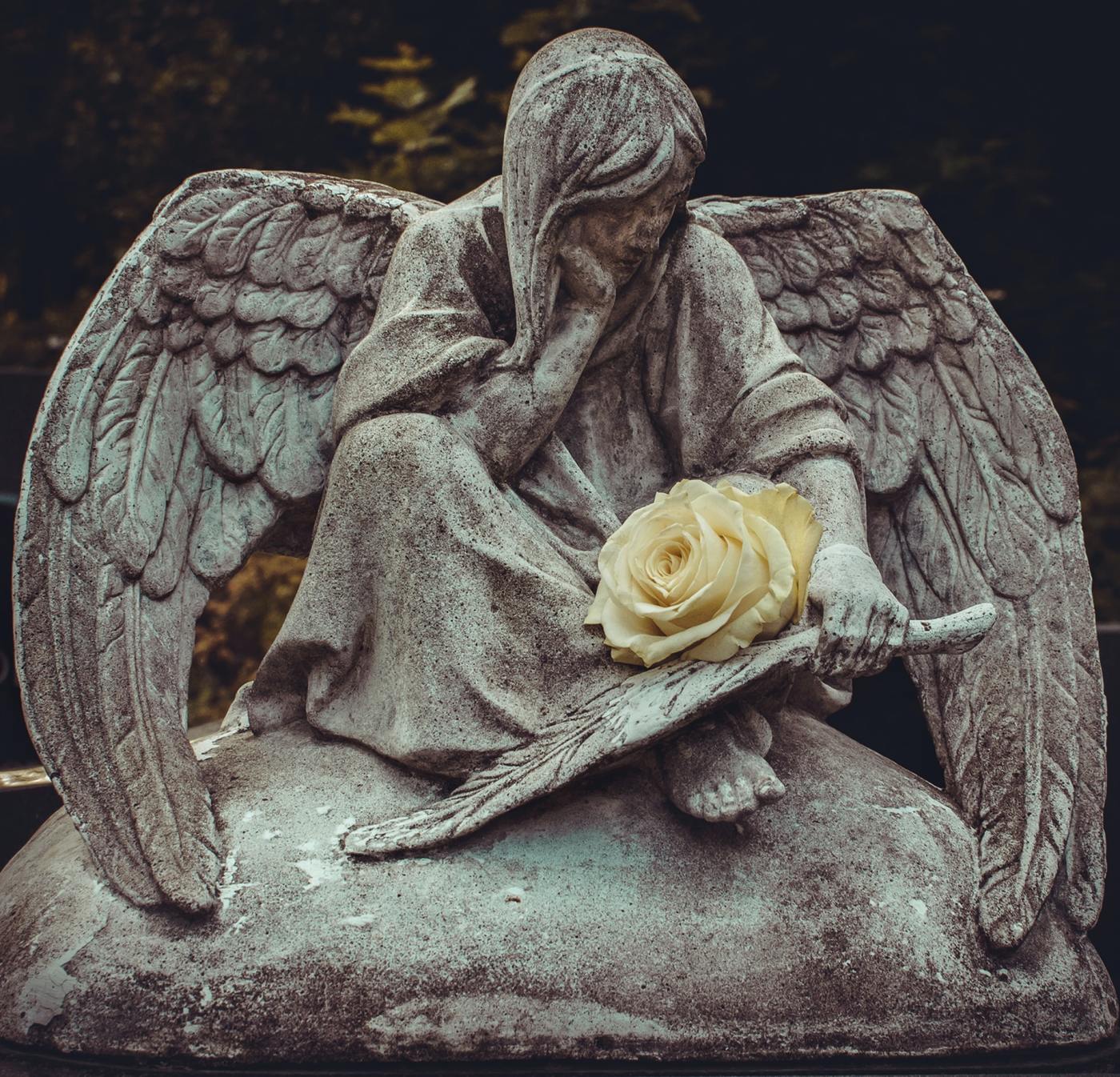
Small ghosts trail behind so many families, invisible to the naked eye or the quick hello.
Rena bustles around her son’s birthday party, passing food and welcoming guests. During a lull, we chat. ‘Did you ever think of having another child?’ I ask. ‘Oh, we did,’ she says, voice suddenly rough, ‘but he died. He was eight weeks old. He got an infection, it entered his heart, and he died.’ I place my hand on her shoulder; there are no words.
So often, life is extinguished too soon: ten weeks after conception; during an impossible birth; after a few short weeks of life. A two-year-old drowns; a three-year-old falls ill; a ten-year-old gets leukaemia. These are the invisible children. They hover around their parents at the kinder gates; they are fleeting shadows in their siblings’ eyes. ‘Did I have a brother once?’ asks a little boy, looking at my youngest and no longer sure. As his mother’s eyes fill with tears, I master the lump in my own throat and assure him, ‘Yes, yes you did. A long time ago, you had a baby brother of your own.’ He shouts triumphantly, ‘I did have a brother!’ and runs off to play. We mothers glance at each other, then look away; there are no words.
As each year rolls around, there are new things to grieve. It is the first day of school, and there is a small ghost where a living girl ought to be. It is Christmas, and a quiet space sits at the end of the table. It is a birthday, and a father puts his head down and works. The child is gone; no one here knows; he doesn’t want to chat. There are no words.
And yet words are so important for understanding and healing. A grief unspoken turns inwards and suffocates; it isolates people; it deadens them. So how should we remember small ghosts? Do we mark their birthdays or the day that they died? Do we talk about them in conversation? Do we sit with friends in silent solidarity, letting them know that we, too, share in their loss? Do we name them during All Saints services? How do we mark their lives?
One family I know has a meal each year on the birthday of their son; last year, he would have turned 21. Around the table they tell old stories, dusted off for the event; they dig out yellowing photographs. Another family has a quiet corner with a chair, some photos, a kinder painting, a teddy; when memories bubble up, they go there and sit. Fifteen years late, a friend sews gifts for her daughters. Neither saw the light of day, but the grief is still there, raw and painful and finally coming out. Each stitch is a step in the paradoxical journey of remembering and letting go; each stitch is a move towards healing.
Our culture is desperate to forget the past: yet we need spaces to remember. The biggest gift we can give is to slow down enough to notice the glitch in the story, the name dangled before us, and ask who is missing. Notice the glistening eyes on the first day of school in the mother who has no child starting that year; notice the reluctance of some people to hold a baby or have a conversation with a two-year-old. Allow friends to avoid us as our children move into a particular age loaded with comparisons; welcome them back when they are ready. Let them tell stories if they offer them, and accept each story as a sacred gift.
And acknowledge the ghosts. Some are sleeping peacefully; others crawl; still others run after their fathers hooting with silent laughter. They are always there, a great cloud tumbling around every school and kinder gate, playing touch-last with the wind.
Shalom,
Alison
An earlier version, ‘Ghosts of children passed’, was published in Eureka Street, 2 November 2011. Emailed to Sanctuary 27 October 2021 © Alison Sampson, 2021. Photo by Julia Kadel on Unsplash.
 Alison and the whale