The word of God comes to the one who relinquishes privilege and works for justice. (Listen here.)
Once upon a time, long, long ago, I lived in America. My mother was a pastor, and she had been called as parish minister by the First Baptist Church of the City of Washington, DC. First Baptist had once been Harry Truman’s church, then Jimmy Carter’s. Older members had fond memories of President Carter teaching Sunday School up in the balcony, protected from sniper shots by a vast stone pillar
In the years we were there, the Clintons came a few times. We knew when they were turning up, because we’d be in youth group before the Sunday service, and we’d see snipers with machine guns climbing up the church building in order to secure the roof. As well as various presidents, church members included presidential advisors, scientists and journalists; officers in the military and the CIA; senior bureaucrats and retired diplomats; professors and stockbrokers and a governor of the Federal Reserve. (He made excellent fudge.)
Twenty years later, now a pastor myself, I moved to regional Victoria. I was called to work in what was officially a city but which seemed like a small town to me, and there were times when it felt like I’d fallen off the face of the earth. Compared with living in Melbourne, let alone Washington, things often seemed insignificant. I was no longer surrounded by movers and shakers and culture makers, or the buzz of a big important city. Instead, I was pastoring among autistic people and hurting people, gay people and trans people, young children, people outside the workforce, and people who presented as normcore but who were deeply alienated by the church.
What happened next? To my joy and my delight, again and again I heard God’s word. I heard it in the testimony of a trans man who had been kicked out of church forty years earlier. I heard it in the determination and resilience of a gay woman who was also shown the door. I heard it in the truth-telling of victims of clergy abuse, and in the prophetic advocacy of poor disabled women. God’s word rang out in the memories of a woman with dementia, and in the love with which her daughter’s wife cared for her.
In conversations with people who found even the idea of church intolerable: God’s word. In the stories shared with me by young children, and by addicts, and by victims of family violence: God’s word. At community meetings, in casual conversations, in pastoral sessions, around dinner tables, in publicly shared testimonies and in desperate whispered confessions: again and again I heard God’s word.
This word took many forms. It wasn’t so much preaching but images, metaphors, and snatches of biblical text which popped up from time to time. It was testimony to God at work in a life; it was faith embodied in action. At times it was transforming and healing; at other times, prophetic and challenging. But it was always life-giving, always new. And as I listened and learned, I came to understand in a deep way the words of the beautiful Baptist hymn, that is, ‘The Lord has yet more light and truth to break forth from the Word.’
And I came to understand something else. I realised that, for all my theological training and for all my lefty politics, at some deep level I had still believed that big and powerful human places were where the real stuff happens: the God-stuff. And I had been completely and utterly fooled.
I’m telling you this because I suspect I’m not the only person to have swallowed this particular lie.
Throughout history, the powerful have claimed that God is with them; even, sometimes, that they are gods themselves. To give just a few examples, the Egyptian Pharaoh was equated with the sun god; while, during Jesus’ lifetime, the Emperor Augustus had public buildings and coins engraved with the title he claimed: Augustus Divi Filius, or Augustus Son of God. In Europe, the concept of the divine right of kings was developed, equating obedience to the monarch with obedience to God; and God continues to be co-opted by every American president and every dollar bill engraved with the words ‘In God We Trust’.
“The Lord wants me to become Prime Minister,” Scott Morrison told a mega-church pastor, in a conversation which was later shared with a large online audience. Indeed, it has always been convenient for the powerful to claim a mandate based on divine will, divine favour and divine anointing; it has always been convenient for such people to say they have a direct word from God which cannot be questioned.
All this messaging has its effect. For those of us exposed to it, which is all of us, it can be hard to resist. It seems natural that God favours the people and places where power and wealth accumulate. Yet if we turn to the scriptures, we find that the biblical witness points to a very different reality.
For the most part, our scriptures were written not by the powerful, but by people whom the powerful had rejected and pushed to the margins. Much of the Bible was written by and for people who were colonised, displaced, exiled or enslaved, victims of war and terror, in prison or on the run, and subject to a brutal 24/7 economy. In conditions such as these, unimportant people proclaimed God’s justice, God’s mercy and God’s faithfulness: which were not the same as the empire’s.
It should be no surprise, therefore, that key witnesses to God’s word were persecuted: for their critique of unjust government policies, for railing against abuses of power by the religious hierarchy, and for calling out the private lives of the rich and famous (think: Elijah, Jeremiah, the Apostle Paul …). The most perfect witness of all, Jesus Christ, was crucified for his work, but many others also lost their freedom and even their lives.
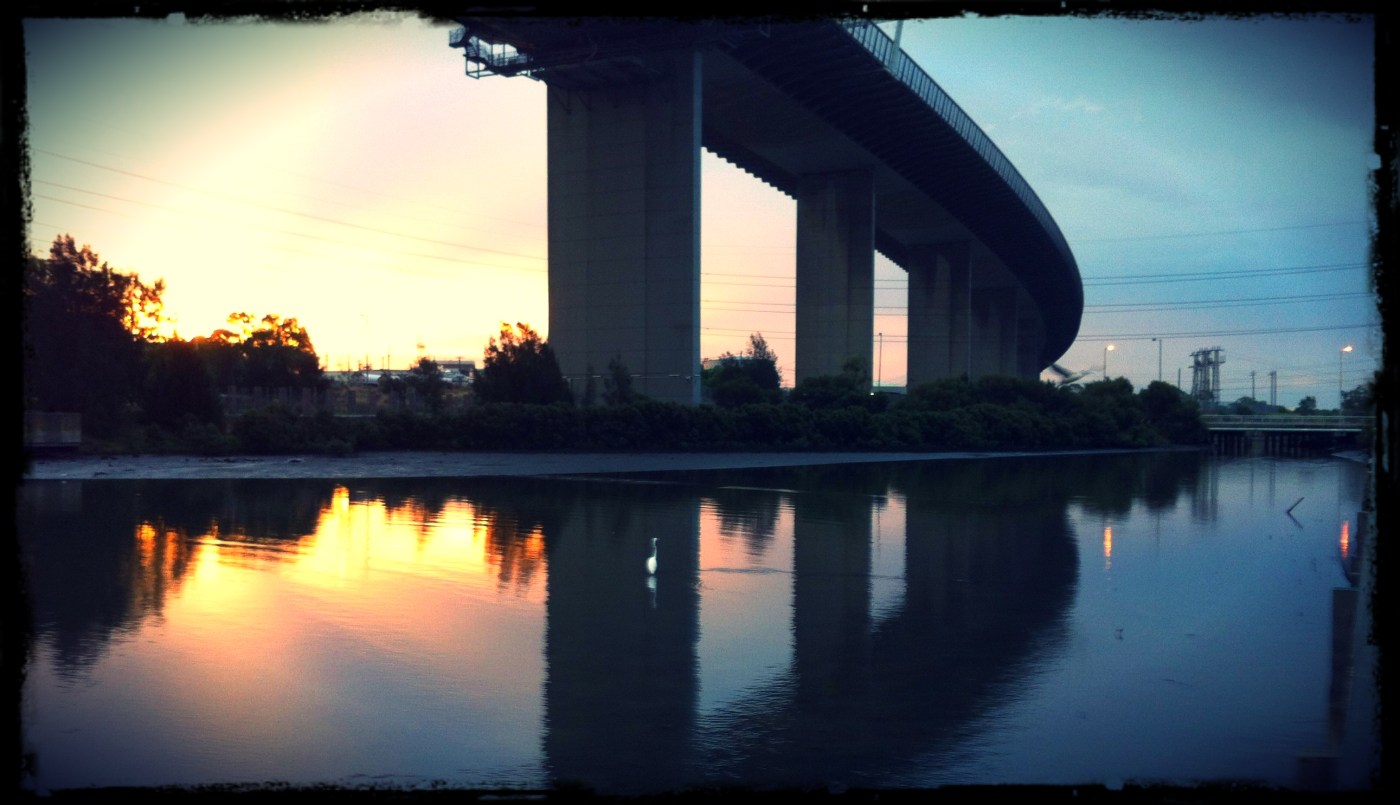
It is one such witness that we encounter in Luke chapter 3. John is down by the river, preaching a baptism of life-change in response to forgiveness of sin. This preaching is important, and the translation is important, which is why I’ve talked about these things in other places at other times (e.g. here). But what’s important, too, is what and where he is, and what and where he is not.
First, it might help to hear the text in contemporary paraphrase. Imagine this: ‘In the eleventh year of the reign of Pope Francis, during the high priesthood of Elon Musk and Rupert Murdoch, when Donald Trump was President-elect of the United States, Gina Rinehart the Ruler of Australia and Anthony Albanese its Prime Minister, and Jacinta Allen the Premier of Victoria, the word of God came to a priest’s son who’d gone bush. When John received the message, he went through the backblocks telling everyone to clean up their act in response to forgiveness from sin …’
So the author begins by listing major seats of power, wealth and influence, that is, the important people in important places who at times might claim to have a divine mandate, and whose words and actions shape the world. In common thinking, these are the blessed, on whom God has showered favour; these are the anointed, chosen by God. And perhaps they are. But then comes the kicker: ‘and the word of God came to John son of Zechariah in the wilderness.’
It’s helpful to dig into the back-story here. In Luke’s account, John is the longed-for son of the priest Zechariah. Zechariah served at the Temple in Jerusalem, with all its attendant power and prestige, and such a role was hereditary. But John doesn’t take up his inherited privilege. Instead, like a Scotch College boy renouncing the career, the connections and the family trust fund, and making a life by the Moonee Ponds Creek up in Broady, John sets up in the wilderness. And as we know from other texts, he lived simply, forsaking wealth, alcohol, fine food and comfortable clothing; and he was later jailed then executed for his criticism of the king’s personal conduct.
So in this story, Luke names key centres of political, religious and financial power: in effect the Vatican, the White House, Silicon Valley, Wall Street, Spring Street: but God’s word doesn’t come to any of them. Instead it comes to John, who turned his back on a hereditary role with all its attendant privilege. It comes to John, who walked away from the nexus of power and wealth that is the lifeblood of every city. It comes to John, who forsook luxury to the point of rejecting material comfort; John, who made a home by a creek in the backblocks; John, who took baptism out of the hands of religious authorities and performed it unlicensed and freestyle out in the open; John, whose preaching was first heard by the nobodies he chose to align himself with.
This is the one whom God chose to preach the word and prepare the world for the coming of God’s Son.
For those far from the centres of power today in refugee camps, in the shadow world of undocumented migration, in rural/regional backblocks, and in pockets of deep weariness, brokenness and need in our major cities, this story should be encouraging: because it tells us that God’s priorities are not the world’s priorities. And it tells us that God may speak through anyone, even a person who has made their home a million miles from power.
But it also contains a challenge. The implication of the passage is that power, wealth and privilege can deafen us to God’s word: and perhaps that’s why John preaches the great levelling. “Every valley shall be filled and every mountain and hill shall be made low,” he proclaims. “The crooked shall be made straight, and the rough ways made smooth; and all flesh shall see the salvation of God.” (Luke 3:5-6). Perhaps it is only when we are on level ground economically, socially and culturally, that we will really see the crookedness and feel the rough places and understand their devastating impact on people. For those of us who have grown up with access to wealth and power, perhaps it is only when we, like John, relinquish our privilege that we will truly see God’s salvation.
My husband and I joined this church because we sense you have glimpsed these strange realities. For this is a church which knows what it is to be in a marginal place.
As you all know, the supermarket at the end of the street is built on a former toxic waste dump. The park across the road is a park simply because the land is so damaged that the houses built on it all subsided and had to be demolished. The local roads are unshaded and corrugated in ways I don’t experience when I visit my father in leafy Canterbury. Heavy industry and refineries and primary schools are all crowded in together.
These suburbs are threaded by major truck routes, and there are significant consequences. The adolescent asthma rate here is 50 per cent higher than the state average, and children and teens are admitted to hospital at rates far higher than the rest of Australia. Yarraville is ranked seventh in Australia for air pollution, and local lung cancer rates reflect this. I could go on, but you get the picture. Those looking in might think that this scarred place, harmed as it is by decades of neglect and industrial abuse, is insignificant, unimportant, overlooked by God.
And yet, here you are. Some of you have lived here your whole lives. Even with gentrification, this is still the industrial west. You know what it is to live in one of Melbourne’s neglected areas, on the wrong side of town. Some of you have arrived here from refugee camps. You know what it is to live in one of the world’s neglected zones, on the wrong side of history. And some of you have moved here from Melbourne’s eastern suburbs, inspired by a vision for the west. You know what it is to relinquish some power and privilege, and to experience some levelling, for Jesus’ sake and for the sake of the gospel.
Because the biblical witness is clear. God’s word is rarely heard at the top, and proclaiming God’s word almost never results in power, money or so-called success. If anything, it’s likely to make those who value such things very angry indeed. Instead, God’s word comes to those who, like John, empty themselves of power and take on the world’s pain; and God’s word is made flesh in communities shaped by self-giving love and care. Which is why, by joining together, living simply, sharing resource, and working for justice, you collectively embody God’s culture-shattering reality: that it’s not in the spaces of the rich and powerful but in ordinary places like this that God’s word most often finds a cradle and a place in which to dwell.
This Advent, then, let us renew our commitment to God’s disruptive yet life-giving word. Let us renew our commitment to love and justice. Let us renew our commitment to community meals and food sharing, and to supporting those who struggle, and to speaking truth to power in Christ’s name. Let us renew our commitment to straightening crooked ways and smoothing out the rough: so that all flesh shall indeed one day see the salvation of our God. Come, Lord Jesus, come. Amen. Ω
A reflection on Luke 3:1-6 shared with Westgate Baptist Community Church on 8 December 2024 (Year C Advent 2) © Alison Sampson 2024.
 Alison and the whale