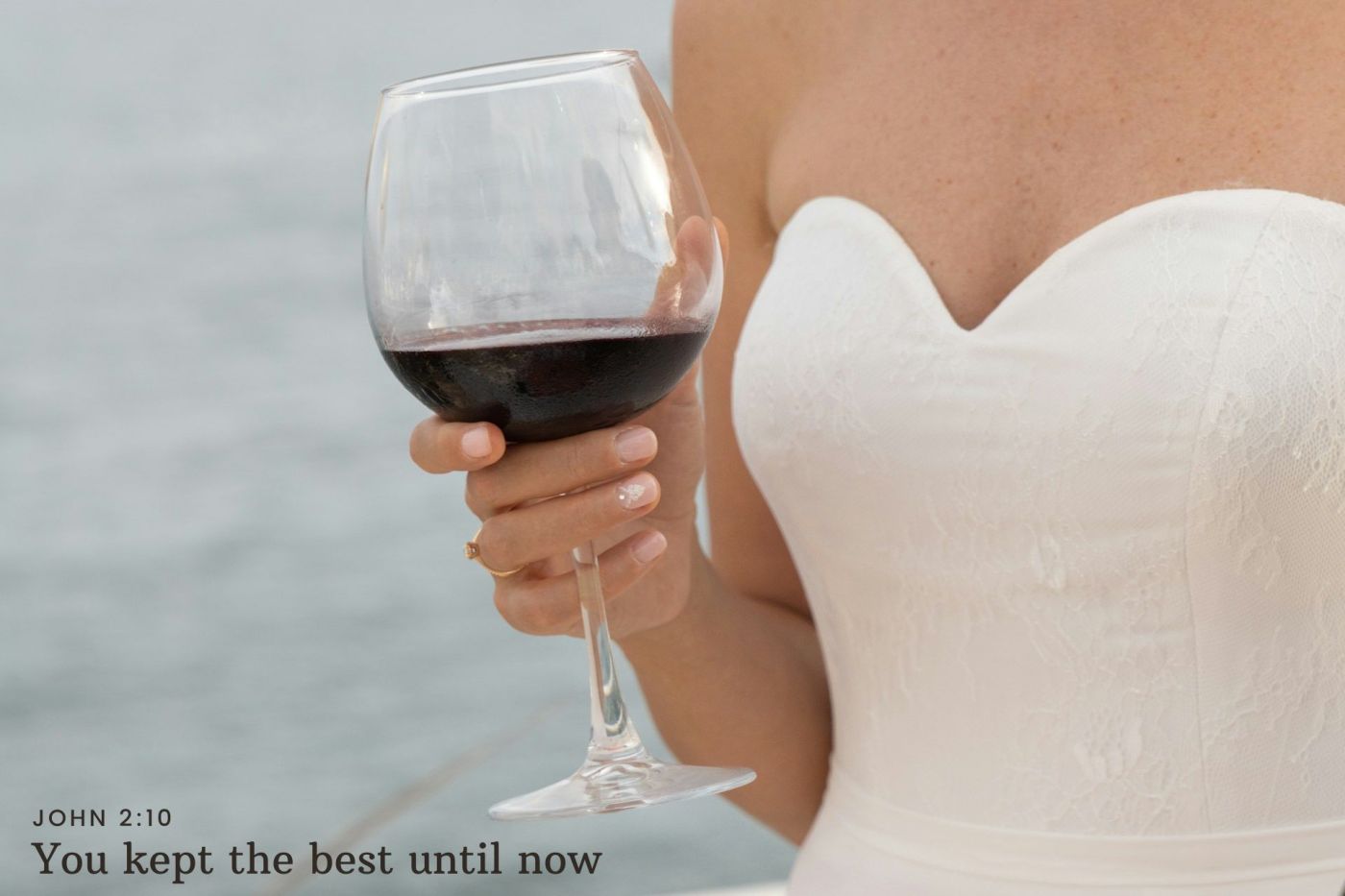
In Melbourne’s north-eastern suburbs, at a long table littered with empty wine bottles and glasses just waiting to be filled, we contemplated the wedding at Cana. It was a conversation-style service, but for those who couldn’t be there, here’s a brief reflection.
Jesus is at a wedding, the wine runs out, he turns water into wine, blah blah blah. The story and its interpretation are so familiar that it can be tempting to tune out.
For we are told that the water-into-wine thing is the first of seven miracles, or what John calls signs, which ‘prove’ that Jesus is divine and we must therefore believe in him. If this interpretation is fundamental to your faith, you can disengage now. But if, like me, you don’t find this interpretation particularly helpful, then stay with me. Because if you’re like me, then perhaps you don’t think faith needs to be or even can be proved. Or perhaps you’ve already been convicted of Jesus’ divinity by faith, or perhaps the whole question of divinity is just not very interesting to you. Perhaps when people interpret miracles as proof of divinity, then like me you go, ‘So what?’
For us so-what people, understanding this story as a literal account of an historic event isn’t entirely convincing. For us, a literary approach can be more helpful. Rather than reading it as a statement of fact, we can look at how the story is structured and what the author is trying to do. We can also reflect on the images used and how they resonate with the wider biblical tradition. When we do this, we will uncover a rich interpretation which can shape how we live here and now.
The key to such a reading lies in the opening words: ‘On the third day …’. Now, John’s story was written in the last decade of the first century. He was writing for people who already knew the trajectory of Jesus’ life, death and life-beyond-death. Like us, they knew that on the third day Jesus rose to be fully present in the world through the gift of his Holy Spirit. So if this is a story about the third day, and it is, then it’s a story about resurrection. It’s a story about what life is like when Jesus has overcome death and his Spirit is with us and we are part of his community.
What, then, is it like? John shows it’s like a wedding banquet! And a first century Jewish wedding was a big deal. It lasted a week and involved great crowds coming together to eat too much, drink too much, play loud music and dance their socks off to celebrate the union of people and communities. Ideally, by the end of the week the bride would be pregnant, cementing the marriage for good.
This image has deep roots in biblical tradition. Biblical writers don’t really paint a picture of heaven as a later destination or existence. It’s less a story about pie-in-the-sky when you die and more about earth being filled with heaven here and now; and it’s told through the metaphor of marriage. Whether it’s God as jealous husband, or the unsatisfied longings of the lovers in the Song of Songs, or the wedding of the Lamb, biblical writers use the metaphor of marriage to describe our relationship with God.
For the authors of the Hebrew Bible, this perfect union of heaven and earth, or God and God’s people, is something that is yet to come. But those of us who follow Jesus are living on the third day, that great day when heaven and earth are reconciled and the lovers of the Song of Songs are finally united and all are drawn into the story. So on the third day, the day of resurrection, there is a wedding banquet.
Through this image, we gather that resurrection life doesn’t look like people sitting alone at home eating stale crusts and knowing ultimate truths and thinking righteous thoughts to themselves. Instead, if it’s like a wedding banquet, and it is, then resurrection life involves food and drink, laughter and stories, and people coming together to celebrate. It’s earthy, raucous, communal, joyful and hospitable, and the wine never ever runs out.
For Jesus doesn’t skimp. The story tells us he turns nearly 700 litres of water into wine, that is, 900-odd bottles. This is a vast quantity, an ocean of wine! It’s an indication of generosity, abundance, even excess. We see there is nothing stingy about the hospitality of this banquet, and no holding back in resurrection life.
This brings me to an interesting detail. When Jesus turns water into wine, who instigates it? His mother. Who witnesses it? The servants. And so we learn that resurrection life is not business-as-usual big men in charge. Instead, women show leadership and people of no account are the first witnesses. Through these details, John shows that people with little to no earthly status have significant roles to play in the resurrection community.
Then there’s the transformation. John shows us water turning into wine, and John has a sacramental imagination. In the longer story into which this episode fits, Jesus makes us right with God through the spilling of his blood. He urges his disciples to drink his blood and be transformed, and he imagines blood as wine. Perhaps John uses this symbol because of the way wine can soften us, break down our inhibitions and intoxicate us: for it is only when we let go of control and entrust our lives to God that we are transformed into Christ’s image and likeness.
Said the steward to the bridegroom, ‘You’ve saved the best till now.’ Life is good, but resurrection life is so much better. Like marriage, it’s a fertile embodiment of love, sex, food, labour and community. Like a wedding banquet, it’s abundant, generous, hospitable, earthy, communal, festive, even ecstatic. This is what the union of heaven and earth looks like, and it’s how the whole world is transformed.
And it’s the life into which we have been called. So, is this the life we are living? Are our days shaped by food, hospitality, fertility, intimacy, abundance? If not, what needs to change? What do we need to let go of? What do we need to embrace? And how then shall we be transformed?
God of generosity and joy,
you have kept the good wine until now.
Take the stagnant water of our lives –
our struggles and insecurities,
our glibness and dullness,
our fear of intimacy and our reluctance to be fully known,
and through your grace make us bold, joyful,
intoxicated by your Spirit,
that we may embody your resurrection life
through Jesus Christ our Lord: Amen. Ω
Reflection on John 2:1-11 shared with Rosanna Baptist Church on 19 January 2025 © Alison Sampson, 2025. Photo by engin akyurt on Unsplash (edited). Marriage is a visible embodiment of a fertile economy of love, sex, food, labour and community. It reminds us that all life is interconnected and utterly dependent upon the land. I acknowledge that I worship, work and play on the lands of the Wurundjeri People of the Kulin Nation. I acknowledge elders past and present, and the long history of committed relationship and sacred and joyous ceremony which this land remembers.
 Alison and the whale