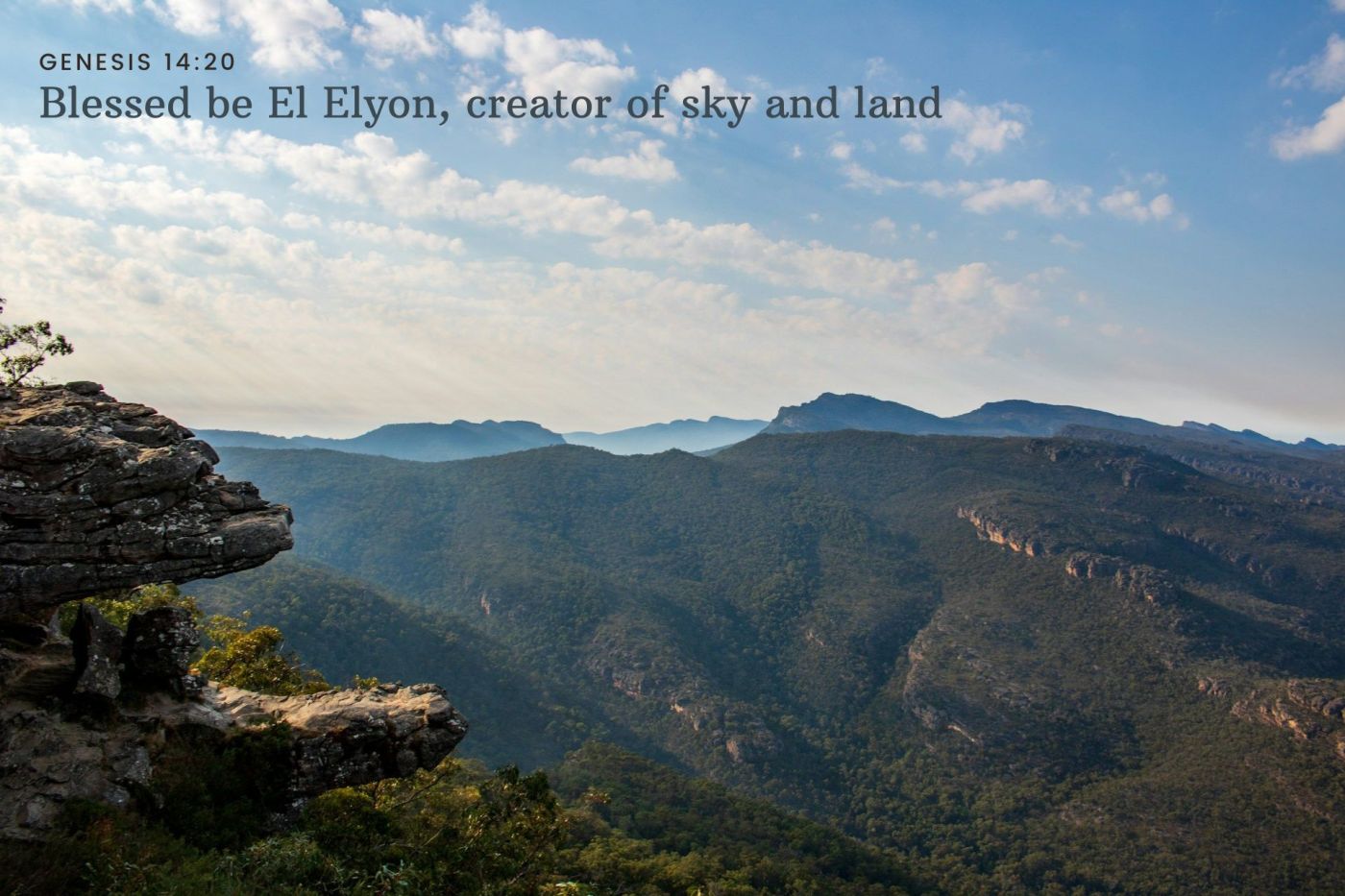
Christ is a priest in the order of an Indigenous creator-ancestor. Truth-telling and implications, as shared with Rosanna Baptist Church on 26 January.
On 26 January 1788, the First Fleet landed in Sydney Cove. There, Captain Arthur Phillip raised the Union Jack and claimed half the continent for his king. It marked the beginning of the disruption, dispossession and colonisation of over 300 nations, and a devastating loss of life.
Early colonisers reaping the wealth of stolen land considered this a date to celebrate. Others did not. Perhaps their land had been invaded, their sovereignty overridden and their loved ones murdered, raped or enslaved by British colonisers; or perhaps they objected to being exiled for the term of their natural life and used as slave labour by the toffs.Either way, that was the colony of New South Wales then. The modern nation we call Australia did not yet exist. It only came into being in 1900, and even then celebrations of nationhood took nearly a century to be cemented into the national calendar.
The first event to be called Australia Day wasn’t until 30 July 1915. However, the date wasn’t fixed, and different regions continued to celebrate in different ways on different dates to mark the colonial invasion. Through it all, 26 January continued to be a very painful date for many. In 1788, of course, it marked the beginning of colonisation. In 1838, it was the day when over 200 Gamilaroi people were massacred at Waterloo Creek. So in 1938, the first Day of Mourning protest was held. Aboriginal people marched in Sydney, calling for recognition and equality.
Yet despite or maybe because of this history, most states adopted 26 January as Australia Day, though not all marked it with a day off. It wasn’t until 1994 that 26 January was formally set aside for a national public holiday. But given it’s a date marking colonisation and a date red with blood, many continue to recognise it as a Day of Mourning; others as Invasion Day, or Survival Day.
What, I hear you ask, does this have to do with old Abram and his wheeling and dealing in the Valley of the Kings? I’ll get to that, but first I would argue that the country we now call Australia was established by those who chose to follow in the footsteps of Joshua. As you might remember, after centuries of slavery in Egypt, and after 40 years of wilderness wandering, Joshua leads Israel back into Canaan. But first he announces that the land is under a holy curse. Then he declares that all men, all women, all children and all livestock must be slaughtered, and all valuables stolen and added to God’s treasury. In other words, Joshua enters the land with the extreme obliterating violence and theft that we now call genocide.
I would love to say that the foundation of the nation we call Australia was very different, but I can’t. Preachers in the colony declared the baseness of Aboriginal people, describing them as the children of Ham and predicting their destruction; they denounced creator-ancestors as demons. With such goading, in the name of Christ great terror was unleashed and Christians willingly participated in many massacres. In Warrnambool, some were known for going to church Sunday morning, then after lunch taking pot shots at Peek Whurrung people from their verandas. One of my own ancestors, a Methodist, is thought to have participated in a massacre in South Australia, driving men, women and children off a cliff.
Across the continent, Christian folk used Aboriginal people as slaves, and took their children in order to ‘civilise’ them. Language, story and ceremony were banned, and cultural knowledge was devastatingly disrupted. It was terror unleashed, an unholy curse, a very real attempt to erase all traces of Aboriginal people, language, history and culture, and it was done all too often by churchgoers.
To be children of Joshua: for many of us, this is our inheritance and our shame. It’s particularly awful since we are not called children of Joshua but of Abraham, and Abraham’s story, while chequered, nevertheless suggests a different way. We find one example in Genesis 14, back when he was called Abram, there in the Valley of the Kings.
Abram has just returned from series of military skirmishes. He has been working with his allies – a group of Indigenous tribes and their kings – to retrieve his nephew Lot and others who had been abducted by a different tribal coalition. Upon his return, he was blessed by Melchizedek in the name of ‘El Elyon, maker of sky and land …’ They shared bread and wine, and Abram gave Melchizedek one-tenth of his possessions.
Understand this: El Elyon wasn’t Abram’s god, for Abram’s god was Yahweh. Instead, El was the Canaanite creator-ancestor, and Elyon the honorific ‘Most High’. Yet Abram received blessings in El Elyon’s name, broke bread and drank wine with El Elyon’s priest, Melchizedek, and gave Melchizedek a tithe of his possessions. He didn’t reject El Elyon or El Elyon’s priest, but accepted them and showed them honour.
More, Abram then made treaty with the king of Sodom to take nothing that wasn’t his, swearing his oath in the name of ‘Yahweh, El Elyon, maker of sky and land …’. So Abram brought the two gods together in his oath, conflating their creative activity, and he promised not to engage in the theft of land, people or possessions.
We opened the service by remembering when the earth was formless, and God’s breath hovering over the deep, and God calling forth creation. Then we remembered Bunjil hovering over formless matter, blowing air through his beak to create the land, scratching soil with his talons to make plants and trees. Perhaps you were shocked, even appalled. But our ancestor Abram in effect does this and much, much more. For where we simply acknowledged the creator-ancestor of this place, Bunjil, Abram acknowledges the creator-ancestor, El, by name. Then he receives the creator-ancestor’s blessing, gives a tithe to the creator-ancestor’s priest, and swears by the creator-ancestor to deal fairly in the land, while acknowledging the overlap between Yahweh and the creator-ancestor.
Abram’s stance points to a way of being in the land that this nation has never tried: a way of coalition, a way of negotiation, a way of treaty. A way of mutual blessing. A way of honour and respect, a way of acknowledging resonances between the ancestors and Abram’s god, a way of living together with our difference.
At this point, you might say that this is all very well, but our primary identity is not as children of Abraham. More important, we are followers of Jesus. So what does this story about Abram, Melchizedek and El Elyon have to do with us?
According to the letter to the Hebrews, a great deal. For Jesus is our great high priest who has gone into the very presence of God to intercede on our behalf (4:14-16). Yet according to the law of Israel, Jesus isn’t a priest. He isn’t born into the line of Aaron, from which all Israel’s priests must come. Instead, he is born into the line of Judah: the kingly line. He has no priestly authority in Judaism nor in any Christian equivalent, for Christianity did not exist in his lifetime. Where, then, does Jesus derive his priestly authority?
The author of the letter writes, ‘Christ did not glorify himself in becoming a high priest, but was appointed by the one who said to him, “You are my Son, today I have begotten you”; as he says also in another place, “You are a priest for ever, according to the order of Melchizedek.”’ (Hebrews 5:5-6) So God appointed Jesus as priest in the order of Melchizedek.
Now, Melchizedek is both priest and king. His name means ‘king of justice’, and he is also king of Salem, which means ‘king of peace.’ More, and I quote Hebrews, having ‘no father, no mother, no genealogy; having neither birth nor death, but resembling the Son of God, he remains a priest forever.’ (Hebrews 7:1-3). So Melchizedek is without beginning or end: he is what First Nations people might call an ancestor. As an ancestor, he is linked with justice and peace. His authority doesn’t come from Jewish religious tradition, but from his participation in the indestructible life of the creator-spirit of the land.
And it is this priesthood, a priesthood outside of Judaism, a priesthood rooted in an Indigenous Canaanite creator-ancestor, to which Christ is appointed. (This should blow your mind!)
Why this particular priesthood? The author of the letter to the Hebrews argues that the Levitical priesthood is profoundly limited. It is changeable, compromised, ineffective. It requires endless sacrifice to make people right with God; it has failed to generate faithfulness.
The priesthood which comes through the life of the creator-spirit is different. It endures; it is eternal. Institutional religious expression is necessarily limited, but a priesthood empowered by the indestructible creator-spirit is without end. More, this priesthood is truly powerful. For, unlike the Levitical priesthood or any later priesthood established by the church, priesthood in the order of Melchizedek is not anchored in human rites but in the activity and promises of the divine.
The power of this priesthood is seen in the divine activity which led to a once-and-for-all sacrifice, bringing the sacrificial system to an end. Faith was taken out of the temple and exploded into the world, shaping hearts and minds for the good. This is the priesthood to which Christ has been appointed and, as members of the body of Christ, this is our priesthood, too.
Several implications come to mind. First, it is suggestive that many early colonisers declared First Peoples were not religious, for they were not seen to pray, build churches or echo other European religious practices at that time. Leaving aside comments about observational failings and cultural difference, I note that a religious practice shaped by the order of Melchizedek permeates all things. There is no need for a defined thing called prayer or for a visible church building when every activity is a spiritual act and the whole world radiates the divine.
We do this thing called prayer and we worship in churches because we still live in a ruptured world; the reconciliation of heaven and earth has not yet been fully realised in us. But we are called to a fully integrated way of being, a way in which every aspect of life is deeply permeated by meaning and story, a way which is profoundly Indigenous. So I suggest that we would do well to read, listen and learn from First Nations pastors, poets, theologians, academics, songwriters, artists and activists. We would do well to allow them to unmake and shape us into people who recognise and honour the divine in all things, in every place and time.
Second, just as Abram knew the name and activity of the Canaanite creator-ancestor El Elyon, I suggest we too should know the name and activity of the creator-ancestors where we live. More, where the church has historically sought to silence and eradicate these stories, I suggest that we are called to repent of this stance. Instead, I suggest it is our duty and our joy to seek out, listen and learn from these stories when they are entrusted to us.
Where we are gathered today, this means knowing about Bunjil the creator-ancestor and Waa the law-giver. In the central desert, it means learning the stories of Kungkarangkalpa, or the Seven Sisters, as they are chased by Wadi Niru across the continent. In Gunditjmara country, stories of Budj Bim and the birth of lava flow and wetlands take priority. For people called to tend and serve the earth, that is, us, these stories are crucial. They show where we really live and what is important and how to attend to country. A church which stands in the order of Melchizedek will take these stories seriously.
Third, I believe that acknowledgement of country and ancestors is both biblical and necessary. At the start of the service, we acknowledged that we are gathered on the land of the Wurundjeri people of the Kulin Nation, and we remembered the creative activity of Bunjil. To acknowledge these things is not a hollow exercise in woke politics. Jesus’ priestly authority arises from the order of Melchizedek, which in turn derives its authority from the creator-ancestor El Elyon. And in a sign of respect and honour, El Elyon is acknowledged by name and given a tithe by our ancestor Abram.
So paying respect to creator-ancestors is biblical. More, if we are to begin to comprehend the boundary-shattering grace embodied by Christ’s priesthood, we will learn and honour the source of his authority: the creator-ancestors of the land.
Finally, without truth, without treaty, there is no justice or peace. Called as we are to the order of Melchizedek, the one whose names mean ‘king of justice’ and ‘king of peace’, I suggest we are therefore called to truth-telling, to treaty, and to a more just settlement. Given the powerful forces which benefit from how things are, forces both external and located within ourselves, I can’t pretend that we will achieve these goals in our lifetimes. Even so, I believe we must be part of the work, and that our work begins now.
Of course, this work won’t make us popular. However, as the letter to the Hebrews reminds us, ‘Jesus suffered outside the city gate … so let us go to him outside the camp, bearing the disgrace he bore. For here we do not have an enduring city, but we are looking for the city that is to come.’ (Hebrews 13:12-14).
My friends, if perfection could have been attained through the Levitical priesthood, there would be no need for a new covenant reliant on divine activity alone. If maturity could have been attained through an aggressive religious nationalism, there would be no need for a priesthood grounded in an Indigenous creator-ancestor which takes worship outside the temple. If love permeated all that we do, there would be no need for a reimagined city, that radiant city of justice and peace that is to come, a city where people of all nations worship freely, a city overflowing with life and goodness and joy.
Yet perfection, maturity and love continue to elude us. So let us seek the transformation of ourselves and of our nation, working and praying in the name of the great high priest in the order of Melchizedek, Jesus Christ, Son of God. And as we work and pray, let us seek the way of coalition, the way of negotiation, the way of treaty. Let us seek the way of mutual blessing. Let us seek the way of honour and respect, the way of acknowledging resonances between the ancestors and our god, the way of living together with our difference. For then we will become a nation to be deeply proud of, a nation we can wholeheartedly celebrate.
Let us pray: Creator of land and sky, through your priest Melchizedek you blessed Abram, a stranger in the land. Give us the wisdom to recognise your blessings, however they come, and grant us the grace to receive them. Help us to be a blessing to others, that we can be part of your glorious work of justice and peace and love. We pray in the name of our great high priest: Jesus Christ, our Lord: Amen. Ω
Reflection on Genesis 14:17-24 & Hebrews 5:5-6, 7:1-6 et al shared with Rosanna Baptist Church on 26 January 2025 © Alison Sampson, 2025. This piece was shaped by observations made by Garry Worete Deverell in Contemplating Country (Eugene, OR: Wipf & Stock, 2023) and by Anne Pattel-Gray and others in De-colonising the Biblical Narrative, Volume 2 (Adelaide, SA: ATF Press, 2023). Photo by Katie Moon on Unsplash (edited).
 Alison and the whale