Life in the gospel according to John: what is it? Here’s my take for a second-gen Vietnamese-Australian congregation living in a secular age. (Watch on YouTube here.)
You’ve all seen them. Maybe there’s one in a house you know, or maybe at a place you like to eat pho. Maybe it’s on a shop counter, or in the corner of an office. Wherever it is, it’s a little shrine. What’s on it can vary. Sometimes it’s oranges, but at Tet, or the lunar New Year, it’s the five fruits. Usually there’s incense, often jasmine tea. There may be flowers, even an oil lamp. Perhaps a Buddha or a crucifix. And, of course, there’s the photographs of ancestors who are being remembered and honoured at these altars.
In Vietnam in the 1950’s, the altars largely disappeared. The communist party had came to power, and all religious and spiritual rituals were strongly discouraged. They were seen as a threat to people’s loyalty to the state, and so were mocked as superstitious by the atheist government. Many altars were taken down or hidden away. But under the reforms of the late eighties, the government’s attitude began to shift, and the altars began to appear once more.
Why were they seen as a threat? Because the altars honour the unseen. To use language from the letter to the Hebrews, they honour the ancestors who have gone before us. They honour those who have run their race, and have died, and who are now cheering us on towards the finish line. So they build in us a loyalty deeper than a political party; they give us a longer view than a dictator or an election cycle; they remind us that death is nothing to fear, because life and relationship continue.
Perhaps this is why you’ll find ancestral remembrances all over the world. For example, the ofrenda, or family shrine, is found in Mexico during Día de los Muertos, the Day of the Dead celebrations. It’s the day when the barrier between heaven and earth, living and dead, is especially thin: All Saints & All Souls in the Christian calendar.
Here on this continent, ancestral awareness is anchored in animals, plants and landforms, particularly the soil. Many First Peoples understand that, when we touch the soil, we are in the presence of everything that has already happened and all that is to come, with people of every time coexisting at every moment. You might call this the eternal now, or the everywhen; and it’s something I myself have glimpsed when on my own ancestral country in Cornwall.
To be clear, I’m not talking about these things to say we all should rush off and engage in ancestor worship. Instead, what I am trying to do is paint a picture of how humans can be aware of a spiritual world which exists here among us now. It’s like how the Eastern Orthodox, Catholic and Anglican traditions venerate the saints: those who have died and who are believed to intercede for us with God. And it’s like how we here worship Jesus, the pioneer and perfector of our faith, a man who is long-dead yet who sits at the right hand of God and is our ever-present friend and brother. In fact, some theologians suggest that we can think of Jesus as an ancestor who, through the eternal now, this layering of all time in every time, is always and everywhere present.
Yet despite these and so many other traditions, despite the fact that almost every person of almost every culture in almost every moment of human history has recognised and lived with deep awareness of the eternal, such an awareness is rare these days and in fact is frequently mocked. Sure, we can spend a fortune on yoga retreats and scented candles and lessons in mindfulness. But these are the flip side of the widespread lack of awareness. You don’t need to be taught to notice something that everyone knows in their bones. Expensive yoga retreats and mindfulness training exist precisely because most people are oblivious to the deep holiness which pervades all things, the holiness which, if given the opportunity, can heal and transform the world.
Why are we so unaware? Why is it like this? Well, there’s this little something called the Enlightenment. The Enlightenment was a period of great upheaval, first in Europe and then elsewhere, and we are all its products. It led to the communist government in Vietnam in the 1950’s, and the circumstances of our lives today. Its major themes included scepticism, individualism and reason, and it marked a radical shift in how we understand the world and our place in it. This affected all areas of life: politics, economics, household order, how we view ourselves and so much more. And of course, it affected faith. Where faith had once been understood as about group identity, it now became about individual salvation. And where faith had once been about mystery, now rational thought was equated with the divine.
The result is that we live in what the philosopher Charles Taylor calls the Secular Age. The theory, very briefly, is this: Modern ways of knowing and exploring the world stripped away our sense of the sacred. As mysteries such as conception, growth, illness and death became more open to explanation and management, as more and more of the world was collected, catalogued and described by colonial powers, as even the moon became a place to visit and a potential resource to be mined, people’s recognition of the sacred diminished. We moved from a relational experience of the world to a functional and even exploitative approach. For if we can make bombs and babies in a laboratory, if it seems that the everything can be sold and bought, what then is left of mystery? What need of God?
As Richard Beck writes, ‘The world was once alive … quivering with the love of God. The mere existence of the world was a miracle, the gift of each new morning inspiring awe, reverence, and gratitude. [Many of our Psalms reflect this.] We’ve lost track of that miracle. We don’t behold the world as crackling with God’s power and love. [Instead] We study the Machine in our science classes.’ (Hunting Magic Eels, drawing on the ideas of Charles Taylor in The Secular Age).
And so a sacred well flowing with living water becomes simply a hole in the ground and a bucket on a rope. The sacred rock at the heart of our land becomes a photo opportunity, something many tourists still want to climb and conquer. An evening garden where God might choose to stroll becomes the invisible thing we don’t even notice behind the reflected glare of the television.
With this society-wide loss, faith shifted its focus from mystery to morality. It moved from being about a loving relationship with a living God to a set of arguments and behavioural codes. The result is that, for many if not most people, including many Christians, God now seems a bit unnecessary if God ever existed at all.
This brings me to a matter of translation. In today’s passage, we hear Jesus say something like this: ‘Whoever hears my word and believes him who sent me has eternal life and will not be condemned; he has crossed over from death to life.’ (John 5:24). I want to focus for a moment on the word ‘believe’. It’s a thing that is very hard to do in a Secular Age: to believe in an invisible God. But the word ‘believe’ is tricky; its meaning has wandered through several languages and some dramatic shifts in culture.
Way back in the fourth century, the New Testament was translated from Greek into Latin by a bloke named Jerome. When he came to the Greek word pistis, he used the Latin word fides, or ‘loyalty’; and that later translated into English as ‘faith.’ Now, in Greek, pistis has a verb form: pisteo. But ‘I loyalty’ or ‘I faith’ are not words in Latin, so Jerome used another word. He didn’t choose opino, ‘I hold an opinion.’ He didn’t choose cogito, ‘I think.’ Instead, he chose credo, which comes from the Latin for ‘heart’; it means ‘I give my heart to.’ So pisteo became credo in Latin; and credo is where we get the English word ‘creed.’
Jerome’s translation stood for over a thousand years, until King James ordered scholars to make an English version of the Bible using Jerome’s translation. Then Latin was translated into Middle English, and the word those scholars chose for credo was ‘believe.’
It was a good choice back then. In 1611, when the King James Bible was published, ‘believe’ meant ‘to value’ or ‘to hold dear.’ It came from a German word, belieben, ‘to love’, and you can hear the original sense of both credo and pisteo, ‘to give your heart to something.’
But language changes. Bad used to mean evil or awful; now it can mean excellent, totally rad, even skibidi. And for those of us who are products of the Enlightenment, which is all of us here today, to believe something is to intellectually agree that it is true. Yet thinking something is true is not the same as giving your heart to it, trusting it, being loyal to it. If I believe that the earth is round not flat, it makes no real difference to how I live. It’s just an idea with no impact. But if I give my heart to something, then I will direct my time, money, energy, passion and love towards it. Giving my heart to something, for good or ill, changes my life and the lives of the people around me.
So when Jesus asks us to ‘pisteo’ God, which we usually translate as ‘believe’, he is not telling us to intellectually accept that God exists or to think that ideas about God are right. Instead, he is asking us to open our hearts: to ‘trust’ in God; to ‘give our hearts’ to God; to ‘be faithful’ to God. Threading through it all is an assumption that faith is about relationship. Not intellectual agreement or rational argument or statements of faith requiring assent. Just the intimacy and love which flow in a trusting, steadfast relationship.
This makes sense, because scripture describes a God who is relational, a God who is active and engaged in the world. In the beginning, God speaks, God creates, God calls life and newness into being: and then we have thousands more pages describing God’s ongoing activity. Endings, beginnings, liberations, changings. Conversations, arguments, compromises, renewals. Healings, feedings, forgivings, commissionings. The God encountered in scripture is active and present, responsive and engaged, and always, always in relationship.
But because of the huge shifts in language and worldview I just described, this is not how many of us think about or experience God today. And this is a problem across the spectrum.
To make an outrageous generalisation, conservative evangelicals don’t really trust in the God Walter Brueggemann describes as a ‘lively character and a real agent.’ Instead, they trust in the Enlightenment value of rationalism. They read scripture to resolve tricky questions and come up with ultimate truths. And so they know everything, explain everything, have everything neatly bundled up about their itty-bitty handmade God and all his theology, rules and regulations. Their focus is intellectual agreement, behavioural codes and social order, and they demand adherence without question to faith statements. This is a faith in which God is nailed down, free to do precisely nothing; it is functionally atheist.
To make another outrageous generalisation, theological progressives don’t really trust in the lively character of God, either. They admire and respect the person Jesus, but they’re not really sure about the resurrection or all that waffle about the cosmic Christ. Instead they have their left-wing politics and commitment to social justice and support of soup kitchens to keep them occupied, and this work is more important than worship. They’re busy little bees, these lawyers and social workers and activists, fixing the world through their own efforts. They know what’s needed; they’re well onto it; there’s no need for God to do anything at all; in practice they’re functionally atheist too.
And just look where all this rational God and ineffective God and non-existent God has gotten us. It has led to a toxic culture of polarisation, where people demand agreement as a condition of relationship. What people believe is seen as more important than the fruit of the Spirit in their lives. Contempt is rampant, and the church is fracturing all over the place. Theological arguments split congregations, denominations, even nations, while the lefties have pretty much lost their faith and are totally burned out.
Beyond the church, the loss of mystery, the loss of engagement with a living and active and relational God, has led to skyrocketing rates of loneliness and depression. It has led to apathy and anxiety, addiction and hopelessness and despair. It has led to the breakdown of relationships between people and their families, employers and workers, neighbours and friends. And, of course, the loss of the sense of the sacred in the world is a huge contributor to climate change.
Into this litany of misery explodes the Jesus of John’s account. Because it doesn’t have to be this way. The world doesn’t have to seem so flat, people with different ideas don’t need to be forced to change or leave, life doesn’t have to be so meh. Instead, trust in God, says Jesus. Enter into a loving relationship with the God who lives in me, and I in him, and you in me, and I in you. He’s not talking about intellectual agreement but love. What he’s effectively saying is, don’t worry about the rational. Get relational. Open your heart to God right now and let God’s Spirit dwell within you and between you and among you, whatever you all think. Participate in God’s life, a life seen in the self-giving love of Jesus. For by participating in God’s life here and now, you will know and participate in eternity.
Notice that Jesus’ language is in the present tense. He’s not talking about eternal life as some future hope or possibility. Instead, it’s real, it’s here, and it’s now. ‘The Son gives life,’ says Jesus. ‘Whoever hears my words and trusts him who sent me has eternal life … he has crossed over from death into life.’ Life is not something Jesus will at some later stage give to those who at the end of their mortal lives are deemed worthy, and it’s not something we will one day maybe possibly receive if we’ve been good enough. Instead, to those who open their hearts to God now Jesus is already giving life, and we already have it, and we have already crossed over from death to life. We are already participating in the resurrection, what you might call the eternal now, and God’s life is already flowing through us: and we would do well to notice this.
We might learn to notice the sweet heavy presence of the Spirit when it fills the room, the Spirit who falls like gentle rain on dusty hearts, the Spirit who never provokes a fight but draws people and communities through conflict and brings them closer together. We might notice the Spirit like fire inspiring visions and dreams, the Spirit like wind bringing a cool and much-needed change, the Spirit gifting peace and freedom. We might notice the Spirit who shapes human lives into gospel form: for through the Spirit, Jesus is with us, leading and guiding us always.
It’s not easy to notice in the Secular Age, but as the story of Nicodemus assures us, we can do it; we can be reborn. For in chapter 3, Nicodemus doesn’t have a clue about the life of the Spirit, but by the time of Jesus’ crucifixion and death, he is a faithful, committed disciple. Like Nicodemus, we don’t have to settle for life in the darkness. We don’t need to limit faith to rules and regulations or a flat boring view of the world. We can open our hearts and be born from above. We can be filled with the life of God’s Spirit and it will transform us here and now. And as it wells up within us, it will pour out like living water, bringing more grace and truth, more steadfast love and faithfulness, more unity, more communion to those around us.
As this happens, we ourselves will be moved from death to life, now. We don’t have to wait for our mortal deaths to be resurrected. Sure, we will die one day in the flesh, but when that day comes we will already be so alive in God that death will be simply one more event in the eternal now. Because past, present and future all coexist in the God of Abraham, the God of Isaac, the God of Jacob, the God of Jesus, the God of us: and in this oh so fully alive God we already know life without limit.
This is the life we are plunged into by the waters of baptism. It’s the life which grows within us every time we eat Jesus’ flesh and drink his blood, participating in his life at the table. It’s the life which finds fruition whenever we say no to violence and yes to peace, no to schism and yes to unity. It’s the life which, in the words of West Preston Baptist Church, prioritises relationships over being right. It’s the life we experience when we share our food with a hungry person, and visit the sick and befriend the lonely, and welcome a stranger and even an enemy into our lives. It’s the life which death cannot contain, it’s in the present tense, now, and those of us who enter into it know that when our own day of dying comes, death will be only one more experience in a much bigger, more magnificent story.
But before we get carried away, let’s remember this: this life has responsibilities and consequences. It’s not all spiritual woo-woo. It’s not magic mushrooms or hot yoga or mystical chants which take us to a higher plane. Instead, when we open our hearts to God’s life, when the Spirit flows through us, we begin to look more like Jesus. And Jesus was both relational and practical.
Because when you open your heart and live in a deeply relational way, when you prioritise love over belief, you begin to see that everything and everyone is connected. You begin to realise that other people’s suffering is your own, and then, like Jesus, you begin to do something about it. Because the life of God, this eternal life into which we are called, is for something.
That something is not really about protection from a nasty afterlife. That’s a Greek idea overlaid onto the text. Instead, the purpose of eternal life, God’s life, is revealed to us through the life of Jesus. In John’s story, we see Jesus feeding hungry people and healing damaged people and teaching puzzled people and raising the dead to life: so this is our call, too. Because our fundamental call is to be vessels which bring more life and love into the world, as we dwell in Christ and Christ dwells in God and the Spirit flows into the world through these mutually in-dwelling relationships.
This openhearted flow is only possible through love. God gave the Son in love, and the Son gave his life in love, so that ‘whoever trusts in him shall not perish but have life without limit.’ (3:16). But this way of loving and living can be costly. We see the cost in the crucifixion, but also how, in John’s story, every act of healing leads to conflict. Today’s reading comes straight after Jesus heals a paralysed man on the sabbath. When the religious authorities interrogate him, Jesus replies that God never stops working, by which he means loving, creating, healing, forgiving, saving, liberating; but for this apparent blasphemy they try to kill him. Then he makes matters worse by claiming delegated authority from God to continue God’s work of raising the dead, giving life, and making judgement; and this brings me to the theme of condemnation.
In chapter 3, Jesus announces that he came not to condemn, but to save. Then we are told what condemnation looks like: that the light has come into the world, but people preferred darkness. So the condemnation is the people’s refusal to live in the light. The condemnation is their decision to reject life, to close their hearts to love, to deny a relational God, to block the flow of the Spirit, to turn their back on the world’s pain. Their condemnation is not divine punishment, but simply the consequences of their refusal: and it looks a lot like the mess I described above. Polarisation. Depression. Anxiety. Schism. The loss of mystery. The lack of solidarity. The withering of joy. The shrivelling of life. The loneliness that comes when we refuse to participate in other peoples’ pain, and everything else that happens in a relationally broken universe. Like eternal life, eternal condemnation is happening right now, and we can see the consequences all around us.
One day several years ago, I was shopping at Vic Markets. There were bright colours everywhere: the fruits and vegetables, the flowers, the stalls, all the people in their kaleidoscopic variety. Wonderful smells filled the air: the warm scent of coffee and donuts, the spicy fat from the bratwurst shop, a harsh reek from the drain behind the fish market. Everywhere was noise and chatter as people bought food and bumped into friends and talked with their children in every language. There were friendly dogs and some buskers singing and a crowd which ebbed and flowed; it was a feast for all senses.
Weaving through the crowd came a man holding a leash, and on the leash was not a dog, but a piglet. A cute little pink little itty-bitty piglet! I was entranced.
I looked around to see who else had noticed. Coming from the other direction was a child in a pram, staring at an iPad. Did their parent point out the piglet? Did the child look up? Did they share in the delight of a big busy market, full of the sights and sounds and smells of creation, bustling with people and dogs and even an itty-bitty piglet? No, they did not. Not for a moment, not one little bit.
The parent was pushing the pram with one hand, the other hand scrolling through their phone. The child was hypnotised by the animated figures on their iPad. Both were dead to the piglet, the people, the world and each other. In that moment, by their own choices they were condemned to numbness, to deadness, to the things that perish, to passivity in a world that must seem unbearably boring to them. By their own choices, they were condemned to a lack of connection, a lack of relationship.
Friends, let’s not be like that poor impoverished child, rich in gadgets yet starved of life. And let’s not be like that parent, either. The world is so much bigger than we usually notice, so full of curiosities and wonders. Through everything flows the ebb and surge of the Spirit, and, as Jesus’ followers, we have the chance to participate and to bring even more life into this beautiful and glorious world. We may be born into the Secular Age, but through the power of the Holy Spirit which lives and breathes among us, we can move beyond our present moment. The scales can fall from our eyes. We can reject the attention economy, put down our phones and turn to one another, confident that there is more.
Through prayer, baptism, bread and wine, generosity, hospitality, unity, community, worship and justice, through all these relational practices of our faith, we can open ourselves to the Spirit. We can know a relational, loving God and let the Spirit’s life flow through us: and by this we shall know eternal life here and now.
Indeed, the world is God’s altar where everything is radiantly alive and connected. So let us not rise only to be condemned by our refusal to transcend the Secular Age. Let us not limit ourselves to numbness, to disengagement, to a protracted living death. Instead let us pray, and engage, and come fully alive as we share in God’s life which flows through us. Let us open our hearts to love and worship God in spirit and in truth: for then we shall know life without limit both in the age to come, and in this life, here and now: through Jesus Christ our Lord.
Let us pray: Jesus our resurrected friend and brother, you opened the eyes of the blind and raised your friend Lazarus from death. Come to us now. Come, open our eyes to your presence. Come, awaken our hearts to your Spirit. Come, draw us ever more fully into your life in this life now. Let your Spirit fall afresh on us that we may transcend our age and be fully alert to your life in this world. Because you promised fullness of life without end, and we long to participate with you. Amen. Ω
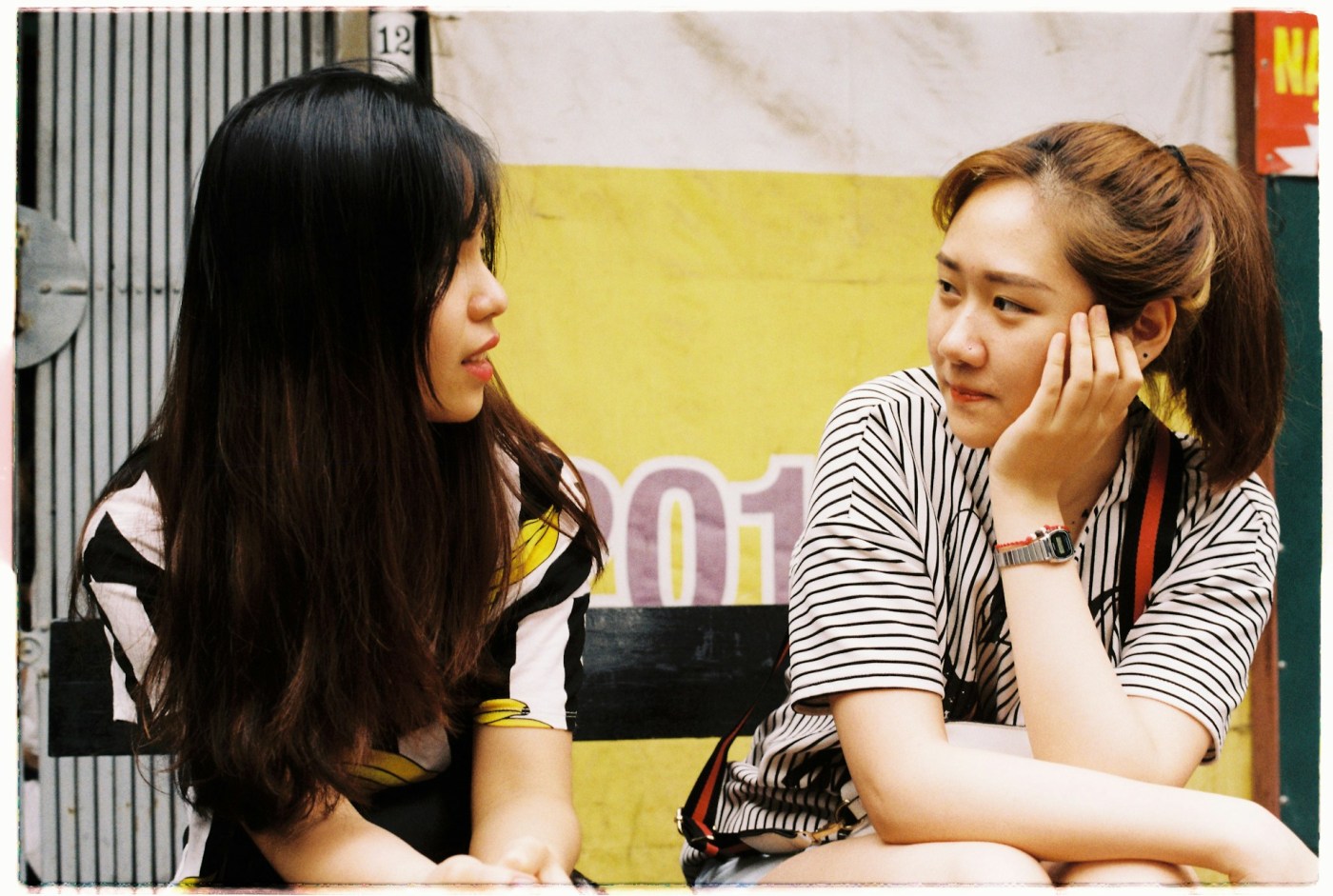
Reflection on life in the gospel according to John shared with CrossVale / Vietnamese Evangelical Church of Australia on 16 February 2025 © Alison Sampson, 2025. This piece includes observations made by Richard Beck in Hunting Magic Eels (Minneapolis, MN: Broadleaf Books, 2021) and by Charles Taylor in A Secular Age (Cambridge, MA: Harvard University Press, 2018). Photo by Trung Thanh on Unsplash.
 Alison and the whale