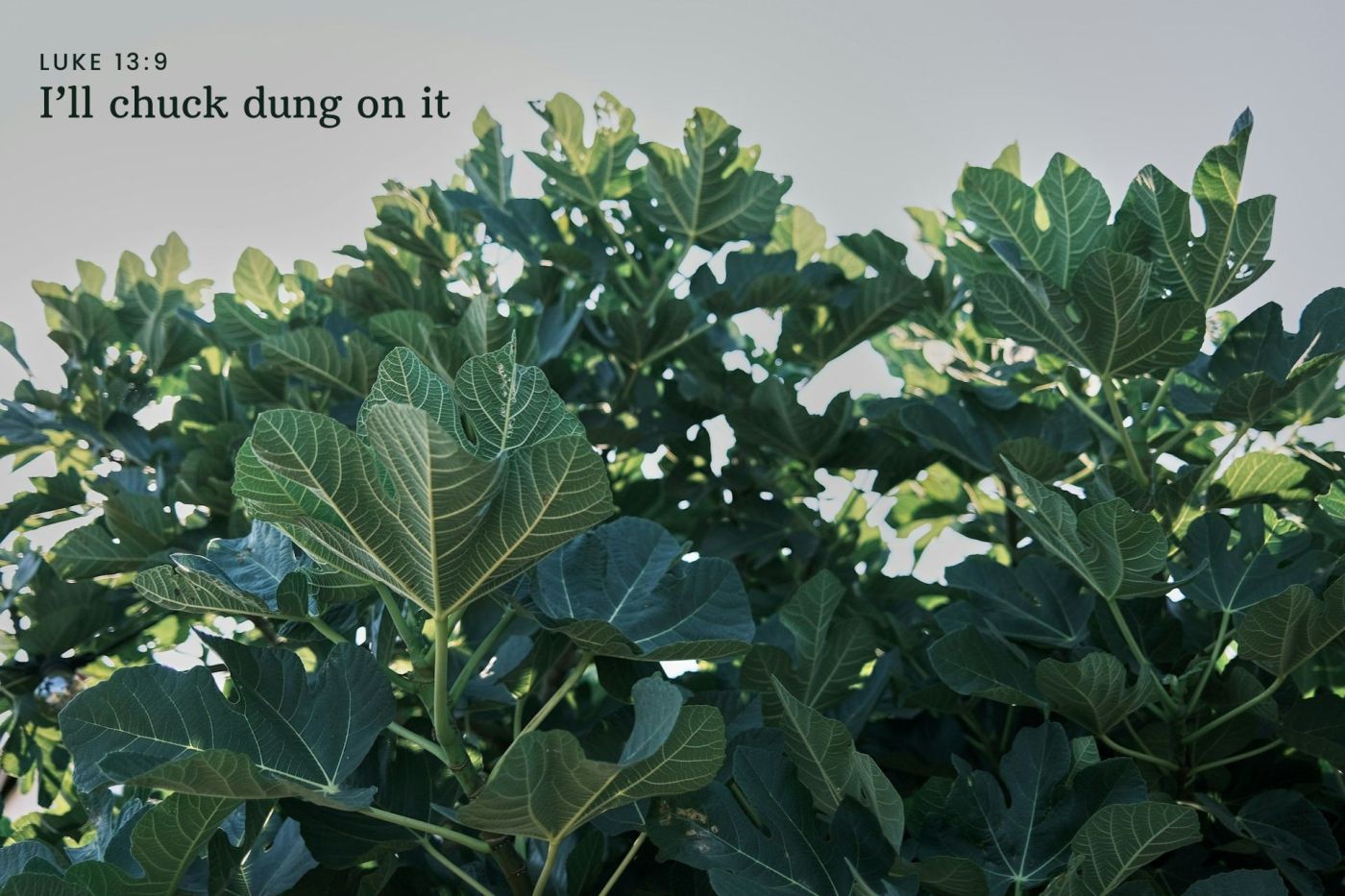
In the face of oppression, Jesus tightens our focus and grounds us. (Listen here.)
Did you hear about Pilate, how he had some Galilean pilgrims murdered along with their sacrifices? Their blood – I can barely say it – their blood was mingled with the blood of their animals on the temple floor. It’s so awful, I can’t really find words. And yet, let’s be honest, are any of us really surprised?
I mean, we’ve all seen how brutal Pilate is, how vicious, how sub-human. I don’t know if he had a traumatic upbringing, or if he’s just a typical Roman. What I do know is we have to get the Romans out. Every last one of them, by any means possible. I know, I know, we’re supposed to be people of peace, but they’ve really crossed the line. They’re killing pilgrims now. Women. Children. You have to defend yourself against these monsters. Jesus, wouldn’t you agree?
I’m riffing on a story from long ago, but it all sounds painfully familiar. Just change the names and locations, and substitute different horrors, and it’s the same old story. Wherever it resonates, you hear the talk: Do you know what Netanyahu did? What about Viktor Orban? Archbishop Kirill said this. Putin did that. Ali Khamenei ordered this. Min Aung Hlaing is doing that. And did you see Elon with the chainsaw? And did you hear Trump, Trump, Trump?
Wherever it resonates, you also hear voices that say, ‘Those brutes are the basically the anti-Christ. There is something about them that is fundamentally wrong. They’re completely broken, sub-human, awful. They ignore every moral code, even the rules of war. They have no sense of common decency, let alone justice. And did you hear they did this? And that? And that?’ And so we stoke the fires of outrage, build up our own sense of righteousness, and define ourselves against the other through powerful corporate identities.
Today’s story, then, is a story for now. And it’s a story for people in a polarised society coming up to an election in an AI-shaped social media age. Because, did you hear what Dutton did? Do you know what Albanese said? The Greens want to take away your right to parent! Labour wants to ban all religious expression! This candidate is a TERF, a radical, a reactionary! That candidate is a socialist in disguise! On and on and on it goes: the stoking of outrage, the spreading of images and stories which are very rarely fact-checked and so often untrue. And we do it because those people – whoever those people are – are vicious lying bastards. They’re broken, sub-human, awful. They have no sense of common decency, no interest in justice. We can’t let them rule over us, we can’t let them win. By any means necessary, Jesus, wouldn’t you agree?
But this attempt to get Jesus on our side never seems to work. Because how does Jesus respond in Luke’s story? In essence, he says that shit happens, and that unless you get your shit together it’ll happen to you, too. Then he rambles on about a fig tree fed by a pile of shit.
If you are offended by my language, blame it on Jesus. Because in the face of his disciples’ outrage at the death of innocents, he is deliberately deflating. He is not saying that the Romans are paragons of virtue, gentleness and grace. He doesn’t condone their actions or say that they’re okay or pretend that what they do is anything other than oppression. But he refuses to be drawn into the disciples’ outrage. He will not let them be defined by their enemies, nor will he let them become warriors of righteousness made in the image of their oppressors. Instead he asks them hard questions, and talks of manure, and brings everyone back to earth.
For when faced with the news, Jesus asks, ‘Do you think that these Galileans were worse sinners than all the others because they suffered in this way?’ When his listeners think, ‘Of course not!’ they realise what he’s suggesting: that righteous people can experience terrible events. And with that Jesus is rejecting the entire Deuteronomic system of blessings and curses. Choose goodness, says the God we meet through Moses. Choose life, and you will prosper. But Jesus effectively says, yeah nah. Shit can happen to anyone.
More, he implies that particular shit will happen when people don’t get their priorities right. Because Jesus’ question to his followers is linked to *how* those Galileans suffered. Were they worse sinners because they suffered ‘in this way’, he asks. What, then, is ‘this way’?
Well, he names two terrible events: pilgrims murdered, and the collapse of a tower. These can be dismissed as random shit, or they can be understood as state terror.
Because when pilgrims are slaughtered and their blood mingled with the blood of their sacrifices, this is the violence of soldiers with swords. And the collapse of a tower might be the result of shonky building practices or an earthquake, but in context is more likely because of a siege engine and battering rams. So the slaughtered pilgrims have been killed as a warning by the state, and the eighteen who died when the tower fell are like every Palestinian who dies when a building collapses after being hammered by Israeli bombs, or every Ukrainian ditto in the Russian invasion. In other words, the Galileans Jesus names here died as the result of an invading army violently suppressing any hint of insurrection.
With these acts of state violence going on around them, there’s no wonder that the disciples are outraged. These acts are indeed outrageous. And yet, if they’re thinking of taking up arms, Jesus says no, it just makes everything worse.
In Matthew’s account, he’s explicit: ‘Those who live by the sword die by the sword.’ (26:52). But the Jesus we meet in Luke’s story also insists on nonviolence. When his disciples wonder about punishing a Samaritan town which denies them hospitality, Jesus is furious with them and says, No way! And when his disciples offer him a breathless story about outrages committed by the Romans, Jesus insists that those who rebel with violence against the occupation will know only violence in return. ‘Unless you repent,’ says Jesus, that is, unless you turn away from making yourselves into the image of your oppressor and instead walk the path of peace, ‘you too will perish.’ If you insist on taking up arms and joining the rebellion, you and your people will die violently.
Of course, in 70CE, this is exactly what happened. The Romans crushed a Jewish revolt and destroyed Jerusalem. Up to half a million Jews were slaughtered by sword, and by the walls tumbling down. But for now, this disaster is simply gestured at; for now, it’s just a warning. For now, Jesus is letting his followers know what will happen when they reject his way of peace: and then he tells a story about a fig tree.
Now, the tree is non-fruiting, standing there in the vineyard. His first audience would have immediately recalled scriptural images: Israel as a vineyard, its relationship with God as a fig tree. So what is this particular tree doing? It’s just taking up space. It’s doing nothing, it’s feeding no one, it bears no fruit. Eventually the owner becomes fed up and tells the gardener, ‘Cut it down.’ And we’re back to the earthy language. Because the gardener says to leave it alone for one more year. ‘I’ll loosen the soil and dig in some shit,’ he says: maybe it’ll be fruitful next year? And if not, then I suppose you can cut it down.
Jesus’ listeners have just been telling him about horrific deaths. They are no doubt seized with outrage, convinced of their own righteousness, ready to join the revolution and destroy the oppressor or die trying. But Jesus is saying, come back to earth. Get your own house in order. Be grounded, be manured: then bear good fruit. In other words, be loving, be joyful, be patient, be kind. Be gentle, be good, be faithful. Break bread with friend and enemy alike. Be transformed from the inside out and, through love, transform your oppressors. Don’t become like them; don’t use their tools; don’t let them define you. Instead, let Christ shape you. Become a community of gentleness and grace; show the world how it’s done.
This all leads me to wonder, where are you sinking your roots these days? Where are you focussing your energy and attention? Where are you getting your information? Are you spending your days doomscrolling, tumbling down internet rabbit holes of fearmongering and rage? Or are you finding out what you need to know while grounding yourselves in God’s word and the goodness of God’s kingdom and the love of God’s people? Are you, and is this community of faith, bearing fruit?
That reminds me, did you hear what … no, sorry, I’m not going there. It’s not helpful and I haven’t fact checked it and it doesn’t bear repeating. It stops with me. Instead, I’ll turn to something good. It’s an excerpt from a letter written in a context where free speech was seen as a threat to the state; it was written by a man who had been jailed for his speech by the prison-industrial complex. And he wrote this:
‘Rejoice in the Lord always; again I will say, Rejoice. Let your gentleness be known to everyone. The Lord is near. Don’t worry about anything. Instead, tell God what you need; give thanks for what God has done. And the peace of God, which surpasses all understanding, will guard your hearts and your minds in Christ Jesus. Finally, beloved, whatever is true, whatever is holy, whatever is just, whatever is pure, whatever is beloved, whatever is reputable, anything virtuous, anything praiseworthy: ponder these things,’ wrote this man in chains. ‘Keep on doing the things that you have learned and received and heard and seen in me, and the God of peace will be with you.’ (Philippians 4:4-9).
My friends, in these turbulent times, amidst all the terrifying presidential orders and horrifying news reports and vicious internet memes and appalling comments made by politicians and uber drivers and maybe your uncle: get your shit together. Fix your eyes on what is good, what is just, what is generous, what is kind, what is true. Things like Nowruz, and feast days, and the fruit of the earth, and all the goodness they represent. Things like food shared, and gardens tended, and friendship.
Ponder these things, and keep on breaking bread and sharing your lives and seeking the way of love together. For then the God of peace will be with you, the God who intimately knows every outrage and grief yet who still wells up in us and among us with irrepressible life and joy. Rejoice in the Lord, always; again I say, rejoice! Ω
Having gathered around a beautifully set Haft Sin Table in the church, we then moved to a Nowruz feast, prepared by Persian members of the congregation and served in the garden. Amidst the grief and pain of people who have been compelled to seek refuge in this country, the God of peace was indeed with us as we celebrated together.
Reflection on Luke 13:1-9 shared with Brunswick Baptist Church on 23 March 2025 (Lent 3 Year C) © Alison Sampson, 2025. Photo by Lora Georgieva on Unsplash (edited).
 Alison and the whale