In places of death, speak words of life. (Listen here.)
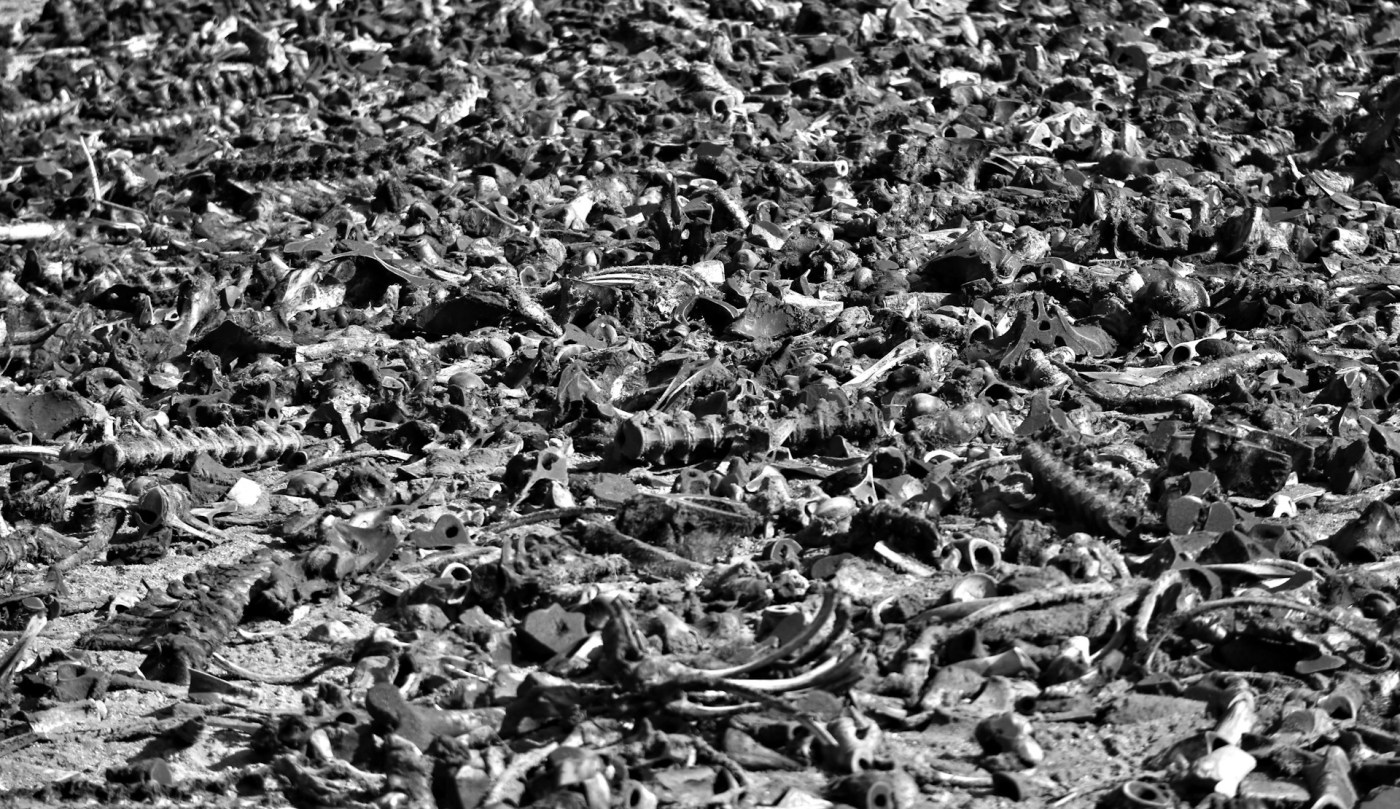
How do you imagine the bones? Do you think of the news reports? The broken bones of young children at an elementary school in Iran, torn apart by an American Tomahawk missile. The bullet-riddled bones in Mexico’s streets left by paramilitary forces and drug cartels. The blood-stained bones in El Fasher; the bomb-shattered splinters in Ukraine; the charred fragments in Gaza. The bones of Rwanda, Cambodia, the Holocaust. Or perhaps you think of the bones which are dotted throughout this country, left to rot in lake, valley and hollow, abandoned in paddocks to dry out in the sun. Do you imagine the bones created by violent policing, by war, by genocide?
How do you imagine the bones? Do you think of the news reports? The broken bones of young children at an elementary school in Iran, torn apart by an American Tomahawk missile. The bullet-riddled bones in Mexico’s streets left by paramilitary forces and drug cartels. The blood-stained bones in El Fasher; the bomb-shattered splinters in Ukraine; the charred fragments in Gaza. The bones of Rwanda, Cambodia, the Holocaust. Or perhaps you think of the bones which are dotted throughout this country, left to rot in lake, valley and hollow, abandoned in paddocks to dry out in the sun. Do you imagine the bones created by violent policing, by war, by genocide?
Or do you imagine a people divorced from Spirit, community and land? Do you think of a desiccated culture obsessed by sport and celebrity, international holidays and home renovations and wealth creation, to hell with the cost? Maybe you think of a political class which still subsidises fossil fuel industries while the Great Barrier Reef is bleached bone-white. Or maybe you think of flag-waving white nationalists protesting against Indigenous folk, against migrants, against change. There’s the boneyard of a society which entrusts all information and the terms of public discourse to the sort of men who think generating fake porn is a joke. Or there’s the vast bone field of artificial intelligence with its death to sustainable energy, clean water, deep wisdom, clear thinking; death to the creative arts, independent journalism, free and fair elections; death to human participation in bureaucratic systems; death to human connection to the earth and other people. So, do you imagine our cultural, social, corporate bones?
Or do you imagine your own heart? So overwhelmed by change, by loss, by death, by grief, by lack of hope for a flourishing future, so gutted by what is happening and so anxious at what is to come, that there’s nothing inside but barren desert and dry old rattling bones.
However you imagine it, God’s question cuts deep: ‘Mortal, can these bones live?’ Ezekiel, who has been brought by the Spirit to stand among the bones, that terrible place where he cannot avoid the evidence of death, has no answer. ‘Lord God,’ he says, ‘you know’: because he, Ezekiel, doesn’t. The horror is too great, the events too overwhelming, the people too divorced from the Spirit of love and life. The world is shattered; everything has disintegrated; everywhere you look you see death. Can these bones live? God alone knows.
It seems impossible. From where Ezekiel is standing, dry bones look like the end of the story. In the sixth century BCE, Israel was invaded by Babylon. Family, friends and neighbours were killed. Bodies were abandoned, with no one to bury them. Buildings were destroyed, the streets emptied of life. Those who survived were sent into exile. Their lives were in tatters and everything they ever knew had been obliterated. They felt completely cut off: from their land; from each other; from their God.
It is to these devastated people – the living dead – that God speaks. What does God say? That God remembers them, and will re-member them and put their lives back together. God sees their dryness, their desiccation, their despair, their living death, and God’s Word will fill them with vitality. God’s Spirit will be breathed into them and give them life, and God will bring them to a place that they love.
There is of course a great danger here, and that is to interpret this promise through a modern colonising lens. Nationalised and militarised, these and similar words are used to justify the dispossession of the Palestinian people and the ongoing expansion of modern Israel. The promise of land linked with God is extremely seductive and very, very dangerous.
But it is the God of life who makes these promises, the God whose Spirit brings vitality and healing. We worship the One who knits bones and people together, not the armies who make more bones. ‘Send forth your Spirit, O Lord,’ sings the Psalmist, ‘and renew the face of the earth.’ (Ps 104, paraphrase). Any understanding of God’s newness, God’s renewal, God’s planting of people in a place and time, must be grounded in this Spirit of life and love.
With this proviso, then, what do the people need to do for renewal to happen? What might it take to be made whole and to be grounded in a place that you love? According to Ezekiel, absolutely nothing. God’s promise is not conditional, and it has nothing to do with human effort. Instead God’s Word does the work, for when Ezekiel preaches God’s Word to the bones and the breath, the bones begin to live.
As the story goes, Ezekiel speaks, and then ‘there was a noise, a rattling, and the bones came together, bone to bone … there were sinews on them, and flesh came upon them, and skin covered them…’ Gradually, the bone dry people are stitched together. The shattered parts are brought together, integrated and given flesh. Yet still, they do not live.
So God tells Ezekiel to preach to the Spirit, the breath, the wind. Spirit, breath, wind: they all translate the Hebrew word, ruah, the feminine life force which emerges from God and carries God’s presence into the world. Ezekiel preaches to the Spirit, saying ‘Thus says the Lord God, Come from the four winds, O breath, and breathe upon these slain that they may live.’ As he speaks, the newly enfleshed people take a breath, then another, then another. With each breath, they are filled by God’s Spirit; they are given life and created anew.
They begin to stand, a great multitude. Perhaps, then, they look around. Perhaps they begin to notice what has happened and what is even now still happening. And perhaps they begin realise how their allegiances have been all wrong. For this story says that, when the people are renewed, they will finally know that the God of life is Lord. In other words, they will realise that nothing else is lord. Not money, not death, not property, not celebrity. Not violence, not religious or political triumphalism. When the bones live, they will see that supremacy is not lord and capitalism is not lord. Corporate profit is not lord and military power is not lord. Nothing which brings death and destruction is lord. Only the life-giving God whose Spirit brings renewal is lord of this suffering world, this dark valley, these dry and desiccated bones.
Perhaps you have read or watched The Lord of the Rings, and perhaps you remember the Ents. They are tree shepherds, vast creatures almost indistinguishable from the trees. They have slept through the centuries and through tremendous destruction, including of the very forests which are their responsibility and their home. Maybe they tried to ignore it. Maybe they thought it would all be ok. Maybe they thought that the powers were too big and the destruction too final; maybe they had succumbed to despair.
But Gandalf predicts, ‘A thing is about to happen that has not happened since the Elder Days: the Ents are going to wake up and find that they are strong.’ And it happens when two gentle little hobbits, Pippin and Merry, encourage the Ents to act. As Gandalf says, ‘their coming was like the falling of small stones that starts an avalanche in the mountains.’ It takes those little hobbit voices, it takes time, and it takes the right time, but at last the Ents awaken and discover just how powerful they really are. Galvanised, they put an end to the destruction and begin the work of repair.
Mortal, can these bones live? When we stand in the valley of the bones, it is tempting to close our eyes. In the face of military horror or climate disaster or sweeping and destructive political and social change, it is tempting to shut down our hearts. In the midst of our shallow, trivial, desiccated culture, hope can seem foolish, naïve. So we plan another holiday, telling ourselves we are too busy, too old, too tired, too ineffective, there’s no point even in prayer. We can fixate on the bones and say that whatever we do will be too little too late, death is the end of the story, we may as well live it up now. Like the house of Israel in exile in Babylon, we might say, ‘Our bones are dried up and our hope is gone; we are cut off.’
But Ezekiel’s vision suggests that God’s Word *will* enflesh us, God’s Spirit *will* enliven us, and one day we will stand together, a great multitude, and find ourselves at home on this earth. And when we do, we will find our voice, we will find our power, we will find strength in solidarity, and we will find our role in the healing of the world.
Because when we know that the God of life is lord, we realise everything else is ephemeral, just smoke. Just as the divine right of kings was challenged, just as chattel slavery and Jim Crow laws and the utter dehumanisation of Indigenous peoples came to an end, just as legal definitions of women shifted people like me from being property to being citizens, just as whaling was banned and proposed dams were blocked and the Wombat State Forest made a national park, just as stone cold hard hearts can be set on fire and former enemies can become friends, all that is death dealing can and will one day fall.
‘Preach to the bones,’ says God through Ezekiel. ‘Preach to the Spirit.’ These words are for all who have ears to hear. So find words of hope and healing, words of love, words of promise. Paint word pictures which bring life, which cast a vision, which tell a different story. Use simple gentle humble words, words of truth and goodness, words a little hobbit might use. Call on the Spirit and ask her to reinvigorate this tired old earth, and pray and pray and pray.
And as God’s Word continues to be spoken to us and among us and through us, may we all wake right up, come even more alive, and discover just how strong we are. May we awaken others through the words that we speak, that they too may come truly alive. And may God’s impossible newness continue to unfold, breathing life and goodness into the world. In this valley of death, let us indeed preach to the bones. And with the Psalmist, let us sing and pray: ‘Send forth your Spirit, O Lord, and renew the face of the earth.’ (Ps. 104). Ω
Where & when: Wurundjeri country, Luk (Eel Season). Binap is flowering, butterflies are drifting, and eels are swimming down to the sea.
Reflecting on Ezekiel 37:1-14 with Manningham Uniting Church, 22 March 2026 (Lent 5 Year A) © Alison Sampson, 2026.
 Alison and the whale