Matthew | Life on the margins has its own reward

Jesus expects his disciples not only to offer hospitality, but to receive it: for through this exchange they will be transformed. (Listen.)

Last week, back when it was legal, we had a couple of school families over to mark the winter solstice. We lit a big fire in the fire pit; cooked up a storm; and gathered around our long table for a meal. We chatted and told stories, and gradually the talk turned to politics. At this point, one of my daughters entered the conversation; and she set out her strong and considered opinion on the intersection of power and violence. Continue reading “Matthew | Life on the margins has its own reward”

Housekeeping: A metaphor for church leadership

It’s time for us to start thinking about who will do the housekeeping for the next twelve months. Many churches call these people ‘deacons.’ The word comes from the Greek diakonos, which means ‘one who serves.’ We sometimes call it ‘church leadership’, but it’s a funny sort of leadership. It’s low status, usually thankless, and only noticed when it’s not being done: like housekeeping; and, like housekeeping, many of the tasks are mundane and require no special expertise beyond a deep willingness to serve. And, like housekeeping, it takes time each week to keep things ticking over. This is what it involves: Continue reading “Housekeeping: A metaphor for church leadership”

Genesis | Dear Hagar: Letter from a white woman

The stories of Sarah and Hagar have been appropriated by white colonial peoples to devastating effect. Here is one white woman’s acknowledgement and response. (Listen.)

Dear Hagar: Today I read the stories about you, and Sarah, and Abraham. All my life, I’ve been taught that Sarah is the matriarch and great-grandmother of my faith; but I pretty much ignored her story. And yours. But today I read them, and this is what I saw: Sarah never once used your name; you’re just ‘the maidservant’ or ‘that slave.’ She forced you to sleep with her husband because she needed a son. But when you got pregnant, she was so threatened that she accused you of being ‘uppity’ and she abused you. Continue reading “Genesis | Dear Hagar: Letter from a white woman”

Romans | Letter to a church facing change

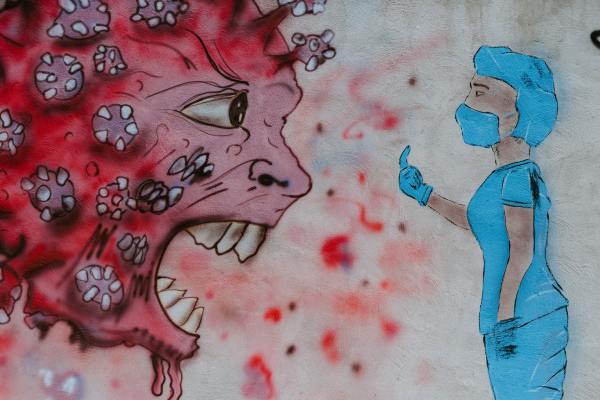
We are in limbo. The old has passed away, and the new has not yet arrived. For those of us foolish enough to remain in the church, these are terribly uncomfortable times. We don’t necessarily want change; and yet we also know that things can’t stay the same. Christendom is long gone, COVID-19 is real, the world keeps moving online, and these realities are powerfully shaping the future church. Continue reading “Romans | Letter to a church facing change”

Genesis | Welcoming the stranger, encountering the divine

Emerging from shutdown is an opportunity to create space and time in our lives: but for whom? (Listen.)

So here’s old Abraham, dozing in the entrance of his tent in the heat of the day. Sarah’s inside, having a nap. The air is heavy; the afternoon is still. Somewhere, a fly buzzes. And the Lord appears to Abraham and he looks up, and sees three strangers down the road, emerging out of the shimmering haze. Continue reading “Genesis | Welcoming the stranger, encountering the divine”

Genesis | In the face of chaos, a new story

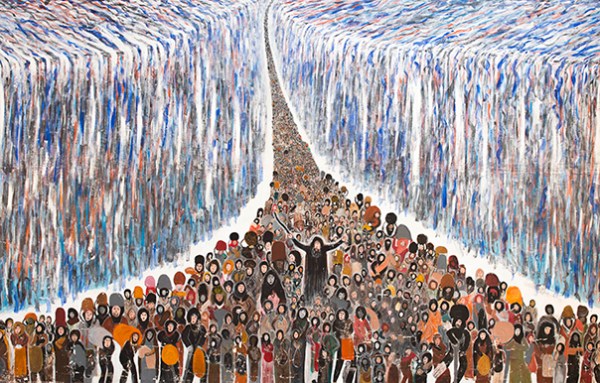
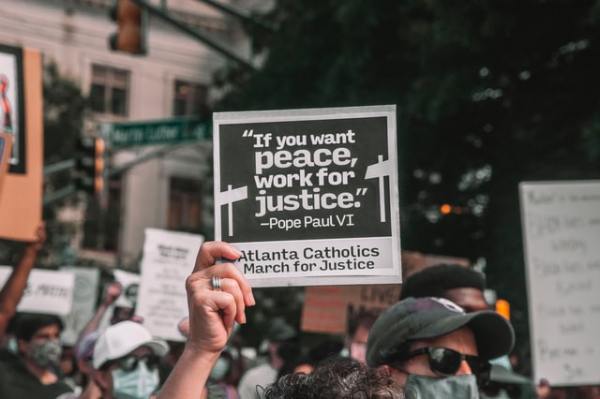
As the Black Lives Matter protests unfold, let us remember an ancient life-giving story, given to a people who were also invaded, removed from their land, forced into slavery and subject to state sanctioned violence. (Listen.)

Explanatory note: Many scholars agree that the sea is an ancient symbol of chaos, and that Genesis was written during the Babylonian exile.

Imagine: Your country is invaded. An army rampages through the landscape, killing men, women, children, even babies: Their heads are dashed against the rocks. Barns are burned; homes flattened; towns looted; cities destroyed. Continue reading “Genesis | In the face of chaos, a new story”

Genesis | ‘Male and female they created them’: Pronouns and the community of God

This coming Sunday, we will focus on the first creation story (here). During the service, I plan to reflect on how God acts in the face of chaos; here, I want to comment on translation. What’s interesting is the name of God and the related issue of pronouns, that is, he/him; she/her; they/them. Most English translations just write ‘God’ and assign a male pronoun; not coincidentally, most English translations have been authored by men. (If in doubt, read through the list of contributors in the front of your Bible. It’s an entirely depressing exercise.) Continue reading “Genesis | ‘Male and female they created them’: Pronouns and the community of God”

Pentecost | Reaching beyond the gathered church

During shutdown, many of us long to gather like the first disciples “all together in one place”; but the Spirit of Pentecost pushed them, and pushes us, to reach far beyond the bounds of the gathering. (Listen.)

Did you feel the poignancy of that first line? ‘When the Feast of Pentecost came, they were all together in one place.’ How I long for us to be all together in one place, gathered into one body, singing, praying, and sharing bread and wine, food and drink, hugs and handshakes. But we cannot. Instead, we remain separate, compelled by the pandemic to huddle in our houses and maintain physical distance. The reality of being gathered all together in one place feels a long way away. Continue reading “Pentecost | Reaching beyond the gathered church”

Pentecost | An invitation to linguistic humility this #NRW2020

Ngata (hello). Last week I met some women who were speaking language. Their conversation sounded like sunlight on a gently rippling stream, like good earth made soft with ash. As they turned to include me, I asked the elder how many languages she speaks. ‘Nine,’ she said, ‘plus English. Usually five around the kitchen table at my house.’ Then she apologised for speaking language in front of me. ‘Should be speakin English,’ she said. Continue reading “Pentecost | An invitation to linguistic humility this #NRW2020”

Acts | How can we be fed by the body when the body as we know it has disappeared?

For churches grappling with the loss of physical gatherings and an uncertain future, the story of Jesus’ ascension provides a model for discernment. (Listen.)

Here at Sanctuary, yet again we have ‘gathered’ to worship via Zoom. It is wonderful that we are able to do this: To see each other’s faces and chat before and after the service; to lead each other through the liturgy; to hear the Word of God proclaimed; to pray together; and to be reminded that, through the power of the Holy Spirit which transcends time and space, we continue to be the church. Continue reading “Acts | How can we be fed by the body when the body as we know it has disappeared?”

Blog at WordPress.com.

Up ↑