Jeremiah | Lament in a time of climate emergency

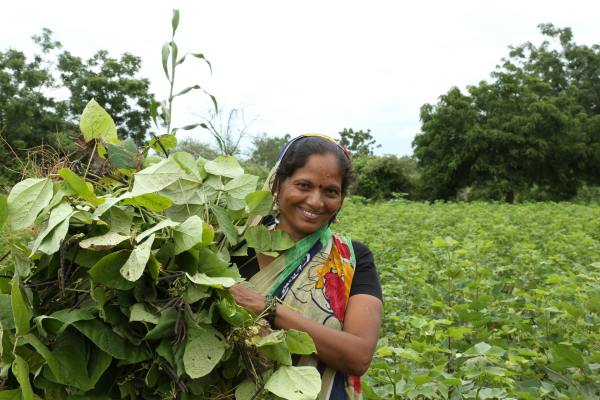
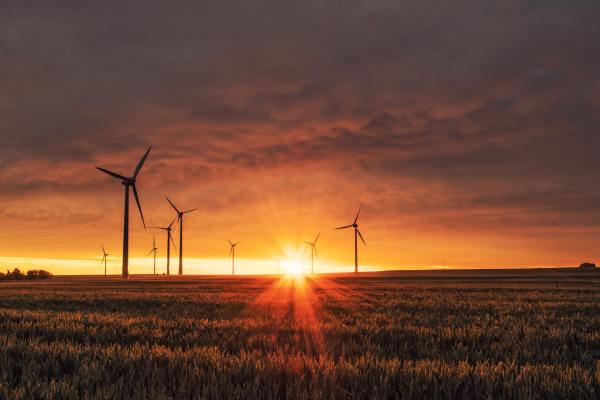
According to Jeremiah 12, injustice leads to land degradation and species loss. In an era of anthropogenic climate change, these words have new resonance and show us how to lament. (Listen.)

How long, O Lord, will the land mourn? How long will degraded topsoil blow away and riverbeds crack for lack of water? How many millions of frogs must die? How many fish? How many bees? How long will the evangelical industrial complex wield your name like a weapon, while passing laws and investing in industries which destroy ecosystems? How many bushfires, how many floods? How many environmental defenders must be murdered? Where is your justice, O Lord? How long must we wait? Continue reading “Jeremiah | Lament in a time of climate emergency”

Wisdom of Solomon | Biblical wisdom, cultural knowledge, and the language of healing

Biblical wisdom leads to understanding the particularities of place and the interconnectedness of all things, and is a source of hope for the healing of the earth. (Listen.)

Note: This reflection is by a white Second Nations person speaking with a white Second Nations congregation, with all the limitations this entails. Yet it seems to us better to fumble our way towards greater understanding than to give up altogether.

Acorn. Dandelion. Fern. Heron. Ivy. Kingfisher. Nectar. Willow. These are but some of the words which were cut from a revised edition of the Oxford Junior Dictionary a few years ago. A dictionary has only so much space, and the editors decided these words were irrelevant to the modern child. In their place, they added other words: attachment, blog, broadband, bullet-point, celebrity, chatroom, committee. Continue reading “Wisdom of Solomon | Biblical wisdom, cultural knowledge, and the language of healing”

Mark | The bitch slaps back

Yes, Jesus calls a woman a dog. It’s not his finest moment. But the bitch slaps back: and he listens, and learns, and grows. (Listen.)

‘Bitch.’ It’s a vicious taunt. Every time I hear it, I’m left enraged, gutted, and gasping, which is exactly what the taunter wants. It’s meant to silence: and mostly, it works. It tells me that the speaker doesn’t see me as fully human. There seems no point in continuing the relationship: so I shut my mouth, and move away. Continue reading “Mark | The bitch slaps back”

Proverbs | Better a dinner of greens

In lockdown some of us are appreciating the simple things and discovering, with the wisdom writer, that some choices are better than others. (Listen.)

If anything good came out of last year’s extended lockdown, it was this: My husband no longer lived in Melbourne part time; he was home every day of the week. I no longer had to operate as a single parent, ever. My daughters were always home, no shuttling to school or activities; and, being self-directed learners, they needed little supervision. No one came over; we didn’t go out. Free from the scramble of sole parenting, free from the drop-offs and pickups and workdays curtailed, free from commuting to Melbourne for work myself, free from activities and dinners and going away on holiday, with meetings cancelled and housework shared: I had time. Continue reading “Proverbs | Better a dinner of greens”

John | For the life of the world

An enfleshed God unites us with the community of all creation and points us to urgent climate action. (Listen.)

There are two kinds of eating, says Jesus; two kinds of food. One, we eat of the created goodness, plants and animals which we rip into with our teeth, and chew and swallow; they are absorbed into us so that we might live. This is the food which perishes. The other, we eat of Christ, ripping in with our teeth, chewing and swallowing. Christ is absorbed into us that we might live beyond simply being alive: this is the food which endures. The first food provides vitamins, minerals, calories, fats; the second, transformation, wholeness, wisdom, healing. The first grants fullness of stomach, here and now; the second, fullness of life in time beyond time. These ways of eating are intimately related: and they point to the care of the whole earth. Continue reading “John | For the life of the world”

John | With Christ as our centre and source, we too become bread

The church is the body of Christ, and so it is our joy to be broken and shared to feed a hungry world. (Listen.)

Do you feed on success, or achievement, or excellence? How about winning, or seeing your team or country win? Do you feed on other people’s approval or praise or pity or love? Do you feed on wealth and power, or being followed on social media? What about the dopamine hit of other people’s ‘likes’? Do you feed on beauty? Do you feed on titbits of gossip, or righteous anger or outrage? Do you need to win every argument? Do you feed on being needed? Do you feed on your wounds? What do you feed on? Continue reading “John | With Christ as our centre and source, we too become bread”

Ephesians | The body of scarred tenderness

The sacred body of Christ is a body of scarred tenderness, aching with love for the world. (Listen.)

At our last leadership meeting, we reflected on how we are members of one body, united and growing in love (Ephesians 4). We observed that we are therefore all connected: what affects one part of the body affects the whole; and this led us to think about the wounded and scarred bodies that form the body we call Sanctuary. For in recent weeks it has become clear that many of us live with chronic conditions or persistent pain: our bodies are exhausted, aching, or screaming in pain. Continue reading “Ephesians | The body of scarred tenderness”

John | Five loaves, two fishes and a pocketful of prayers make a church

God provides abundance where people see scarcity, delights in gathering people to feed them, and comes up with endlessly surprising ways to do so—even during lockdown. (Listen.)

Here we are in lockdown again, and life is feeling small. We don’t see enough people; we don’t share enough meals; we don’t get enough exercise; the walls are beginning to close in. Even when lockdown eases, we know from previous experience that it will take time and energy to reengage with the world. We’ll have new restrictions to navigate and new fears to manage. And after all these months of infrequent socialising, some of us will decide that it’s all too hard; we’ll choose to stay home. Continue reading “John | Five loaves, two fishes and a pocketful of prayers make a church”

Ephesians | Friends beyond any binary

Christ breaks down the walls between all peoples, then unites them together in love. (Listen.)

Male + Female. Gay + Straight. Trans + Cis. Black + White. Neurodiverse + Neurotypical. Progressive + Conservative. Catholic + Protestant. Believer + Unbeliever. And I could go on with the binaries. We live in a world which loves to label people. Sometimes, labels can be incredibly helpful; they can provide a lens to understand ourselves and other people. But all too often, labels are used to make insiders and outsiders; they are used to exclude and condemn. Continue reading “Ephesians | Friends beyond any binary”

Mark | No authority but Christ

When the church operates from a position of power and wealth, it has no authority. (Listen to a much earlier version here.)

I have a confession to make. As I prepared to travel to Canberra and preach on this story, that is, a story where disciples are sent out carrying no bag and no change of clothing, I panicked. I hadn’t been to this city before, let alone this church; and I suddenly realised two things. One, my usual op shop clothes probably wouldn’t cut it; and, two, my only good pair of pants had moved to Melbourne earlier this year with my oldest daughter. So I ran out and bought myself a new pair of pants, and shoved them into my already overflowing bag. Continue reading “Mark | No authority but Christ”

Blog at WordPress.com.

Up ↑