We all know the story. Adam and Eve, naked as jaybirds, are wandering the garden. Then that devious, cunning, and above all evil snake points out the fruit to Eve and whispers suggestively, ‘Take, eat, for then will you be wise.’ Eve plucks the luscious fruit, and bites into it suggestively. Juice runs down her chin and between her naked breasts. Adam swoons. Eve flutters her eyelashes at him; ‘Take, eat, for then will you be wise,’ she murmurs. And Adam reaches out his hand to the ripe and fragrant fruit, raises it to his lips, and eats. In this way does sin enter the world—and it’s all the woman’s fault.
John | No judgement, just paradise
In Christ we discover no judgement, only paradise: so why is condemnation such a feature of Christianity? A potted history. (Listen.)
It is a mystery to me why so many Christians spend their lives condemning people. It is a mystery to me why so many Christians spend their lives feeling guilty and condemned. And it is a mystery to me why I spend so much time condemning myself.
The six steps of grooming
Love one another: It lies at the heart of who we are and what we do as a church. And we are called not just to love those like us, but to love across human boundaries: male and female; gay and straight; rich and poor; adult and child. What this means, however, is that we are loving across power imbalances: and so we near to be clear about love.
Corinthians | Human violence, and the foolishness of the cross
To those reeling from another week in the patriarchy, the cross offers only foolishness: but in that foolishness we find healing and companionship. (Listen.)
Like so many people, I feel overwhelmed by the events of the last few weeks. Parliament House is revealed to be a hotbed of sexual violence; and our Prime Minister cannot imagine it matters until, we are told, his wife prompts him to think of his own daughters. Then the attorney general is named in allegations of historic rape. Meanwhile, the head of the defence force instructs young cadets that they should not make themselves ‘prey’ to predators, and that they can do this by, among other things, avoiding being ‘attractive.’ All this while our training grounds for power, that is, Sydney’s private schools, are publicly revealed as manifestly unsafe places for young women.
Continue reading “Corinthians | Human violence, and the foolishness of the cross”
John | Word made flesh
And the Word became flesh and lived among us, and we have seen his glory, the glory as of a father’s only son, full of grace and truth … From his fullness we have all received, grace upon grace. (John 1:14, 16)
When I was in training, I encountered many theories about what a pastor is and does. Nouns flew around: shepherd, leader, manager. Verbs, too: healing, guiding, sustaining, reconciling. Sometimes it sounded like I was supposed to be a CEO; other times, a badly trained therapist; still other times, a salesperson for the gospel. I was told to work out where I fit in the APEST model—apostle, prophet, evangelist, shepherd-pastor or teacher—and was told, simultaneously, that the church has no need for pastors or teachers these days. I explored Biblical metaphors—struggling Jacob, raging Jonah, and Simon’s mother-in-law, whose healing led to ministry—but the powers that be told me these reflections were irrelevant, even faintly ridiculous.
Philippians | Slow reading | Seeking the mind of Christ
From a young age, we are encouraged to know our own mind and push our own opinion, and winning an argument is often seen as more important than loving. According to the Apostle Paul, however, “Knowledge puffs up, but love builds up. Anyone who claims to know something does not yet have the necessary knowledge; but anyone who loves God is known by God.” (1 Cor. 8:1b-3). He was writing in a context where people were making technically reasonable arguments, yet their conclusions were hurting others; and he argued that even the best theological reasoning meant nothing unless it led to love.
Continue reading “Philippians | Slow reading | Seeking the mind of Christ”
Mark | Change your thinking, claim your life
Repentance is about changing your mind, and accepting the freedom which this new perspective brings. (Listen.)
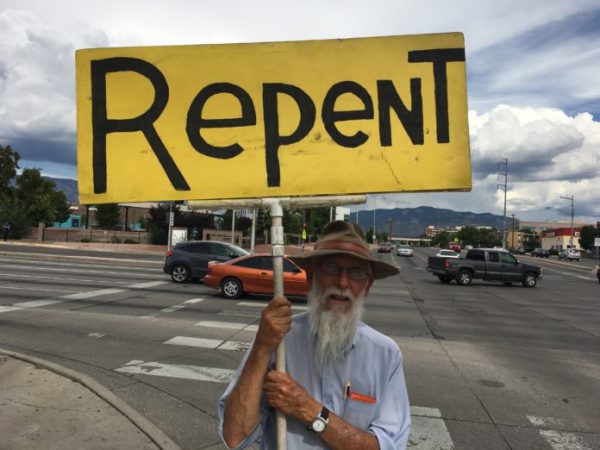
Once upon a time, long long ago, I had a great-uncle who was slightly mad. He used to parade up and down a major traffic bridge wearing a sandwich board; on it, large letters proclaimed, ‘Repent!’ I don’t know about you, but this sort of thing makes me twitchy. It’s like the time I was sitting in a tram quietly minding my own business, when a bloke I knew to be an intermittently violent psychiatric patient loomed over me and aggressively demanded, ‘Have you been saved?’ To which I replied, ‘Yes, of course,’ and immediately scrambled past him and shot off the tram.
Continue reading “Mark | Change your thinking, claim your life”
1 Corinthians | Slow reading | Many members, one body
The earliest believers were organized into a radically interdependent body, where different members held different gifts, all necessary. As you listen to the text and dwell in the Word, notice any resistance within yourself to the text; notice also what intrigues you, excites you, or makes you want to know more. Continue reading “1 Corinthians | Slow reading | Many members, one body”
2 Kings | The simple cure
We like to make things complicated, but the faith which heals is simple. A word for our graduates moving away to university. (Listen.)
Naaman was hoping for a miracle. ‘Easy peasy lemon squeezy,’ said the prophet’s errand boy. ‘Go wash in the Jordan seven times, and you’ll be made clean.’ Then he ran back inside, narrowly avoiding a boot in the behind.
Acts | Slow reading | The early church
In our society, self-sufficiency and independence are usually perceived as virtues; but here we see the earliest believers organized into a radically interdependent body which fostered unity, growth, and freedom. As you listen to the text and dwell in the Word, notice any resistance within yourself to the text; notice also what intrigues you, excites you, or makes you want to know more.