John | Word made flesh

And the Word became flesh and lived among us, and we have seen his glory, the glory as of a father’s only son, full of grace and truth … From his fullness we have all received, grace upon grace. (John 1:14, 16)

When I was in training, I encountered many theories about what a pastor is and does. Nouns flew around: shepherd, leader, manager. Verbs, too: healing, guiding, sustaining, reconciling. Sometimes it sounded like I was supposed to be a CEO; other times, a badly trained therapist; still other times, a salesperson for the gospel. I was told to work out where I fit in the APEST model—apostle, prophet, evangelist, shepherd-pastor or teacher—and was told, simultaneously, that the church has no need for pastors or teachers these days. I explored Biblical metaphors—struggling Jacob, raging Jonah, and Simon’s mother-in-law, whose healing led to ministry—but the powers that be told me these reflections were irrelevant, even faintly ridiculous.

Continue reading “John | Word made flesh” →

Philippians | Slow reading | Seeking the mind of Christ

From a young age, we are encouraged to know our own mind and push our own opinion, and winning an argument is often seen as more important than loving. According to the Apostle Paul, however, “Knowledge puffs up, but love builds up. Anyone who claims to know something does not yet have the necessary knowledge; but anyone who loves God is known by God.” (1 Cor. 8:1b-3). He was writing in a context where people were making technically reasonable arguments, yet their conclusions were hurting others; and he argued that even the best theological reasoning meant nothing unless it led to love.

Continue reading “Philippians | Slow reading | Seeking the mind of Christ” →

Mark | Change your thinking, claim your life

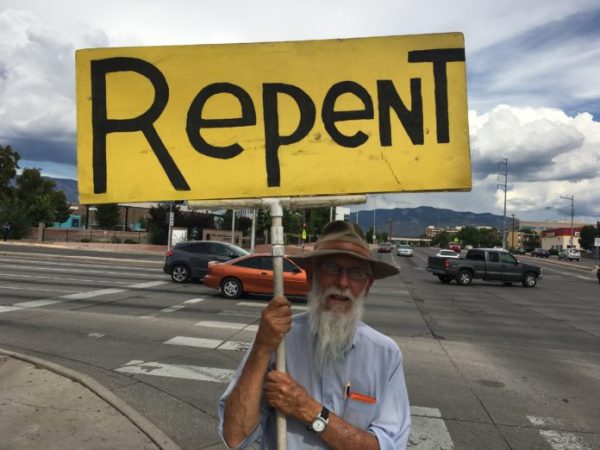
Repentance is about changing your mind, and accepting the freedom which this new perspective brings. (Listen.)

Once upon a time, long long ago, I had a great-uncle who was slightly mad. He used to parade up and down a major traffic bridge wearing a sandwich board; on it, large letters proclaimed, ‘Repent!’ I don’t know about you, but this sort of thing makes me twitchy. It’s like the time I was sitting in a tram quietly minding my own business, when a bloke I knew to be an intermittently violent psychiatric patient loomed over me and aggressively demanded, ‘Have you been saved?’ To which I replied, ‘Yes, of course,’ and immediately scrambled past him and shot off the tram.

Continue reading “Mark | Change your thinking, claim your life” →

Acts | Slow reading | The early church

In our society, self-sufficiency and independence are usually perceived as virtues; but here we see the earliest believers organized into a radically interdependent body which fostered unity, growth, and freedom. As you listen to the text and dwell in the Word, notice any resistance within yourself to the text; notice also what intrigues you, excites you, or makes you want to know more.

Continue reading “Acts | Slow reading | The early church” →

Mark | Jesus-centred ministry: Spontaneous, informal, domestic

Just as the first recognized minister in Mark’s gospel is an unnamed woman in a private home, most ministry today continues to be spontaneous, informal, domestic. (Listen.)

I wonder what Simon’s mother-in-law prepared for Jesus and his disciples. Pita bread and hummus? Rice wrapped in vine leaves? Dried figs, almonds, and a soft mound of goats’ cheese? Because when Jesus visits Simon’s house, Simon’s mother-in-law is sick. But although it’s the Sabbath, and although she’s a woman, and although she’s sick, Jesus touches her. She is resurrected; she gets out of bed; and, most Bible translations say, she begins to serve them: and in the Middle East, that always means food.

Continue reading “Mark | Jesus-centred ministry: Spontaneous, informal, domestic” →

John | Slow reading | Our first task

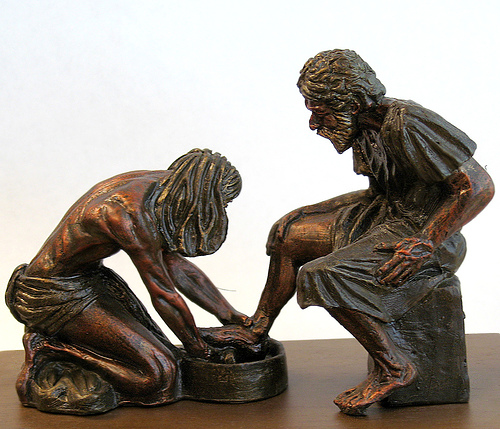
In this reading, Jesus is preparing his disciples for his death. As they share a meal, he shows them how to love one another and gives them a new commandment. This commandment becomes their first task and primary witness in the world: and it is just as relevant to disciples today. As you listen to the story and dwell in the Word, imagine Jesus is on his knees washing your feet. Without judgement, notice any resistance you have to this action; notice any emotions which arise.

Continue reading “John | Slow reading | Our first task” →

Mark | Teachers like Jesus

Great teachers like Jesus use what they know to show you a bigger, bolder, more expansive world. They help you find your place in it, and they build you up in love. (Listen.)

Over the years, I’ve had some great teachers. There was Jim, who began a calculus lesson by leaping around the room at ever-decreasing intervals until he got down to teeny-tiny little mincing steps. There was Ellen, who ignited in me a love for poetry. There was Keith, who turned the Bible upside down with gentleness and grace. Then there are all my other teachers: family and friends and people in churches: because everywhere I go, I find teachers.

Continue reading “Mark | Teachers like Jesus” →

Luke | Being virgin is a superpower

Mary’s virginity has nothing to do with passivity or innocence. Instead, it’s the independent attitude which undergirds her prophetic power. (Listen.)

The first time I heard the word ‘virgin’, I was in primary school. I was confronted by a mean little gang who asked hungrily, ‘Are you a virgin?’ The way they said it, it was clearly a dirty word, and so of course I said, ‘No.’ They howled with laughter, and I felt so ashamed. I asked them to explain the word, but they just snickered some more, then ran off to the next poor sucker.

Continue reading “Luke | Being virgin is a superpower” →

Blog at WordPress.com.

Up ↑