Leading out of weakness and not-knowing

Some days I feel utterly overwhelmed by what I don’t know. I don’t know how to plant a church. I don’t know how to run a Bible study. I don’t know how to include children in worship, and I don’t know how to disciple teenagers. I don’t know how to grow a congregation, or increase attendance, or begin a service while people are chatting or slowly drifting in the door. I don’t know how to free us all from cultural captivity. I don’t know how to truly serve the LGBTIQA+ community or other marginalised groups, or how to galvanize other Christians around climate change. I don’t know how to develop a five-year-plan nor write a sermon, and every week I walk the cliff edge of terror as I try to work the latter out. And as for truly loving and forgiving people: well, the older I get, the less sure I am of this as I become more aware of my frailty, sinfulness and hardness of heart. Continue reading “Leading out of weakness and not-knowing”

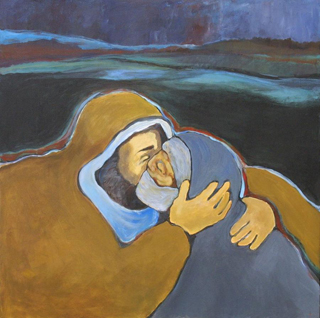
Luke | Touching the untouchable in you and me

Acknowleding our brokenness and need is the path to wholeness. (Listen.)

When I was fourteen, our family moved to Washington, DC. I will never forget the day we arrived. We drove downtown, and everywhere I looked, I saw tents and tarpaulins, refrigerator boxes and flapping plastic sheets. ‘What’s happening?’ I asked, ‘I mean, what’s with all the tents?’ I had never seen a homeless person before, and I didn’t understand that this is how many people live. And I never became accustomed to it: that, in the capital city of the richest country in the world, thousands of people live on the streets. Continue reading “Luke | Touching the untouchable in you and me”

Prayer | Walking the neighbourhood

So, walking the neighbourhood. It’s something many of us do every day: but we can add a layer and turn our walks into an opportunities for reflective prayer. This way of praying is not about praying for the neighbourhood, although you can certainly do that. Instead, it is about ‘reading’ the neighbourhood, and seeking the presence of Christ there. For “the Word became flesh and blood, and moved into the neighborhood” (John 1:14, MSG); and so, just as the Word is present in the Scriptures and speaks through them, so too is the Word present in the neighbourhood and, to those with open hearts, speaks through the neighbourhood also. Continue reading “Prayer | Walking the neighbourhood”

Luke | Mustard seeds and mulberry trees: Acting in hope despite the odds

Jesus commands us to forgive, but with no guarantees regarding the outcome.

Recently, a beloved sister of ours announced her resignation from the church. It’s the kind of thing we hate to talk about – and yet it must be talked about. Not the specifics, by any means, but the implications for the congregation. Unfortunately, people have been leaving churches since the first century: yet it never feels okay. It leaves the individual terribly isolated and vulnerable; and it leaves those who remain with strong and often conflicting emotions: sadness, anger, shame, confusion, deep concern for the one who has left; and even, sometimes, relief – and guilt about that relief. Of course, rumours abound; and they muddy the waters and damage relationships further, so this is an attempt to name a few truths and bring a few things into the light. Continue reading “Luke | Mustard seeds and mulberry trees: Acting in hope despite the odds”

Almost everything we do at church you can do at home, with one important exception

On Sunday we worshipped by walking. Several of us blessed the earth beneath our feet; others walked the prayer labyrinth; still others went on a reflective neighbourhood stroll. Afterwards, someone said, “You don’t need to be at church to do this: you could do these walks anywhere,” to which I replied, “Yes! Absolutely yes! And that’s true of most of what we do here.” Continue reading “Almost everything we do at church you can do at home, with one important exception”

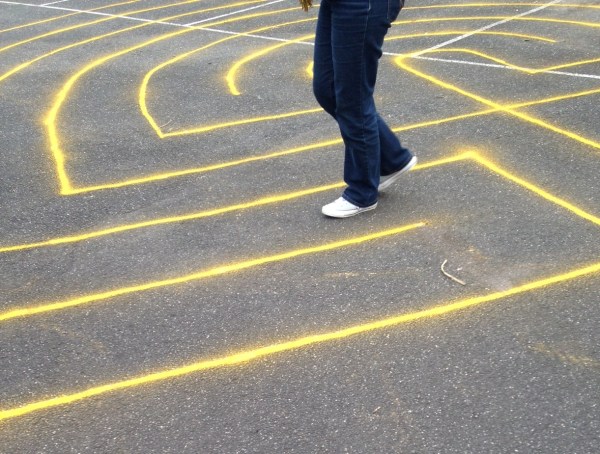
Prayer | Walking the labyrinth

The labyrinth is an ancient spiritual tool. It is found all over the world, in diverse religious and spiritual contexts. It is not a maze or puzzle. Instead, the labyrinth has one path in and out, and following the path is a way of going deeply into what we might call the heart of life. In my experience, walking a prayer labyrinth is always absorbing, always surprising, and often very moving: things deep within me seem to shift, rearrange and reveal themselves as I walk and pray. Continue reading “Prayer | Walking the labyrinth”

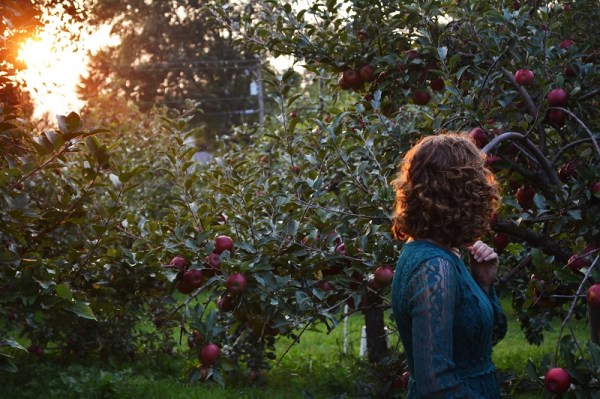
Psalms | Jesus Christ, the apple tree, and me

Indigenous and Christian ways of the seeing reveal a world fully alive, animated by the spirit, and wanting to communicate. (Listen.)

While we were away with our sister church recently, Phil went for a walk. When he came back, Uncle Den wandered up for a chat: “I saw you come back from a bit of a walkabout just now.” “Yep,” said Phil, and he told Uncle Den how much he loves being outside by himself, and how he finds peace and rejuvenation there. Uncle Den asked him, “So do you talk to the birds that you see? Do you stop to listen to what they might wanna say to you? How ‘bout the trees? They’re always talking; do you listen to them, too?” Continue reading “Psalms | Jesus Christ, the apple tree, and me”

Prayer | Climate march and other prayer walks

As we continue our journey through the season of creation, I’d like to introduce you to another method of prayer. Prayer is a way of deep listening. Yet when our minds are busy and distracted, we cannot listen well; and so we need methods to still our minds. One of these is to go for a walk! The repetitive rhythmic movement, and the regular intake and exhalation of breath, can help us find that still centre: the space where we notice the spirit bubbling up and gently prompting us. Continue reading “Prayer | Climate march and other prayer walks”

Luke | Crushed by capitalism? Consider the ravens

Weighed down by capitalism’s incessant demands? Consider the ravens and discover a renewed way of life. (Listen.)

Once upon a time, there was a village. The people in the village had a life that was simple, and good. They hunted; they tended their fish traps; they grew yams. They wove baskets, and stitched and decorated fur cloaks. They walked to the coast and feasted on shellfish; they walked to the grassy plains, lit controlled fires, and waited for the big game to come hopping in. Most people worked about four hours a day; beyond that, they hung out. They kicked a footy around; they considered the ravens and other creatures; they told stories; they pondered the landscape; they traded songs with visitors from other villages and other towns. Continue reading “Luke | Crushed by capitalism? Consider the ravens”

Blog at WordPress.com.

Up ↑