Luke | The loneliness of the Australian colonial capitalist

The deep loneliness of colonial capitalism: and some pointers to an alternative economy. (Listen.)

The fear of saying the wrong thing means too often we say nothing at all. The following is a stumbling attempt to articulate some consequences of the colonial capitalist economy, to note resonances between some Indigenous economies and God’s kingdom culture, and to tentatively imagine a renewed economics which fosters connection and community. Time, space, audience and ignorance mean I necessarily make generalisations and minimise the extraordinary diversity of expressions of Indigenous economic systems. Continue reading “Luke | The loneliness of the Australian colonial capitalist” →

Living the questions

Rainer Maria Rilke writes: “… try to love the questions themselves, like locked rooms and like books that are written in a very foreign tongue. Do not now seek the answers, which cannot be given you because you would not be able to live them. And the point is, to live everything. Live the questions now. Perhaps you will then gradually, without noticing it, live along some distant day into the answer.” Continue reading “Living the questions” →

Luke | Ask, seek and knock for the presence of the Holy Spirit. And that’s it.

Many believe that prayer is a transaction between ‘good’ people and God; but is this what Jesus is really on about? (Listen.)

An old friend of ours, Monique Lisbon, once wrote a satirical song with a chorus that goes like this: God can’t keep track of the human race / when everyone’s praying for a parking space. The song is her response to those Christians who quite literally ask God for everything: personal prosperity, a perfect spouse, a big house in a nice suburb, and a parking space right outside the front. Jesus says, “Ask, and you shall receive,” and so they ask, and ask, and ask some more: for the verse has been widely interpreted to mean that God is a fairy godmother just waiting to reward our earnest prayers by granting our heart’s desire. Continue reading “Luke | Ask, seek and knock for the presence of the Holy Spirit. And that’s it.” →

Through women’s eyes

There’s a depressing phenomenon in the children’s book industry: girls happily read books marketed to both girls and boys, while boys usually only read books marketed to boys. What this means is that boys tend to have their worldview reinforced, whereas girls tend to see the world through the eyes of both girls and boys. It reminds me of the scene in The Hitchhiker’s Guide to the Galaxy, when Trillian zaps Zaphod Beeblebrox with the point-of-view gun. Zaphod, a complete narcissist, suddenly sees the world and himself through her eyes. He reels in shock, then grabs the gun to zap her back. She looks at him and shrugs. “It won’t affect me,” she says sadly, “I’m already a woman.” Continue reading “Through women’s eyes” →

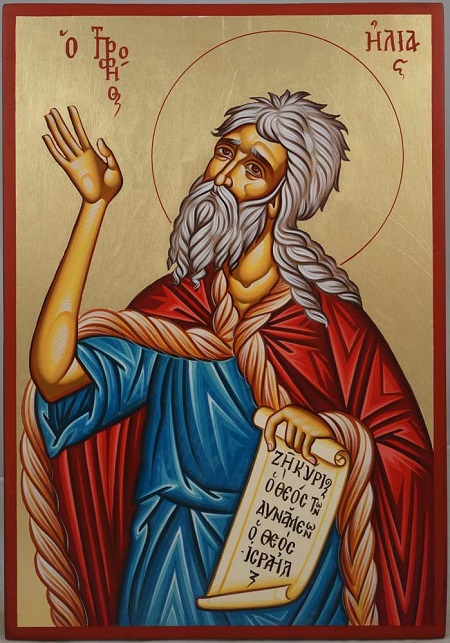
2 Kings | Taking on the mantle

Just as Elisha’s glimpse of God’s reality enables him to take on the prophet’s mantle, our glimpses of God’s kingdom empower us to become disciples. (Listen.)

I’m going to let you in on a secret: There are times when I hate being a grown up. Sure, I get to drive and spend money; but if I make a mess, I have to clean it up. When I drop something on the floor, I have to pick it up. If I do something wrong, I have to put it right. If I’m hungry, I have to cook; if I’m bored, I have to find something to do; if I’m lonely, I have to arrange a playdate; if I’m tired, I have to put myself to bed. When I see a job that needs to be done, it’s usually me that needs to do it. I know I look reasonably competent, but half the time I’m just bumbling around, trying to work out how to serve the church or write a sermon or love my enemy or do any of the other things I’m supposed to do. There are days when I wish a great big mother would drop down out of the sky and clean up my messes, bake me a plum cake, and tell me what to do. Continue reading “2 Kings | Taking on the mantle” →

1 Kings | Spirituality for the chaos of life

Most spiritual teachings assume solitude and silence, but the story of Elijah suggests that a healthy God-centred spirituality is grounded in the hustle and bustle of community. (Listen.)

Once upon a time, long long ago, when my kids were young, I felt for a while that my faith and spirituality had to go on hold. Life was so busy, and the kids were so demanding, and everywhere I went there were people. People needing a nappy change; people needing a story; people needing a cuddle; people needing a cuppa; people needing a neighbour; people needing a friend; people needing a volunteer; people needing a worker. Everything I had ever read about spirituality was about spending quiet time alone with God: yet quiet time alone was exactly what I never had. Continue reading “1 Kings | Spirituality for the chaos of life” →

Brahminy’s prayer, and tips for welcoming children

Do you know the child who spends every service lolling on the floor, or chatting quietly to herself at the dolls house, or snipping paper into a thousand little triangles? The child who rarely speaks, never sings and shakes her head violently when invited to participate? The child whose back is to the congregation and who seems oblivious to everything that goes on around her? Continue reading “Brahminy’s prayer, and tips for welcoming children” →

Proverbs | Lady Wisdom and the gender diverse community of God

Pronouns can limit or expand how we think about people; they can limit or expand how we think about God. (Listen.)

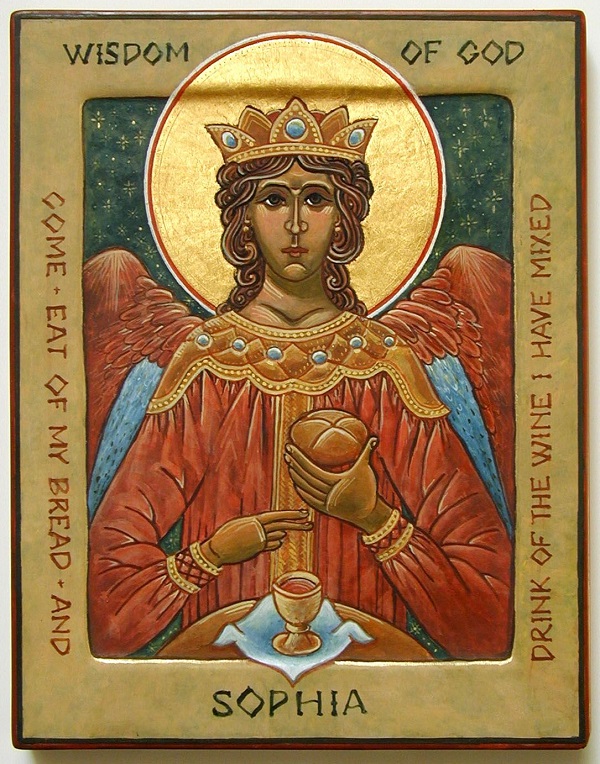
Once upon a time, long, long ago, Lady Wisdom called out at the public places—the city gates, the crossroads, the mountaintops—and she said: “The Lord began the work of creation with me. In time before dreaming I was in on the action; right from the word ‘go’ as the earth began.  Continue reading “Proverbs | Lady Wisdom and the gender diverse community of God” →

Blow through me, Breath of God

Did you know that, in both Greek and Hebrew, the word we translate as ‘spirit’ means ‘air-in-movement’? In Hebrew, it’s the feminine ruah, or breath, which hovers over the waters of chaos in Genesis. In Greek, it’s the gender neutral pneuma which descends from heaven and fills Jesus’ disciples. You get a sense of the Greek word from the English words ‘pneumatic’ (containing air), and my ten-year-old’s favourite word: ‘pneumonoultramicroscopicsilicovolcanoconiosis’, a condition seriously restricting air flow caused by the inhalation of silicate, possibly from a volcano. Phew! Continue reading “Blow through me, Breath of God” →

Blog at WordPress.com.

Up ↑