Genesis | Dear Hagar: Letter from a white woman

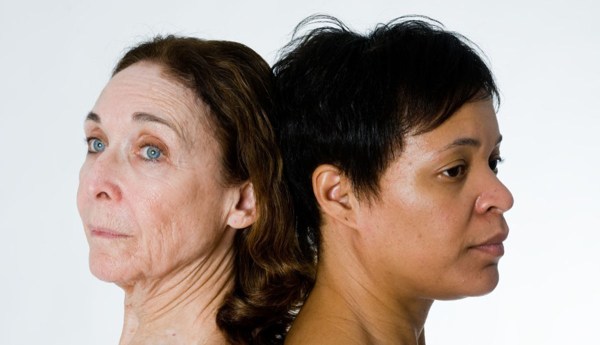
The stories of Sarah and Hagar have been appropriated by white colonial peoples to devastating effect. Here is one white woman’s acknowledgement and response. (Listen.)

Dear Hagar: Today I read the stories about you, and Sarah, and Abraham. All my life, I’ve been taught that Sarah is the matriarch and great-grandmother of my faith; but I pretty much ignored her story. And yours. But today I read them, and this is what I saw: Sarah never once used your name; you’re just ‘the maidservant’ or ‘that slave.’ She forced you to sleep with her husband because she needed a son. But when you got pregnant, she was so threatened that she accused you of being ‘uppity’ and she abused you. Continue reading “Genesis | Dear Hagar: Letter from a white woman”
Genesis | In the face of chaos, a new story

As the Black Lives Matter protests unfold, let us remember an ancient life-giving story, given to a people who were also invaded, removed from their land, forced into slavery and subject to state sanctioned violence. (Listen.)

Explanatory note: Many scholars agree that the sea is an ancient symbol of chaos, and that Genesis was written during the Babylonian exile.

Imagine: Your country is invaded. An army rampages through the landscape, killing men, women, children, even babies: Their heads are dashed against the rocks. Barns are burned; homes flattened; towns looted; cities destroyed. Continue reading “Genesis | In the face of chaos, a new story”

Pentecost | An invitation to linguistic humility this #NRW2020

Ngata (hello). Last week I met some women who were speaking language. Their conversation sounded like sunlight on a gently rippling stream, like good earth made soft with ash. As they turned to include me, I asked the elder how many languages she speaks. ‘Nine,’ she said, ‘plus English. Usually five around the kitchen table at my house.’ Then she apologised for speaking language in front of me. ‘Should be speakin English,’ she said. Continue reading “Pentecost | An invitation to linguistic humility this #NRW2020”

Matthew | This 26 January, pray for an invasion of light

Land of Zebulun, land of Naphtali, land of the Eastern Maar nation: Jesus comes to bring light and healing to occupied territories and colonised people. (Listen.)

Once upon a time, the land was fertile and good. Sparkling rivers threaded through it; lakes teeming with birds dotted it; and on its edge the sea thundered, shimmering with fish. The people of the land tended it for millennia, creating intricate patchworks of forest and field. They enriched the soil and made it friable; they selected plants for abundance and ease. The people caught fish; they hunted and traded; they tended their crops. They built houses and raised children; they passed on law through story and song. Continue reading “Matthew | This 26 January, pray for an invasion of light”

Isaiah | Peace and plenty for everyone

Isaiah’s vision of a new creation promises peace and plenty for everyone: Indigenous, colonial settler, migrant — and koalas. (Listen.)

This reflection was prepared for a local people in a local area. However, its themes are pertinent to every locality in Australia, particularly, this week, those regions on fire because of colonial land clearing and extractive industries which release carbon, heat up the atmosphere and trigger catastrophic fires; and those regions affected by police racism and violence, including Yuendemu, where people are mourning the death of Kumanjayi Walker and protesting continued injustice. Continue reading “Isaiah | Peace and plenty for everyone”

Luke | Crushed by capitalism? Consider the ravens

Weighed down by capitalism’s incessant demands? Consider the ravens and discover a renewed way of life. (Listen.)

Once upon a time, there was a village. The people in the village had a life that was simple, and good. They hunted; they tended their fish traps; they grew yams. They wove baskets, and stitched and decorated fur cloaks. They walked to the coast and feasted on shellfish; they walked to the grassy plains, lit controlled fires, and waited for the big game to come hopping in. Most people worked about four hours a day; beyond that, they hung out. They kicked a footy around; they considered the ravens and other creatures; they told stories; they pondered the landscape; they traded songs with visitors from other villages and other towns. Continue reading “Luke | Crushed by capitalism? Consider the ravens”

Luke | The loneliness of the Australian colonial capitalist

The deep loneliness of colonial capitalism: and some pointers to an alternative economy. (Listen.)

The fear of saying the wrong thing means too often we say nothing at all. The following is a stumbling attempt to articulate some consequences of the colonial capitalist economy, to note resonances between some Indigenous economies and God’s kingdom culture, and to tentatively imagine a renewed economics which fosters connection and community. Time, space, audience and ignorance mean I necessarily make generalisations and minimise the extraordinary diversity of expressions of Indigenous economic systems. Continue reading “Luke | The loneliness of the Australian colonial capitalist”

Blog at WordPress.com.

Up ↑