Isaiah | Peace and plenty for everyone

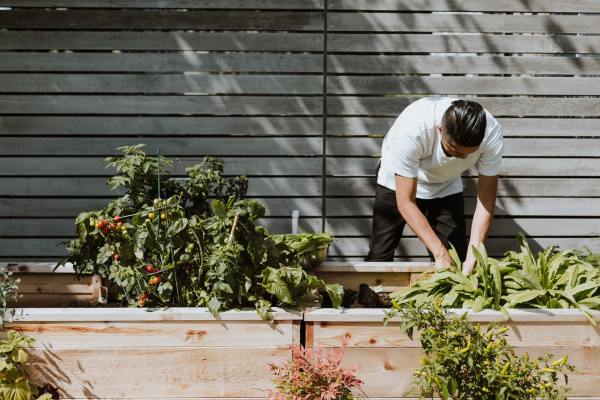
Twenty years ago, Cudgee was a depleted paddock. Now, it’s an oasis. Families have built sustainable homes and are raising their children there. People have planted countless Indigenous trees, grasses, and shrubs. The creek is overhung by eucalypts; blocks are lined with wildlife corridors; koalas grunt and roam. There are organic gardens and orchards; happy chooks; contented ducks; an Indigenous plant nursery; and the best garlic in Victoria. Continue reading “Isaiah | Peace and plenty for everyone”

Prayer | The earth is filled with God’s presence

Let us pray.
We are the people:
the people of earth.
Let us care for each other:
let us care for the earth.
Let us worship the creator:
let us attend to the earth.
For the earth is filled with God’s presence.
Our ancestor Jacob woke from his sleep and said,
“Surely the Lord is in this place—and I didn’t know it!”
And he was afraid, and said,
“How awesome is this place!
This is none other than the house of God,
and this, the gate of heaven.”
Let us acknowledge this place’s traditional custodians,
the Peek Wurrung peoples of the Eastern Maar nation,
and pay our respects to elders past and present.
May we wake up to this place and its peoples.
May we wake up to God’s holy presence.
Let us attend to the earth: the very dwelling place of God. Amen. Continue reading “Prayer | The earth is filled with God’s presence”

Prayer | Write your own collect

Sing to the Lord a new song! Sing to the Lord, all the earth! (Psalm 96:1)

It is good to pray old prayers, tried and tested by generations of the faithful. It is also good to pray in new ways which reflect changing contexts and priorities, raise up our lives here and now, and anchor the biblical story to our own lives and places. We can, of course, pray freely. But as we create new prayers, sometimes it helps to have a structure.  What follows are instructions for writing your own prayer in a form called the collect. Continue reading “Prayer | Write your own collect”

Isaiah | Manna gums and sheoaks

Today I’m in Ballarat at the Intergenerate Conference, where I’m giving a workshop on a practice we developed during lockdown: telling stories in the landscape. As you might remember, for a while we could meet outside in groups of 20, so I drove around to various places for outdoor communion served from our family van (temporarily christened the Manna-Mobile). This story, which I am sharing at the workshop, describes one such event. I hope you enjoy it! 

Imagine: Kirrae Wurrung country. A large paddock fringed by manna gums. Continue reading “Isaiah | Manna gums and sheoaks”

2 Kings | The god of the land

A provocative retelling of 2 Kings 17 for NAIDOC Week. (Listen.)

Once upon a time, there was a cruel empire, formed in the image of its gods. Its navy patrolled the seven seas; its armies marched through foreign lands; its merchants controlled entire regions through trade monopolies and taxes. The empire grabbed and sold slaves and spices, sapphires and silks; it grew rich on stolen people, stolen wealth, stolen land. Gradually, it spread across the globe. One day it reached a strange new land, where mammals hop and giant birds run and bright birds screech and even the stones hum. Continue reading “2 Kings | The god of the land”

Jeremiah | Lament in a time of climate emergency

According to Jeremiah 12, injustice leads to land degradation and species loss. In an era of anthropogenic climate change, these words have new resonance and show us how to lament. (Listen.)

How long, O Lord, will the land mourn? How long will degraded topsoil blow away and riverbeds crack for lack of water? How many millions of frogs must die? How many fish? How many bees? How long will the evangelical industrial complex wield your name like a weapon, while passing laws and investing in industries which destroy ecosystems? How many bushfires, how many floods? How many environmental defenders must be murdered? Where is your justice, O Lord? How long must we wait? Continue reading “Jeremiah | Lament in a time of climate emergency”

Wisdom of Solomon | Biblical wisdom, cultural knowledge, and the language of healing

Biblical wisdom leads to understanding the particularities of place and the interconnectedness of all things, and is a source of hope for the healing of the earth. (Listen.)

Note: This reflection is by a white Second Nations person speaking with a white Second Nations congregation, with all the limitations this entails. Yet it seems to us better to fumble our way towards greater understanding than to give up altogether.

Acorn. Dandelion. Fern. Heron. Ivy. Kingfisher. Nectar. Willow. These are but some of the words which were cut from a revised edition of the Oxford Junior Dictionary a few years ago. A dictionary has only so much space, and the editors decided these words were irrelevant to the modern child. In their place, they added other words: attachment, blog, broadband, bullet-point, celebrity, chatroom, committee. Continue reading “Wisdom of Solomon | Biblical wisdom, cultural knowledge, and the language of healing”

Mark | The bitch slaps back

Yes, Jesus calls a woman a dog. It’s not his finest moment. But the bitch slaps back: and he listens, and learns, and grows. (Listen.)

‘Bitch.’ It’s a vicious taunt. Every time I hear it, I’m left enraged, gutted, and gasping, which is exactly what the taunter wants. It’s meant to silence: and mostly, it works. It tells me that the speaker doesn’t see me as fully human. There seems no point in continuing the relationship: so I shut my mouth, and move away. Continue reading “Mark | The bitch slaps back”

Proverbs | Better a dinner of greens

In lockdown some of us are appreciating the simple things and discovering, with the wisdom writer, that some choices are better than others. (Listen.)

If anything good came out of last year’s extended lockdown, it was this: My husband no longer lived in Melbourne part time; he was home every day of the week. I no longer had to operate as a single parent, ever. My daughters were always home, no shuttling to school or activities; and, being self-directed learners, they needed little supervision. No one came over; we didn’t go out. Free from the scramble of sole parenting, free from the drop-offs and pickups and workdays curtailed, free from commuting to Melbourne for work myself, free from activities and dinners and going away on holiday, with meetings cancelled and housework shared: I had time. Continue reading “Proverbs | Better a dinner of greens”

Blog at WordPress.com.

Up ↑