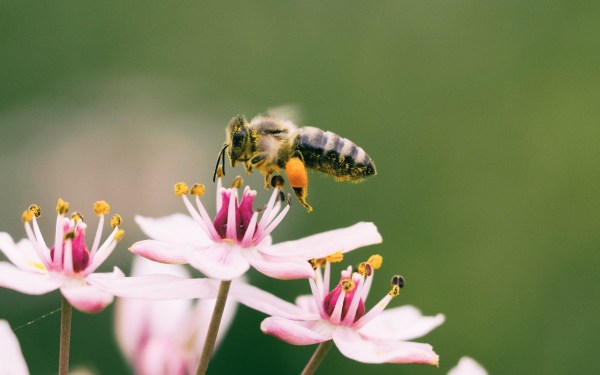
When we moved from inner city Melbourne to regional Victoria, we really noticed the absence of insects. Our garden in Brunswick was dancing with butterflies most of the year, and every shovelful of dirt brought up a mass of worms. Here, there are almost no butterflies and worms are a scarcity. So I’ve planted butterfly-attractors and caterpillar foods, and slowly improved the soil: and I am gradually seeing life return. Still, the absence is striking. Continue reading “Proverbs | Slow reading | Consider the insects”
Psalms | Slow reading | In the vale of death’s shadow
Yesterday there were two funerals as two beloved young people, both killed in the same car crash, were farewelled in this region. I could pile on words of comfort and assurance. I could remind you that those who grieve are blessed. I could assure you that nothing can separate us from God’s love. I could recall the peace which surpasses all understanding, and which so many of us experience precisely at these moments of extreme need. But this week, I don’t think we need more words, just the balm of an old favourite. So let us rest in Psalm 23, and let the good shepherd minister to us all. Continue reading “Psalms | Slow reading | In the vale of death’s shadow”
Isaiah | Slow reading | Your healing shall spring up quickly
Israel is engaging in spiritual practices, but God isn’t responding and Israel wants to know the reason why. We live in an age when spirituality has been privatised and turned into a marketable commodity; where fasting is about slimming and ‘wellness’; where subscription-based meditation apps are best-sellers; where spiritual practitioners push products on goop; where people spend thousands on spiritual retreats; yet anxiety, depression, addiction and autoimmune diseases run rampant. To those wondering, ‘Why isn’t God listening? Why aren’t we being healed?’, God’s answer through the prophet Isaiah is scorching–and there’s not a scented candle in sight. Continue reading “Isaiah | Slow reading | Your healing shall spring up quickly”
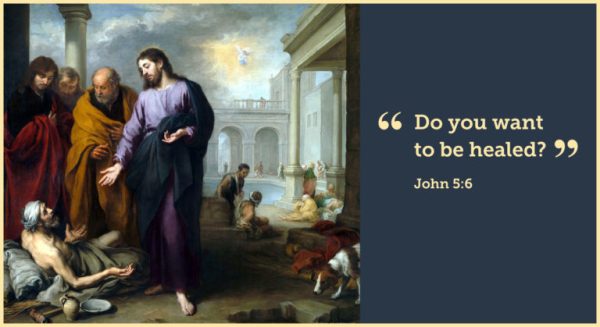
John | Slow reading | Do you want to be healed?
Of course everyone wants to be made well. It’s a no-brainer. Or … is it? Because healing means loss. It means letting go of dependency, taking up responsibility, and walking into a new future: a future often studded with conflict. As you listen to this story and dwell in the Word, you are invited to consider your own attitude to being made well. But first, imagine yourself in the beginning place: lying on a mat by a pool. You are comfortably dozing, and the sun is dancing across your eyelids … Continue reading “John | Slow reading | Do you want to be healed?”
Mark | Slow reading | The witness of women
Mark’s account of the resurrection is very odd, ending in silence, fear and a great big question mark: for the last word of the gospel account is ‘because …’ Most English translations are so uncomfortable with this ending that they drag the ‘because’ backwards, using it to explain the women’s behaviour. Thus we often read, ‘They said nothing to anyone, because they were afraid.’ This is not Mark’s wording. A more accurate translation ends with ‘They said nothing to anyone. They were afraid, because …’ – inviting you, the reader, to enter into the story, and wrestle with the question and the sense of unknowing. With current events in mind, I invite you to dwell on the story, the women, the fear, and the dangling question, as you slowly and prayerfully read and wonder how it continues to speak into our world today. Continue reading “Mark | Slow reading | The witness of women”
Philippians | Slow reading | Seeking the mind of Christ
From a young age, we are encouraged to know our own mind and push our own opinion, and winning an argument is often seen as more important than loving. According to the Apostle Paul, however, “Knowledge puffs up, but love builds up. Anyone who claims to know something does not yet have the necessary knowledge; but anyone who loves God is known by God.” (1 Cor. 8:1b-3). He was writing in a context where people were making technically reasonable arguments, yet their conclusions were hurting others; and he argued that even the best theological reasoning meant nothing unless it led to love.
Continue reading “Philippians | Slow reading | Seeking the mind of Christ”
1 Corinthians | Slow reading | Many members, one body
The earliest believers were organized into a radically interdependent body, where different members held different gifts, all necessary. As you listen to the text and dwell in the Word, notice any resistance within yourself to the text; notice also what intrigues you, excites you, or makes you want to know more. Continue reading “1 Corinthians | Slow reading | Many members, one body”
Acts | Slow reading | The early church
In our society, self-sufficiency and independence are usually perceived as virtues; but here we see the earliest believers organized into a radically interdependent body which fostered unity, growth, and freedom. As you listen to the text and dwell in the Word, notice any resistance within yourself to the text; notice also what intrigues you, excites you, or makes you want to know more.
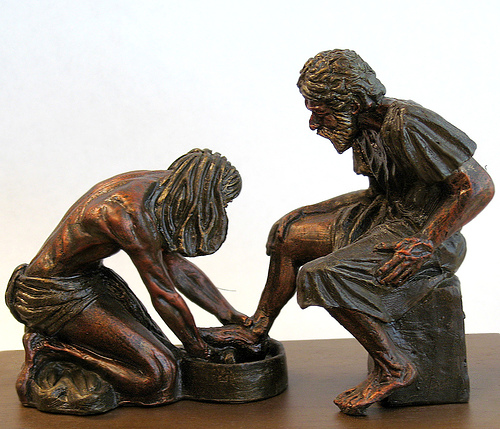
John | Slow reading | Our first task
In this reading, Jesus is preparing his disciples for his death. As they share a meal, he shows them how to love one another and gives them a new commandment. This commandment becomes their first task and primary witness in the world: and it is just as relevant to disciples today. As you listen to the story and dwell in the Word, imagine Jesus is on his knees washing your feet. Without judgement, notice any resistance you have to this action; notice any emotions which arise.
Matthew | Slow reading | A remedy for uhtceare
I absolutely love words, and I just found an absolutely lovely one. Uhtceare, pronounced oot-key-are-a, means ‘lying awake before dawn and worrying.’* It may be Old English, but it’s a word for our times as so many of us are doing just that: tossing and turning as we fret about tomorrow, next week, next month, next year. Continue reading “Matthew | Slow reading | A remedy for uhtceare”