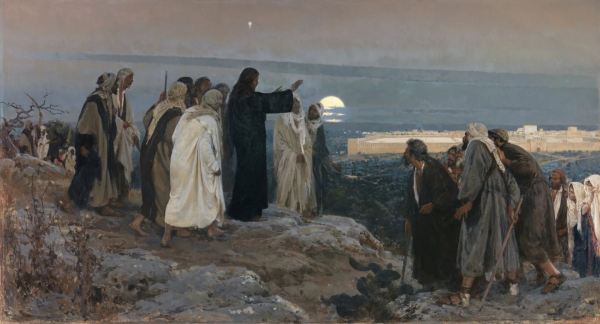
Luke | The things that make for peace

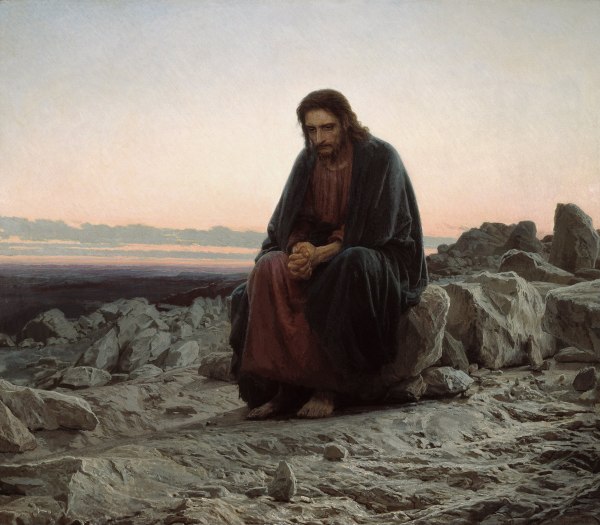
Disciples praise his deeds of power and sing of peace; yet Jesus weeps. (Listen.)

Once upon a time, a baby was born. Angels announced it, and a heavenly host sang, “Glory to God in the highest heaven, and peace to God’s people on earth!” (Luke 2:13). The little one grew in wisdom and stature, and soon enough taught the ways of peace: good news for the poor; release for the captives; recovery of sight for the blind; freedom for the oppressed; and cancellation of all debt (Luke 4:18). Continue reading “Luke | The things that make for peace”
Saints | Reflection and reckoning

The poet sings, “The steadfast love of the Lord never ceases, his mercies never come to an end; they are new every morning; great is your faithfulness.” (Lamentations 3:22-23) – A piece written for Sanctuary for our Lent booklet in 2022, a collection of stories about real people whose lives displayed fruit of the spirit.

I remember my grandfather as a man of gentleness and grace. When I walked into a room, his eyes would light up. He showed his affection with a warm pat then a rub of the forearm, followed by a gentle squeeze; we still call it ‘The Snell Pat’. He always had projects on the go, and would potter around humming “psalms, hymns and spiritual songs” while he worked; every now and then, he’d break into full song.  Continue reading “Saints | Reflection and reckoning”

Luke | Christ, our mother hen

The power of Christ is seen in a mother hen: warm, vulnerable, disarming. (Listen.)

Where is God? We see Russian troops invading Ukraine and desperate people trapped; we hear of Rohingya Muslims being persecuted and Burmese protestors mown down in the streets; we watch Israeli settlers seizing more and more Palestinian land by force; we read of military atrocities and police brutality and institutional violence; we know the reality of domestic abuse; and through it all we wonder: Where is God? Why isn’t God protecting the innocent? When will God punish the violent and keep vulnerable people safe? Continue reading “Luke | Christ, our mother hen”

Luke | If you are God’s child …

Jesus’ resistance to the devil is grounded in knowing himself beloved. (Listen.)

*If.* It’s a very small word with a very big weight, and I hear it all the time. If only I prayed hard enough … If I were a good enough Christian … If I read my Bible more … If I just tried harder … If I really trusted God … How many times have I heard some iteration of this, sometimes from the people I listen to, sometimes within my own head? Continue reading “Luke | If you are God’s child …”

Matthew | Slow reading | You will know them by their fruits

Many will say “Lord, Lord”: and as the last week in politics demonstrated, as we head towards an election this clamour will become ever louder. But followers of Jesus shouldn’t be taken in by it. Instead, we are instructed to look at the effects of people’s words and actions and weigh up whether or not they are truly doing the will of the Father in heaven. Jesus tells us what this will is: “In everything, do to others as you would have them do to you.” By this rule, those whose words and actions marginalize, humiliate, manipulate, diminish, suppress, silence or harm others are not speaking or acting in God’s name, whatever they may claim. Continue reading “Matthew | Slow reading | You will know them by their fruits”

Galatians | It’s not about genitals, but love

There’s been a flurry in the news lately about what it means to be Christian; apparently, it has a lot to do with our genitals. Under the Religious Discrimination Bill currently before Federal Parliament, in order to be legally protected while discriminating against some sexualities and genders, faith-based schools and other organisations need to have a public statement of belief which explicitly rejects those sexualities and genders. Therefore, some “Christian” schools and other organisations have recently circulated statements which claim that what we do with our genitals, and whether they are seen to correlate with our gender assigned at birth, are litmus tests of faith. Continue reading “Galatians | It’s not about genitals, but love”

Palm Sunday | The jester’s joke

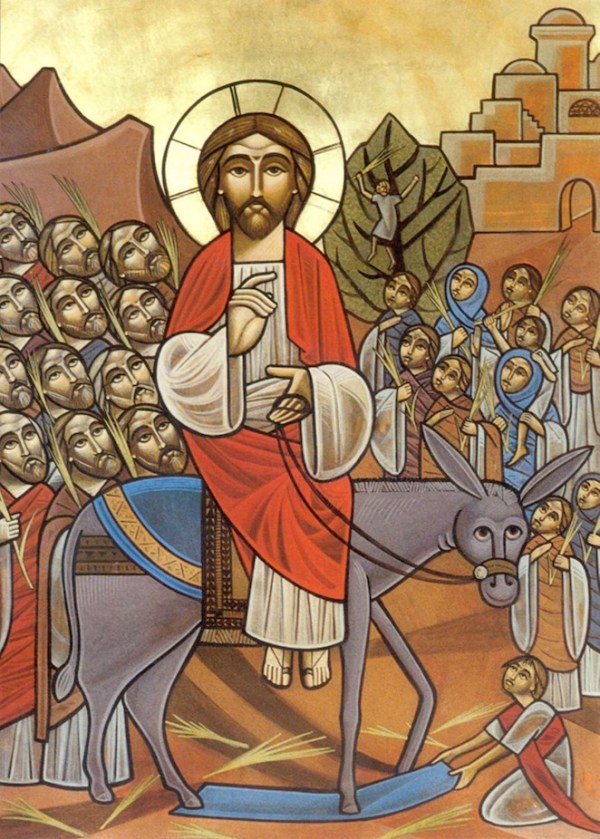
Palm Sunday is not so much a triumphal entry as a profound anticlimax, a raspberry, a fart. (Listen.)

Some days, I’m flooded with awe. I look around and I see miracles. I see people affirmed in equal marriage, and victim-survivors acknowledged and believed. I see households working towards equitable arrangements, women in leadership, women in Parliament. I see small acts of justice raining down, and diversity appreciated in myriad ways: and I am filled with hope.

Continue reading “Palm Sunday | The jester’s joke”

Reset Faith: Empty

Grounded God,
you emptied yourself,
taking the form of a slave
and humbling yourself even unto death.
Empty us of our pride,
strip us of our self-importance,
and recall us to our limits.
Reconcile our circles of concern
with our circles of influence,
that we may stop loudly panicking
and start quietly working
towards your new creation
of reconciliation, justice and peace.
For we cannot solve everything:
but you resolve all things;
and it is not in grand gestures
but in humble service
that you are made known.
In the name of Christ, we pray:
Amen.

Continue reading “Reset Faith: Empty”

John | Word made flesh

And the Word became flesh and lived among us, and we have seen his glory, the glory as of a father’s only son, full of grace and truth … From his fullness we have all received, grace upon grace. (John 1:14, 16)

When I was in training, I encountered many theories about what a pastor is and does. Nouns flew around: shepherd, leader, manager. Verbs, too: healing, guiding, sustaining, reconciling. Sometimes it sounded like I was supposed to be a CEO; other times, a badly trained therapist; still other times, a salesperson for the gospel. I was told to work out where I fit in the APEST model—apostle, prophet, evangelist, shepherd-pastor or teacher—and was told, simultaneously, that the church has no need for pastors or teachers these days. I explored Biblical metaphors—struggling Jacob, raging Jonah, and Simon’s mother-in-law, whose healing led to ministry—but the powers that be told me these reflections were irrelevant, even faintly ridiculous.

Continue reading “John | Word made flesh”

Blog at WordPress.com.

Up ↑