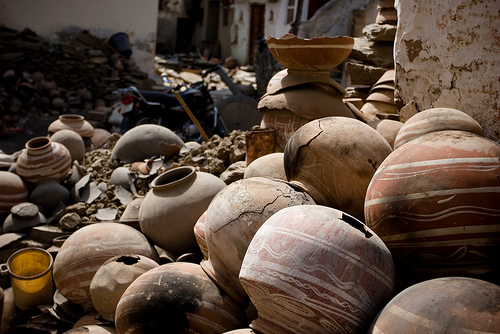
Luke | Our lives, broken and shared

The Risen Christ is recognised when he takes bread, gives thanks, and shares it; just as when we take our own lives, give thanks, and feed others. (Listen.)

They recognise him when he takes bread, gives thanks, breaks it, and gives it away. He has always done this. When he was born, he was laid in a feeding trough. When he grew up, he catalysed picnics and ate at sinners’ tables and barbecued fish on the beach for his friends. He took bread and wine and made them special: and those who ate with him knew an abundance and a welcome they had never known before. Continue reading “Luke | Our lives, broken and shared”

Matthew | Trusting God’s life will prevail

The Apostle Paul said that if Christ had not been raised, then our faith is in vain. So what is resurrection faith? (Listen.)

Time after time after time it comes to this: Violence. Destruction. Despair. Death. This summer, Australia burned; yet the Victorian Government is logging state forests again. COVID-19 rampages the earth; countries are digging mass graves. Men murder their own wives and children, and are sympathetically described in the media. Powerful religious types support oppressive governments and corporations. Pell has his conviction quashed on a technicality. Millions die from tuberculosis and air pollution every year; vulnerable people are trafficked into slavery; and the world turns a blind eye. Violence, destruction, despair and death: they are never very far away. Continue reading “Matthew | Trusting God’s life will prevail”

Ezekiel | A word of life to a nation in lockdown

Through the prophet Ezekiel, God promises life to a people cut off from everything they once knew. (Listen.)

The people were devastated. Family, friend and neighbour had been killed by an invading army. Bodies were abandoned, with no proper burial. Shops were shuttered; streets were emptied of life. Those who survived were in exile, and everything had changed. They could not worship in the usual places; they could not go to familiar shops or town squares; they no longer saw their friends. Continue reading “Ezekiel | A word of life to a nation in lockdown”

John | Born again into self-giving love

Jesus is not asking us to intellectually agree with a set of propositions, but to entrust our hearts to him in love. (Listen.)

Many years ago, I left home and went away to university. I came from a background where people talk about faith and science and politics and everything else, and perpetually wonder and ask questions. At university, I expected the same. I hooked up with the first Christian group which presented itself, but soon felt totally bewildered. I found myself in conversations I never wanted to have, in which the acceptability of women in leadership, the theory of evolution, questions of sexuality and gender, and many other issues were put under the microscope, and my position was always shown to be wrong. Continue reading “John | Born again into self-giving love”

On healing

It is impossible to read the gospel accounts without being struck by the number of healing stories. Everywhere he goes, Jesus heals; and healing is central to his self-professed ministry. “Tell John,” he says, “that the blind receive sight, the lame walk, those who have leprosy are cured, the deaf hear, the dead are raised, and the good news is preached to the poor.” (Matthew 1:4-5). Later, Jesus commissions his disciples to engage in this same ministry—but what is it? Continue reading “On healing”

Matthew | The uses and abuses of salt

Don’t be a moron. Be pure salt. And be ready to be sprinkled around. (Listen.)

Some of my mother’s health kicks were worse than others. I could cope with brown bread, more lentils, less cordial; and we’d never been allowed lollies or chips. But when she decided to eliminate salt, meals became unbearably bland. Flavours no longer melded together, but jostled up against each other; everything lost its savour. “You’ll get used to it,” she’d say. “You just need to retrain your tastebuds.” Continue reading “Matthew | The uses and abuses of salt”

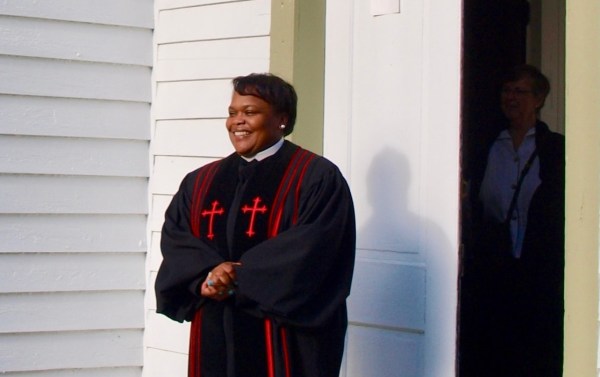
Luke | This resurrection life

The church is called to embody a culture where women are no longer silenced, invisible or subjugated, and all people are called into community. (Listen.)

Every now and then, I get a letter addressed to Mrs Paul Holdway; and I reel. Once I’ve stopped reeling, I wonder who on earth this woman is. She sounds like a shadow, a cipher. She’s probably maternal, almost certainly matronly. I’m sure she’s a great supporter of her husband and good at housework. She probably darns other people’s socks, and I’m sure she makes things for cake stalls and fetes. I have no idea what she herself is like, or what she herself is really interested in, but I do know this: There’s something extraordinarily silencing about having my name obliterated in a letter which is ostensibly addressed to me. Continue reading “Luke | This resurrection life”

All Saints | Remembering the cloud of witnesses

The night Great-Aunty Pete died, she came to my mother on the other side of the country and said goodbye in a dream. After Lindsay died, he came to my kitchen while I was cooking dinner. In his life, he had intellectual and emotional disabilities; when he appeared in my kitchen, he was wise and mature and laughing. He told me not to worry about him anymore: everything was just fine. And I’m sure many of you have similar stories, where the dead have presented themselves to the living, and provided words of love and reassurance. Continue reading “All Saints | Remembering the cloud of witnesses”

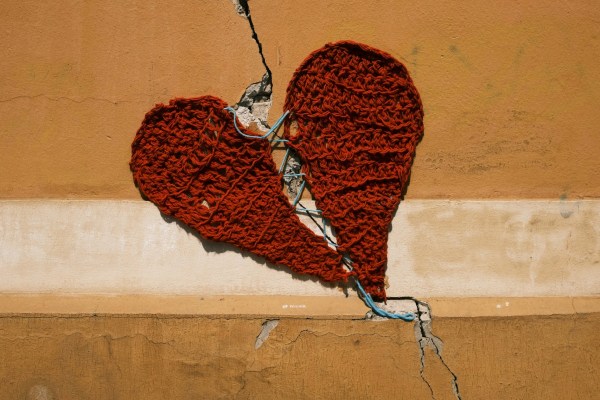
2 Corinthians | The gift of brokenness

I don’t know if it’s the season: perhaps it’s what happens after months of grey lowering skies. But so many of us are struggling right now: struggling with marriage, struggling with depression, struggling with our children, struggling at work. The temptation is to gloss over all these struggles and pretend things are okay; or to back away from church and each other and hide our mess. But the struggle continues: only now we’re struggling alone. Continue reading “2 Corinthians | The gift of brokenness”

Living the questions

Rainer Maria Rilke writes: “… try to love the questions themselves, like locked rooms and like books that are written in a very foreign tongue. Do not now seek the answers, which cannot be given you because you would not be able to live them. And the point is, to live everything. Live the questions now. Perhaps you will then gradually, without noticing it, live along some distant day into the answer.” Continue reading “Living the questions”

Blog at WordPress.com.

Up ↑