Isaiah | The city of joy

Good health, good work, and good relationships come together to form a city of joy, and a people of delight. (Listen.)

A city of joy, its people a delight: this is what God promises through the prophet Isaiah. Sounds wonderful! So, what are the elements of this joyful city? First, says Isaiah, health and wellbeing. No child will die young; no senior die prematurely (Isa. 65:20). And we can imagine it. There are no coal-fired power stations; no rampaging wildfires; no unprecedented floods. There are no smouldering rainforests; no record-breaking heatwaves. No children or elders are struggling for breath through air thick with particulate matter; no one is sick from herbicides or forever chemicals because these are strictly banned; nobody is collapsing from extreme heat. Continue reading “Isaiah | The city of joy”

Isaiah | Peace and plenty for everyone

Twenty years ago, Cudgee was a depleted paddock. Now, it’s an oasis. Families have built sustainable homes and are raising their children there. People have planted countless Indigenous trees, grasses, and shrubs. The creek is overhung by eucalypts; blocks are lined with wildlife corridors; koalas grunt and roam. There are organic gardens and orchards; happy chooks; contented ducks; an Indigenous plant nursery; and the best garlic in Victoria. Continue reading “Isaiah | Peace and plenty for everyone”

Like the child who bursts into a Zoom call

So kids are back at school and yet at home; and parents are at work and yet at home. Parents are now expected to supervise and support their children as they learn online, even while doing their own work – which in itself has become more challenging due to all the changes. Any plans we might have had for juggling work and kids through the school holidays are now being extended indefinitely by the COVID-19 shutdown; while for others, work has suddenly dried up. And so, one way or another, stress levels are heading through the roof. Continue reading “Like the child who bursts into a Zoom call”

Isaiah | Peace and plenty for everyone

Isaiah’s vision of a new creation promises peace and plenty for everyone: Indigenous, colonial settler, migrant — and koalas. (Listen.)

This reflection was prepared for a local people in a local area. However, its themes are pertinent to every locality in Australia, particularly, this week, those regions on fire because of colonial land clearing and extractive industries which release carbon, heat up the atmosphere and trigger catastrophic fires; and those regions affected by police racism and violence, including Yuendemu, where people are mourning the death of Kumanjayi Walker and protesting continued injustice. Continue reading “Isaiah | Peace and plenty for everyone”

Luke | Recognizing our limits

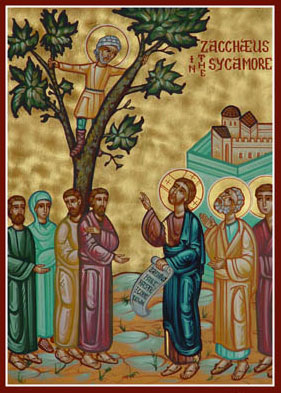
The gospel tells us that Zacchaeus is a man of short stature. He is also limited by Roman rule, by social expectations, and by other people’s judgements. Like Zacchaeus, we too are creatures with limits. We all experience social pressures and expectations; we all have finite time, energy, money, and capacity for relationship. Everything we do conforms to or upsets social expectations; everything we do uses time, energy, money, and capacity for relationship. Wisdom means recognising this, and weighing up our commitments accordingly. At this time of year, then, when many of us are deciding what we will commit to in the year to come, let us reflect on our context, our limits, our commitments, and our relationship with Jesus Christ. Continue reading “Luke | Recognizing our limits”

Through women’s eyes

There’s a depressing phenomenon in the children’s book industry: girls happily read books marketed to both girls and boys, while boys usually only read books marketed to boys. What this means is that boys tend to have their worldview reinforced, whereas girls tend to see the world through the eyes of both girls and boys. It reminds me of the scene in The Hitchhiker’s Guide to the Galaxy, when Trillian zaps Zaphod Beeblebrox with the point-of-view gun. Zaphod, a complete narcissist, suddenly sees the world and himself through her eyes. He reels in shock, then grabs the gun to zap her back. She looks at him and shrugs. “It won’t affect me,” she says sadly, “I’m already a woman.” Continue reading “Through women’s eyes”

Luke | Going deeper at work with Jesus

Listen here.

Close your eyes, and consider your workplace: the place where you put regular time and effort; the place which demands your experience and skill. It might your home, where you raise children, cook and clean. It might be a classroom, where you teach or learn. It might be an office, where you negotiate and communicate. It might be a garden, where you help things grow. It might be a courtroom, or a library, or a factory, or a studio, or a hospital. Wherever it is, whatever you do: consider your workplace. Imagine yourself there. Continue reading “Luke | Going deeper at work with Jesus”

John | The sacrificial cult of work

Listen here.

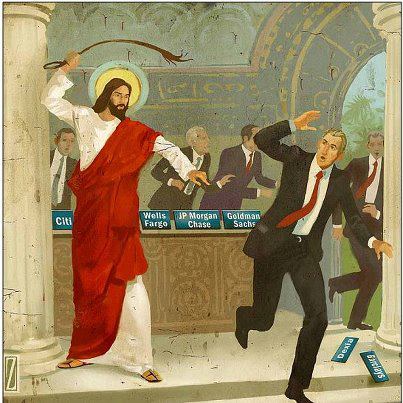
What sacrificial system do we operate in? What system of meaning takes most of our time and energy, gives most of us a profound sense of identity, and for most of us is also an expression of faithfulness? And what same system of meaning can be hostile to women and children, and largely excludes people who are poor, sick, or disabled? For that is what the temple was for Israel: a social, financial, and spiritual hub, which gave people a powerful sense of identity. It was an expression of Israel’s faithfulness; but it was an expression which largely excluded women, children, and people who were disabled, sick, or poor.  Continue reading “John | The sacrificial cult of work”

Blog at WordPress.com.

Up ↑