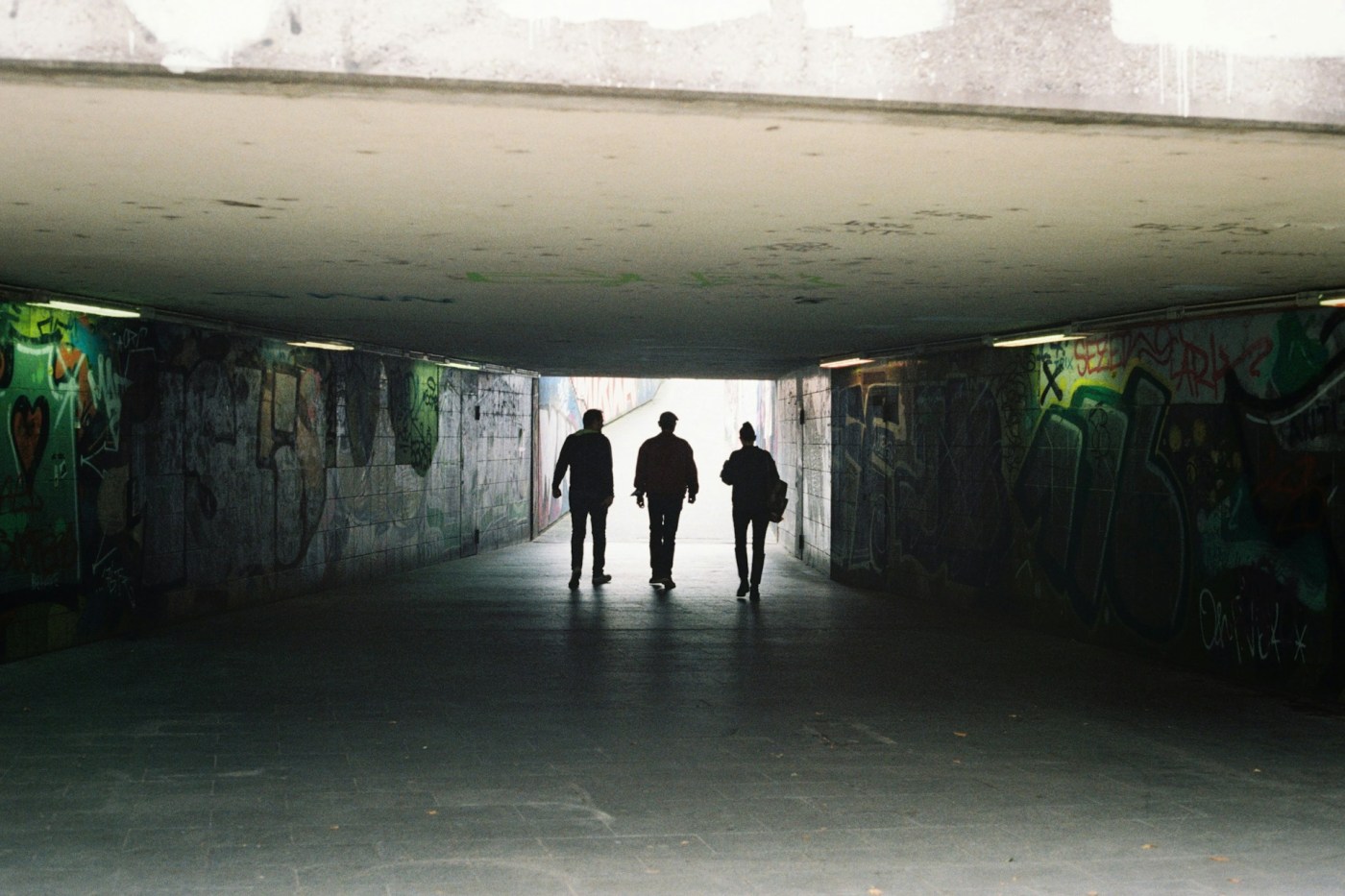
In the shadow of empire and its death-dealing gods, the Risen One comes quiet and unobtrusive. (Listen here.)
‘But we had hoped…’ say the disciples. The words are so deeply familiar. We had hoped that our marriage would endure. We had hoped the cancer was benign. We had it wasn’t dementia. We had hoped our daughter would live. We had hoped our son would come home. We had hoped for clarity, for success, for blessing. Oh, we had hoped.
And we had hoped we would feel the presence of the Holy Spirit. We had hoped we could believe. We had hoped our prayers would be answered, and that God would intervene. We had hoped for a farsighted government, a kinder society, a flourishing church, a healthier family. We had hoped that all manner of things would be well.
Instead we got suffering, humiliation, crucifixion. We got death. We got the shattering of our dreams. We got the confirmation of all our cynicism and despair, and the scream from the cross still haunts us. ‘My God, my God, why have you forsaken me?’ cried the one in whom we had placed our hope. He had promised a new kingdom, but now he was dead. And his tomb is empty, his body is missing, and foolish women are blathering on about ghosts and gardeners. Everything, absolutely everything, has fallen apart.
So we walk away. We turn our backs on all that has happened, and all that is happening, and try to leave it behind. But while we are walking, a stranger appears. We don’t recognise him, but we have a conversation. And he asks, ‘What are you talking about as you walk together?’
‘Did you miss the memo?’ Cleopas replies. ‘Are you the only stranger in Jerusalem who doesn’t know?’ Then he tells the stranger how a prophet powerful in word and deed has been executed by the nexus of church and state. ‘But we had hoped he would redeem Israel,’ he says.
What, precisely, had Cleopas hoped? For Israel’s political liberation? For freedom from Rome? For territory stretching from the river to the sea? For a return to the monarchy, a time of murderous kings and rapacious queens and endless warfare both civil and international? For a return to Joshua, when Israel invaded the land with extreme violence, slaughtering Indigenous peoples and even their cattle, and stealing absolutely everything? Had Cleopas hoped for a return to wilderness wandering, or the fleshpots of Egypt, or Abraham’s hospitality to strangers, or Eden? Had he hoped that Jesus would make Israel great again? We don’t know.
What we do know is that our hopes were dashed, too. And when we tell the stranger about our shattered dreams, he disappoints. We want reassurance or glory or a sharing in our pain, but instead he rebukes us. ‘You nincompoops!’ he says. Then he interprets scripture in a way which shifts our expectations and sets our hearts on fire. Yet still we do not recognise him. It is not until we have strongly urged him to stay and he has broken bread with us that we glimpse Jesus; immediately, he disappears.
This is what I notice. First, the Risen Christ is unobtrusive. We might have hoped he’d bring about a new politics and a new economics, a new reign of justice and peace, a newness of fullness and flourishing: and perhaps he does. But if we had hoped he’d do this by riding a warhorse, brandishing a sword, and getting rid of all the bad guys, we will be sorely disappointed. If we had hoped he’d call down angel armies and storm the Temple, the Knesset and the American Embassy, we shouldn’t hold our breath. If we had hoped he’d have his revenge on all who betrayed, denied, mocked and killed him, and on the mob who brayed, ‘Crucify!’, yet again our hopes will be dashed. And if we had expected a top down approach, this doesn’t seem to be his way, either.
Instead the Risen Christ goes for a quiet evening stroll. He’s just conquered death, you’d think he’d be shouting victory from the rooftops, but he chooses hiddenness, ambiguity, companionship.
And there on the road, he finds disciples so devasted by all that has happened, they’re walking away from the community of faith. He’s so subtle, they don’t recognise him. It’s only when they share hospitality and a dinner roll that they realise who he is; and then he vanishes once more. Perhaps he was among them in the flesh; perhaps they glimpsed him in the space between them when they shared food according to his way. Whatever, however, he was revealed for just an instant in the breaking of the bread, but it seems he will remain elusive.
I also notice Jesus’ commitment to their freedom. He would have kept on walking. He only came in and ate with the disciples after they strongly urged him. He’s not intrusive. He’s not insistent. He doesn’t impose himself on anyone. Instead he waits for an invitation and, if it’s not forthcoming, he heads on down the road.
I notice it’s a relational encounter. ‘What are you talking about?’ Jesus asks, and he allows his disciples to tell their story. ‘This happened,’ they say. ‘We expected this. We feel that.’ He gives them space to articulate all they have experienced, and only then does he reorient their hope.
I notice, too, that his interpretation of scripture sets their hearts on fire, yet it is not enough for them to recognise him. As a preacher, I find this galling. But the story is clear: sermons are not enough. Good theology is not enough. Quiet time is not enough. Bible study and prayer and even holy visitations are not enough. The only way the disciples know and recognise Jesus is through the breaking and sharing of bread. Only then can they look back on other aspects of their encounter and recognise his presence there, too.
Finally, I notice that the revelation changes them. For the disciples are galvanised. No longer heading home with their tails between their legs, they turn right round to Jerusalem. Risking wolves and robbers and the terrors of the night, they race back to the community of faith. They cannot wait to speak with the Eleven of their encounter and how they recognised Jesus in the breaking of bread. And if we peek a few verses ahead, we will see that while they were still talking about these things, Jesus ratified their story by appearing again and eating grilled fish in their presence. Then he commissioned his disciples to witness to newness of life and repentance and forgiveness for all peoples.
We live in a moment when an unspeakably arrogant president portrays himself as Jesus raising the dead. We live in a moment when his Catholic vice-henchman threatens the pope for speaking theologically. We live in a moment when a poster is found on some US military bases depicting white Jesus firing a mortar round. We live in a moment when the Department of War pushes TikTok videos of military ops to young teenage boys declaring ‘Blessed are the peacemakers, for they shall be called sons of God.’ We live in a moment when its grotesque Secretary, a Christian nationalist tattooed with the symbols of the Crusades, speaks Biblical-ish prayer mashups in the Pentagon which reject all mercy and endorse overwhelming violence.
We had hoped, oh! we had hoped for something bigger, something louder, something much more convincing, decisive and effective against the forces of death. Instead we got small and unobtrusive. An evening walk. A mysterious stranger. A conversation. A reorientation of our hope. We got an invitation. A meal. A revelation. We got reunification with the community of faith; a commission, a blessing, a future.
The Risen One walks the road in the cool of the evening, quiet and unobtrusive. The Risen One listens to our deepest concerns then transforms our expectations. The Risen One waits for an invitation before coming in. The Risen One is made known, just for an instant, in the breaking and sharing of bread. An encounter with the Risen One changes us and, through his Spirit, we are filled with passion to continue his work and witness to the way of peace.
Thus we become the stranger listening to others, reorienting hope, seeking the marks of his presence. We become friends well met at the table, where love is truly known. And in these beautiful ordinary moments of encounter and grace lie our deepest hope, our truest joy, and our redemption.
My friends, as the shadow of empire looms over us, peddling a violent overbearing death-dealing God, may the Risen One’s will be done; the Risen One’s love be shown; the Risen One’s peace which surpasses all understanding be known, in this and every place. Amen. Ω
Where & when: Wurundjeri country, Waring (Wombat) Season. In the early morning mists, wombats gallumph along the banks of Birrarung. It’s a time of crisp mornings, clear days, evening shadows.
Reflecting on Luke 24:14-35 with Manningham Uniting Church, 19 April 2026 (Easter 3, Year A) © Alison Sampson, 2026. Photo by Chris Weiher on Unsplash.

