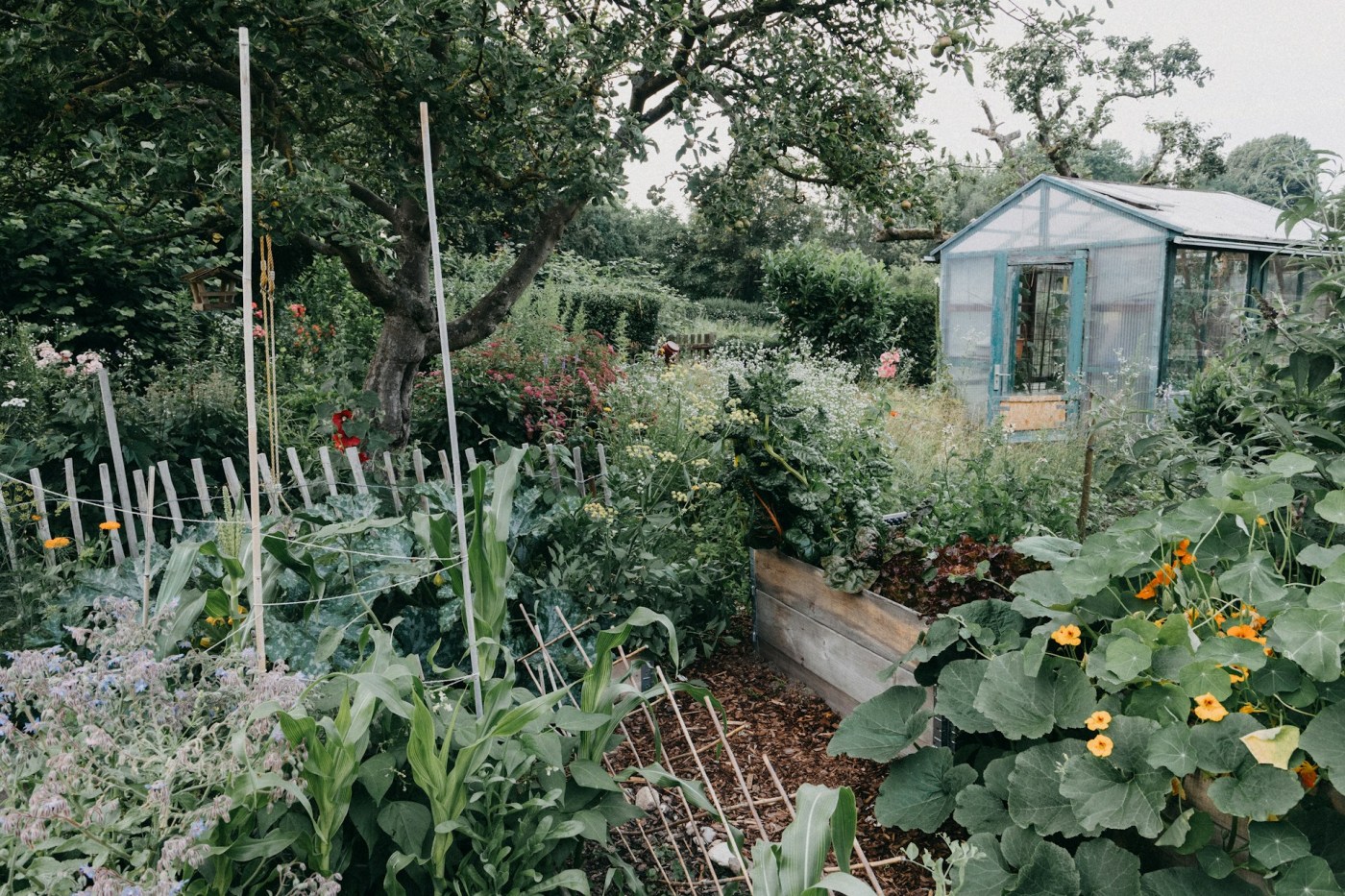
A brief homily given at a recent funeral, for one who loved gardens.
Jim loved gardens. He loved plants, and compost, and growing things. He loved his veggie patch, he loved the wild garden alongside the river, and he loved Wombat Bend. He loved Redgum Café, I suspect not only because it was part of this church, but because of the magnificent redgum which gives it its name.
This is all very fitting for a person of faith, because gardens are central to our story. It begins in Genesis, in the Garden of Eden: a beautiful place of innocence, creativity and newness. God walks the garden in the cool of the evening, crushing thyme between the fingertips. Birds are settling into their roosts for the night; small sounds travel on the evening air; white flowers and silvery leaves seem to glow.
After Jesus’ death, God is again found in a garden. In John’s account, when Mary Magdalene goes to the garden tomb at dawn, she finds it empty. Later, she encounters the Risen Christ: but she thinks he is the gardener. Perhaps he is holding secateurs and a bunch of carrots; perhaps he has a farmers’ tan; perhaps there’s dirt beneath his fingernails. Whatever, she is the first witness to resurrection life, and she runs to share the good news with her friends.
Then in the Revelation of John, a vision which we are told is already being realised here and now, the heavenly city is filling the earth to create a garden city. A crystal fountain flows through the centre of town, and fruit trees line its banks. There’s good fruit for every month of the year, and so there’s always also blossom. The air is threaded with fragrance and the humming of bees; butterflies flit through the sky. The leaves of the trees are for the healing of the nations, and the city is filled with diverse people singing in perfect harmony. Some of them are even Scottish.
All these gardens and more are brought to mind by Jesus’ promise to a dying man, a promise which I shared with Jim shortly before his death: ‘Truly I tell you, today you will be with me in paradise.’ (Luke 23:43). Paradise is simply a Persian word meaning an enclosed park or garden: and Jesus promises that we will one day be there with him. The sin of Adam meant expulsion from Eden, but in Christ’s death and resurrection, all things have been reconciled and made whole. The consequences of sin have been overturned, the gates of paradise have been thrown wide open, and each and every person is free to enter in.
This is the faith in which Jim planted himself: a faith deeply rooted in gardens. It’s a faith which relates to this world, now, as we pull weeds, prune apple trees, and turn compost, and as we enjoy the natural gardens along the riverbank. It’s a faith in which bodies return to the soil, earth to earth, ashes to ashes, dust to dust, yet which also promises life beyond life in the garden. And it’s a faith which suggests we might encounter God at dawn, at dusk, in the in-between spaces of our lives, whenever we are surrounded by growing things.
So let us commend Jim to the love and mercy of the One found in the garden. And in the coming days and months, let seek traces of Jim and perhaps even of his God, each time we find ourselves in a garden. Ω
Where & when: Wurundjeri country, Guling (Orchid) Season. It’s a time of wattles blooming, orchids unfurling, and joeys venturing from the pouch.
A reflection at a funeral at Manningham Uniting Church on 25 August 2026 © Alison Sampson, 2026. Photo by Katharina Bill on Unsplash.

