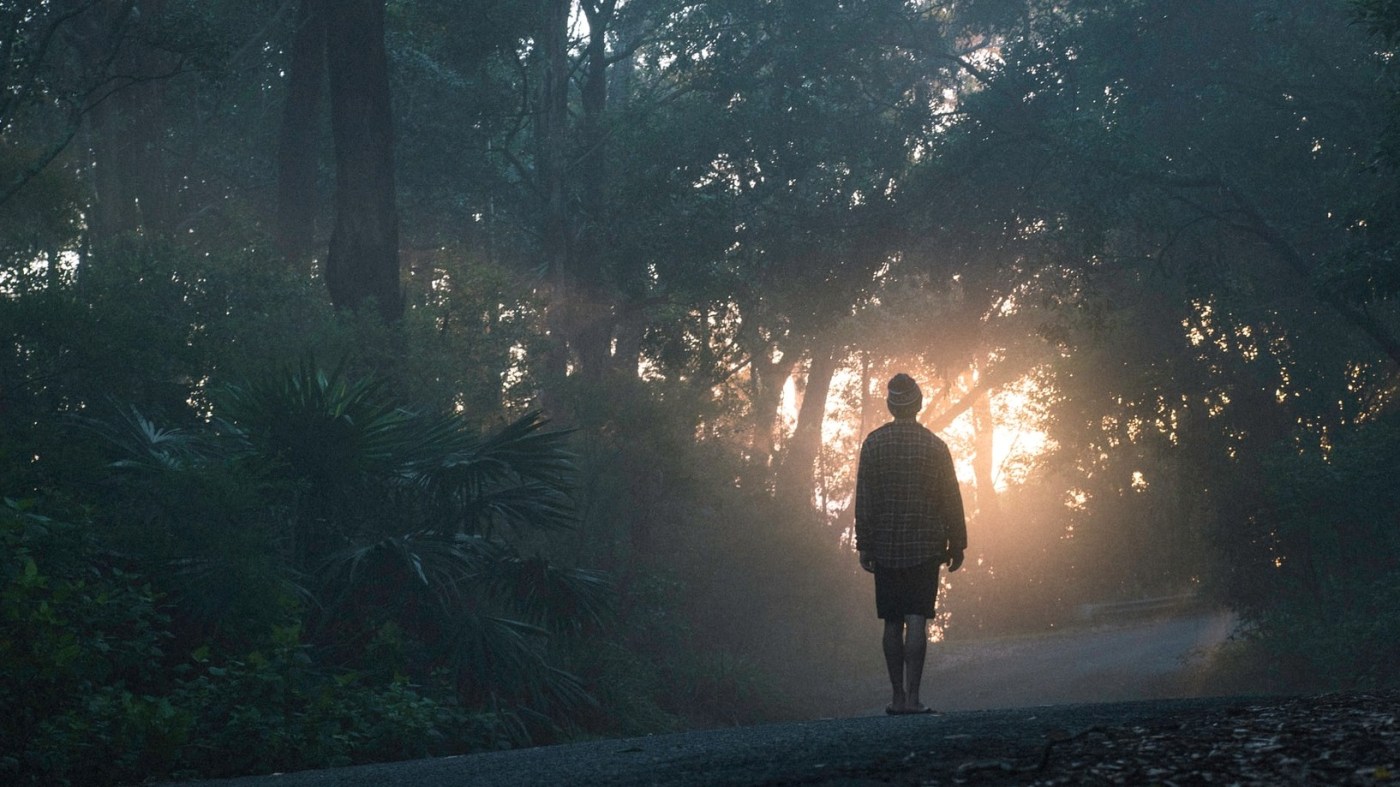
The God of freedom calls us to shape the future through our collective choices. (Listen here.)
The people were far from home. They had been enslaved, and their baby boys were being taken and killed. They were being spoken of in brutal, animal terms. The overseers cracked their whips. The king demanded ever-increasing workloads and allowed no time for rest. The people wept and cried and prayed for mercy while wondering, could anything possibly change?
Among them, someone who didn’t quite belong. Too Egyptian for the Hebrews, too Jewish for the Egyptians, and definitely not a Midianite, Moses calls himself a stranger in a strange land. And here, in the wilderness, he removes his shoes, entering the dwelling of the Presence who can imagine something new.
Moses asks for their Name, and God replies, ‘Ehyeh asher Ehyeh.’ Thanks to a long history of translation, from Hebrew to Greek to Latin to English, and thanks to the Greek philosophical tradition which has shaped our language and worldview, this is usually translated as ‘I am who I am.’ We are given an idea of God as a timeless unchangeable essence, as far from the mess of human life as possible.
But this idea of a removed remote impersonal God is a Greek idea. It’s not Hebrew. And the Hebrew phrase is in the future tense. ‘Ehyeh asher Ehyeh,’ says God: ‘I will be who and how I choose to be.’
In other words, ‘I am the God of freedom, and I will always be free.’ I am free to respond to your prayer, or not. I’m free to take my own sweet time about it, and to do it the way I think best. You cannot control me with spells or witchcraft or animal sacrifice, nor even with your best behaviour or most earnest prayers. Instead, I will listen to your cry, then decide. And when I decide, I am free to interact with history, and to change it. All is not settled in this world; your fate is not sealed; newness, even resurrection, are possible.
My people were enslaved and I heard their cry. I decided to intervene, and changed history.
In another story, I told Isaiah to prepare King Hezekiah for his death. But Hezekiah turned his face to the wall and prayed earnestly. I changed my mind, and he lived (2 Kings 20:1-5).
Another time, I decided to overthrow that wretched city of Nineveh. But the people turned their lives around; and I repented of my plan and did not destroy them (Jonah 3:10).
Indeed, I am free to make my own decisions, and I am open to change. ‘Ehyeh asher Ehyeh’: ‘I will be who and how I choose to be.’ And because God is free, and because people are made in God’s image, people are free, too.
As we heard in the reading from Exodus, God is free to lead Israel into the land of other peoples: and Israel is free to interpret this as an invitation to treaty, like Abram, or to genocide, like Joshua. It’s not that these choices don’t matter – they matter a lot, and their continuing interpretation matters urgently – but Israel is free to make these choices and to experience the consequences. Later, through the person of Jesus, God is free to reject the Joshua tradition and to bring respect, bread and healing to the Indigenous people of the land; and we are free to accept or reject this interpretation and its political implications (see here).
Indeed, we are all free, in each and every thing that we do. Free to uphold the status quo, and free to live differently. Free to vote Liberal or Labor, One Nation or Green. Free to care for life on earth; free to destroy it. Free to clutch onto privilege and power, and free to give our lives away.
This brings me to the second part of God’s utterance: ‘I will be who and how I CHOOSE to be.’ If we are made in God’s image, and we are, then God is saying that we make the future by our choices. We are free to live however we want: but our choices make a difference. Our choices shape the future. Our choices matter.
In Deuteronomy, God says, ‘I set before you the ways of life and death.’ (30:15-18). Because we are free, we can go either way. But, says God, ‘Choose life.’ Choose generosity. Choose forgiveness. Choose justice. Choose neighbourliness. Choose enemy-love. Choose compassion. Choose creation care. Choose for the most vulnerable in your midst, because God wants the whole earth and all her people to flourish.
Many of us feel overwhelmed by the state of the world right now. Wildfires burn across Europe. Glaciers collapse in Nepal. The temperature of the Pacific Ocean keeps rising disastrously. Little birds and mammals and insects are vanishing at horrifying rates, and we are bracing for a long hot bushfire summer.
On the economic front, billionaire tech-bros are engineering massive social change through the manipulation of elections, the control of new and old media, the explosion of surveillance and facial recognition technologies, and the forced insertion of AI into every corner of our lives.
As for faith, the church is rapidly aging and shrinking, and we don’t want to know the reasons why. Climate change is inevitable, capitalism is insurmountable, the church has become a shadow of its former self, and there’s nothing we can possibly do.
At least, that’s the narrative of Pharaoh and of every powerful wealth class since. And if we capitulate to Pharaoh’s voice, we become immobilised and will not follow the many Moseses who are calling us to a different way. But if we can take a breath, maybe get outside and into a quiet place, we just might hear a voice saying, ‘Ehyeh asher Ehyeh’: ‘I will be who and how I choose to be.’
And this God has a funny habit of changing the world in ways we didn’t expect or even imagine. Slavery seemed inevitable, until it wasn’t. The divine right of kings seemed inevitable, until it wasn’t. Jim Crow laws, workforce discrimination, the persecution of gay and trans folk, the slaughter of whales, the use of CFCs and so much more: all seemed inevitable and part of the natural order of things, until enough people imagined a different way and began to live into it.
In the same way, capitalism and climate change and the billionaire class and the death of the church will all seem inevitable until a new imagination takes hold and enough of us begin to live into God’s justice and joy. For we worship an intimate, responsive, changing God who gets involved in the mess of human history and calls us to shape the future by our choices. Some choices are better than others, sure. But because the future is not yet set, there is no perfect choice, no one right path. Instead, the future will emerge out of the choices we make, particularly when those choices are made collectively.
So what sort of future do we want? When it comes to politics, do we want to be a defensive nation which denies its dark history, fosters hostility against vulnerable people, and takes direction from the tech bros and the gambling lords? Or do we want to be a nation of truth-tellers, of justice-seekers, a place which values vulnerable people, faces its demons, heals its wounds and dances into new ways of being together? Some choices are better than others.
When it comes to climate, do we want to keep subsidizing fossil fuel industries and directing profits to the billionaires club? Do we want sweet water and arable land given over to data centres? Do we want even more unprecedented wildfires, hurricanes, droughts, and glacier collapse? Or do we want healthy soil, flowing rivers, a cornucopia of life, a breadbasket? Some choices are better than others.
And when it comes to church, do we want just a pat on the head and a biscuit? Do we want constant reinforcement of what we think we know, a social club, a consumer experience? Or do we long to become a sign of the kingdom, the garden city, the wedding banquet, the economy of God, a light in the darkness, a place to belong, a people who weep with those who are weeping, a gift to a hurting world? What can we offer the sick and the suffering? What can we offer those on life’s margins? Who needs the good news of Jesus right now, and are we willing to share it? Indeed, some choices are better than others.
So, what world do we want to live in? Whose politics will we embrace? What church will we become? What future do we dream of, and which paths lead to life?
We are free to answer these questions however we choose. We are even free to ignore them, because that is a decision, too, with its own ramifications and consequences. But however we exercise our freedom, let us always do so in light of the future that we long for, a future shaped by generosity and justice, and overflowing with life and joy. Ω
Where & when: Wurundjeri country, Guling (Orchid) Season. This week, orchids are in full flower and joeys are venturing further from the pouch.
A reflection on Exodus 13:1-15 shared with Manningham Uniting Church on 6 September 2026 (Proper 17 Year A, a week out) © Alison Sampson, 2026. An earlier version was shared with Sanctuary on 3 September 2023. Photo courtesy of Unsplash.

