Forgiveness as a way of life. (Listen here.)
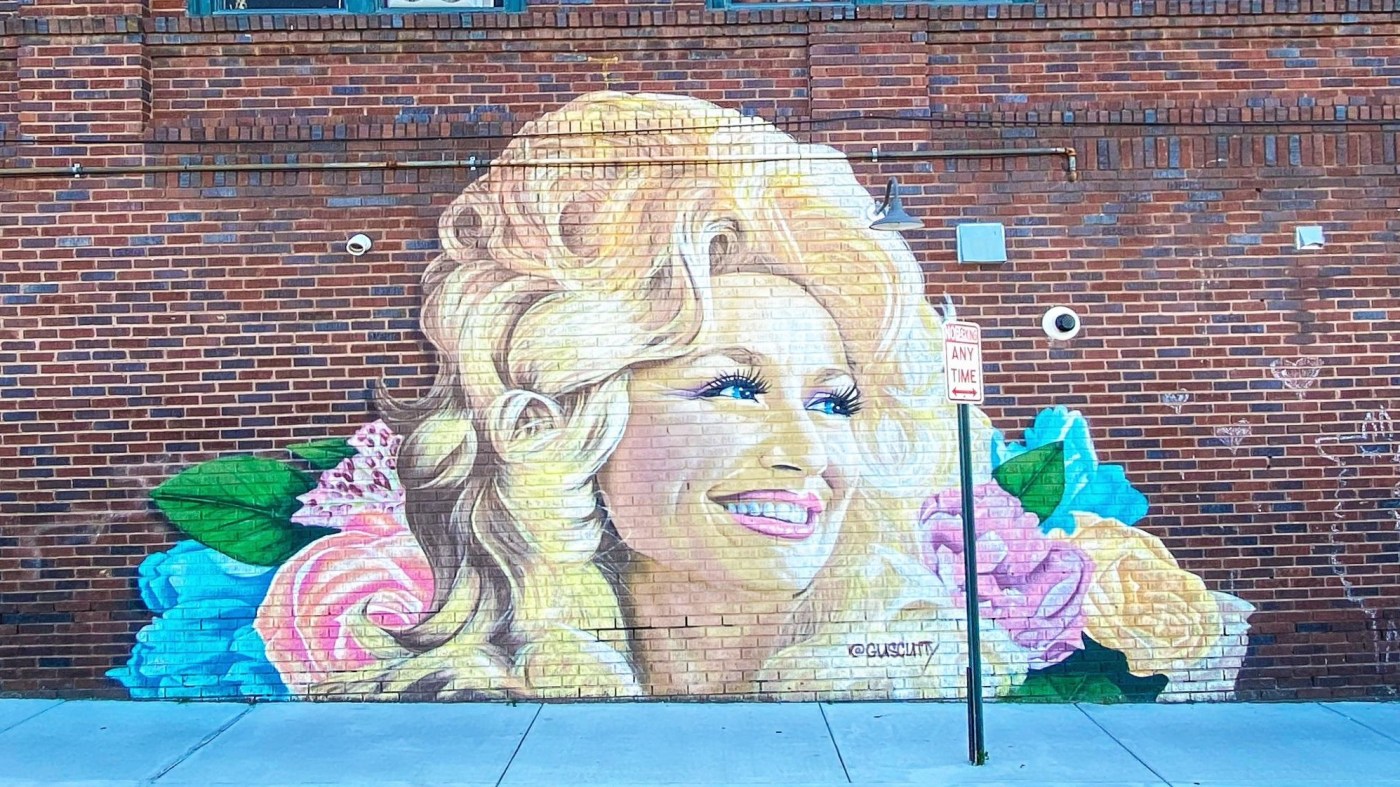
A couple of weeks ago, Dolly Parton died; the world is in mourning. One little story helps illustrate why. Her singing career kicked off in 1967, when she was invited onto The Porter Wagoner Show. Back then, Porter was the star and Dolly was the sidekick, and when Dolly sang solos she was booed. So Porter asked her to sing duets with him, instead, because people wouldn’t boo while he (the star) was singing. As they sang together, Dolly gained in confidence and stage presence and began writing songs. Gradually, she became the star.
Porter did not respond well to this shift. They had a professional falling out and Dolly left the show. Porter then sued her for millions, arguing that, since he had invested in her at the beginning, he was entitled to a share of her ongoing success. Rather than endure an expensive and damaging court batltle, in 1980 Dolly settled out of court for a million dollars. It took her years to pay him out. It is out of this painful experience that she wrote her hit song, ‘I will always love you.’ ‘Bittersweet memories, that is all I’m taking with me,’ she sang, not about a romantic relationship but this professional one.
Fast forward a number of years and Porter was in financial trouble himself, about to be bankrupted. So he made the hard decision to sell the publishing rights to his music catalogue and, with it, the right to future earnings from his music. Was Dolly delighted that he’d finally received his comeuppance? Was sauce for the goose indeed sauce for the gander? Did she gloat? No, she did not. Instead she anonymously bought the rights. Then she gifted them back to him—and why? So he could continue to benefit from his work and his children would have something to inherit.
She could have treated him like an enemy. Instead, she remembered his early kindness and sang that she wished him love, joy and his heart’s desire. Then when she was able, she gave him these gifts herself.
‘How many times must I forgive?’ asks Peter. ‘Seven times?’ ‘Nah,’ says Jesus. ‘Buy out the business and gift it back to your enemy. But if you don’t, then you’ll be handed over to be tortured.’
I’m sorry, what??? But it’s true: they’re talking about forgiveness, then Jesus tells Peter a story about a slave who is forgiven an unimaginable debt but who fails to extend forgiveness himself. Then he says that the slave will be handed over to be tortured until the debt can be repaid. Says Jesus, ‘So my heavenly Father will also do to every one of you, if you do not forgive your sibling from your heart.’ (Matthew 18:35). It seems like God is a fickle sadist who in one moment forgives, but who in the next responds to our failures by whisking that forgiveness away and sending us away to great suffering.
Of course, many people are quite comfortable with this and other images of a vicious God. The mighty warrior fighting for righteousness’ sake. The vindictive ruler, the angry judge, the flaming sword, and all the rest. Such people seem confident that they are on the right side of God, and that God’s righteous anger will protect them. But for those of us who are perhaps more aware of our own capacity for sin, or who have borne the brunt of other people’s righteous condemnation, this image of God is horrific. This isn’t a god we can love and trust, but a god of fear and loathing; a god whose followers all too often take it upon themselves to withhold mercy and even visit divine punishment upon others.
But perhaps there is another way to read this. As noted, Jesus says we need to forgive not seven times but seventy-seven times. Right away, this is interesting. Way back in Genesis, we are told that ‘whoever kills Cain will suffer a sevenfold vengeance.’ (Genesis 4:15). Seven generations later, Cain’s descendent Lamech kills a young man who wounds him, and claims his own vengeance to be seventy-seven times (Genesis 4:23-24). Jesus’ audience, who know scripture by heart, hear the echoes and are reminded of these stories of retaliation and vengeance. But Jesus is flipping the script, from retribution to mercy. Rather than engage in spiralling acts of violence through the generations, he demands his followers enact forgiveness over and over again, so many times that they lose count and forgiveness becomes their way of life.
It’s after he’s insisted on abundant mercy that he tells the story about torture. How is this possible? First, Jesus tells us that we need to offer forgiveness over and over again; then he tells a story in which, if we fail to forgive, we won’t be forgiven at all! Surely this is contradictory.
The clue lies in the wording. Jesus’ story doesn’t actually say that God takes forgiveness away. Nor does it say that God is the torturer turning the thumbscrews and cracking the whip. It only says that God will ‘hand us over’ to the jailers. It’s the same language used for Jesus’ crucifixion, when he is handed over into human hands and experiences great suffering and death. God has created a world of infinite forgiveness, but we don’t have to live in that world. We choose it. If we turn our back on it, I suggest it’s not divine punishment that we experience. Instead, we experience the natural consequences of a life without mercy, a life of spiralling pain.
You’ve probably heard it said that refusing to forgive is like drinking poison, then waiting for the other person to die. Martin Luther King Jr, who had very many enemies and well knew what he was talking about, put it this way: ‘Hate … is a cancer that gnaws away at the very vital centre of your life and your existence … Jesus says love, because hate destroys the hater as well as the hated.’ End quote.
Indeed, hatred and resentment destroy us. They allow the wounds that others have inflicted to fester in us, shaping and defining our lives. God calls us into fullness of life, a life shaped by freedom and joy and flourishing. But if we bind and define ourselves by our pain, we will never be truly free. Instead, we get trapped in our bitterness, lurching in painful lockstep with our enemies all the way to hell.
At a very basic level, I suggest this is what is happening in the modern state of Israel. Unable to reckon with the unimaginable pain of the Holocaust, key players built a modern state grounded in victimhood and determined to retaliate against each and every harm. Naturally, Palestinians resisted invasion and settler violence, some by any means possible. October 6th was only one of many acts of both violent and nonviolent resistance. That particular episode was brutal, but so is the suffering inflicted on Palestinians both before and ever since. Hamas and the Israeli government have become mirror images of each other, each dehumanised and dehumanising, each seeking endless vengeance and experiencing infinite pain. As one rabbi said about the horror, Why did we resist Rome two thousand years ago if all we’ve done is become it? We could have simply capitulated then and saved ourselves all the trouble.
Of course, I am not living with those particular histories or pain. I don’t really know how forgiveness can play out at that level, but I do know that it changes the script. I also know that it must be practiced by followers of Jesus, including here and now.
So what is forgiveness? First, what it’s not. Forgiveness is not cheap. It’s not about accepting abuse or allowing our boundaries to be trampled or putting ourselves in ongoing danger. Nor is it the same as reconciliation; that’s a whole separate process. Forgiveness is not denial, it’s not about glossing over things or pretending they never happened, nor is it easy or quick. It cannot be compelled, and it doesn’t mean that there are no consequences for harmful action.
Instead, forgiveness is simply a way of positioning ourselves and declaring ourselves to be free. It’s a way of insisting on the humanity of the other, even when they deny our own humanity. It’s a way of refusing to be defined by the evil that we suffer, and it’s a refusal to mirror it back. Lamech received a wound and killed the man for his trouble. He intensified the violence and ensured escalating payback for generations to come. But when Dolly received a wound, she didn’t become like her enemy. Instead she wished him well, then she showered him and his family with grace.
Followers of Jesus are called to reset the narrative. Our work is to put an end to the cycles of harm, and we do this by refusing to retaliate. We can establish boundaries, we can engage in nonviolent resistance, we can remove ourselves from danger: but we don’t lash back. Things stop with us. Through forgiveness, we enact our freedom as citizens of the kingdom of heaven, and we create spaces for something new to emerge, something life-giving, something good. So forgiveness takes us to heaven, while resentment throws us into hell; and where we end up is not a punishment from God, but a consequence of our own choices.
This is the glorious freedom that Dolly exhibited so extravagantly to the world. Freedom to be larger than life, freedom to be generous. Freedom to leave her enemy and take no vengeance, only bittersweet memories; freedom to continue to love him and wish him well. Dolly chose to live in a way where even those who hurt her were showered with generosity and transformed by love. Indeed, that relationship did heal and, along with his wife and children, Dolly was at Porter Wagoner’s deathbed. Her bighearted approach to people never diminished her, but led to great flourishing and joy. She was famously loved by so many, and it’s because she loved them. People from every walk of life, every race and culture, every gender and sexuality, at each end of a very divided political spectrum were loved by and loved her: and so the world weeps at her death.
Earlier in Matthew’s account, Jesus says: ‘Love your enemies, and pray for those who persecute you.’ (Matthew 5:44). As we love, pray for and forgive those who hurt us, may we do so with Dolly’s lavishness, wisdom and grace. And, ‘may we [like Dolly] not be overcome by evil, but overcome evil with good.’ (Romans 12:21). God’s will be done, God’s love be shown. Amen. Ω
Where & when: Wurundjeri country, Poorneet (Tadpole) Season. This week, tadpoles are hatching, flax lilies are flowering, and turtles are basking in the sun.
A reflection on Matthew 18:21-35 shared with Manningham Uniting Church on 13 September 2026 (Proper 19 Year A) © Alison Sampson, 2026. Much of this story about Dolly is told in the podcast Dolly Parton’s America, by Jad Abumrad and Shima Oliaee.
 Alison and the whale